
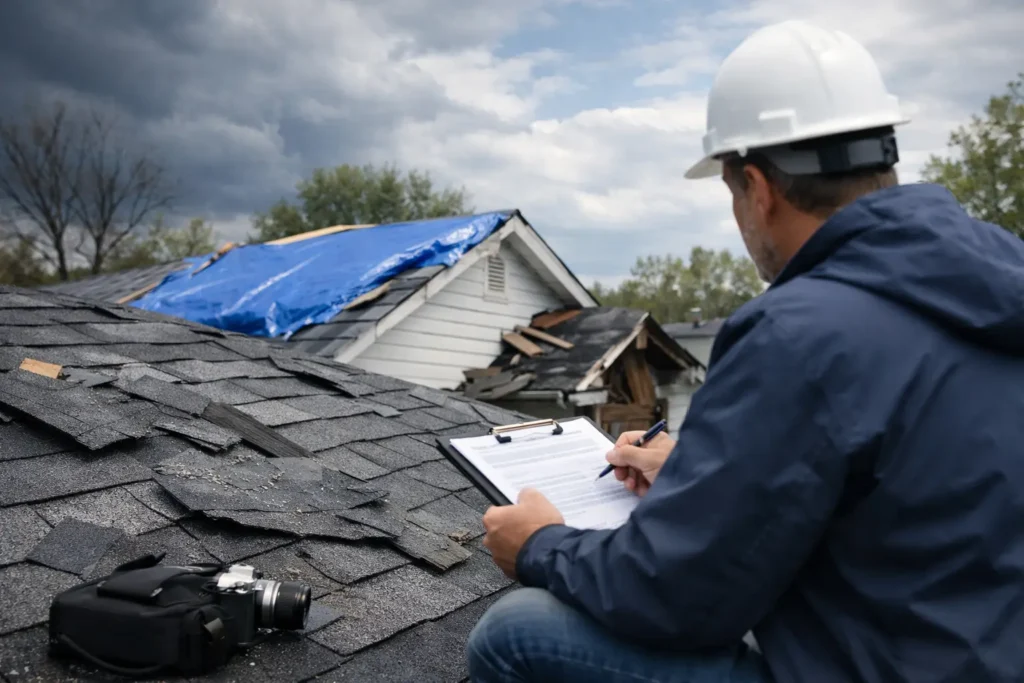
The day after a windstorm is not the time to guess your way through an insurance claim. If shingles are in the yard, water is staining the ceiling, or flashing got peeled back by heavy gusts, knowing how to file storm roof claim paperwork correctly can save time, money, and a lot of frustration.
For many homeowners, the biggest mistake happens in the first 24 hours. They either wait too long to document the damage, or they call the insurance company before they understand what actually happened to the roof. A storm claim moves more smoothly when you stay organized, protect the home from further damage, and get a qualified roof inspection early.
How to file storm roof claim without making it harder
Start with safety. If there is active leaking, exposed decking, fallen tree debris, or power line risk, do not climb on the roof. Take photos from the ground if you can do it safely, and focus first on preventing more interior damage. Use buckets, move valuables, and if needed, arrange temporary tarping or emergency protection.
Then document everything. Take clear photos of missing shingles, dented gutters, damaged flashing, fallen branches, water stains, wet insulation, and any debris that points to wind or hail impact. Wide shots help show the full area, while close-ups help prove the specific damage. If the storm hit siding, skylights, chimney flashing, or soffits too, include those as well. Insurance companies often look at the full exterior damage pattern, not just one visible roof issue.
Write down the date of the storm, the time you noticed the problem, and what you observed. If your neighbors had similar damage, that can also support the timeline. In Central New York, strong wind, ice, and hail can create damage that is not always obvious from the driveway. That is why a professional inspection matters before assumptions get made about whether a repair or a full replacement is needed.
Review your policy before you call
A lot of homeowners are surprised to learn that not every roof problem is covered the same way. Storm damage is generally handled differently than wear and tear, poor maintenance, or an older roof reaching the end of its life. If your shingles were already brittle and curling before the storm, the carrier may look closely at age and condition.
Check your deductible, your type of coverage, and whether the policy pays replacement cost value or actual cash value. That difference matters. Replacement cost coverage is typically more favorable because it is based on what it costs to replace the damaged materials, while actual cash value factors in depreciation. If you are not sure what your policy says, ask direct questions and take notes during every call.
This is also the time to find out if there are filing deadlines. Some policies require prompt notice, and waiting too long can complicate the process. Fast action does not mean rushing blindly. It means getting the facts in order and reporting the claim while the storm event is still clearly documented.
Get a professional roof inspection early
Before the insurance adjuster visit, it helps to have a roofing contractor inspect the damage. A proper inspection can identify problems the average homeowner will miss, including lifted shingles, broken seal strips, creased tabs, punctures, flashing separation, and hidden water entry points around penetrations.
This step is not about inflating a claim. It is about accuracy. If the roof has storm-related damage, you want that documented clearly from the start. If the damage is minor and repairable, you want to know that too. Good contractors will be straightforward about what they see and whether it appears consistent with wind, hail, or impact damage.
An experienced local contractor also understands how regional weather affects roofing systems. In places like Syracuse and the surrounding area, freeze-thaw cycles, snow loads, and high winds can make storm damage worse after the initial event. A quick inspection can help you decide whether emergency repairs are needed right away while the claim is pending.
Filing the claim with your insurance company
Once you have your initial documentation and inspection, contact your insurer to open the claim. Be clear, factual, and specific. State the date of loss, describe the storm event, and explain the visible damage you found. Avoid guessing about full repair costs if you do not have that information yet.
When you open the claim, ask for the claim number, the adjuster assignment process, and the expected timeline for inspection. Keep a written record of every conversation, including names, dates, and what was discussed. Claims become stressful when details are scattered across emails, voicemails, and memory.
If the insurance company asks you to take temporary steps to prevent further damage, do so quickly and save all receipts. Emergency tarping, interior water mitigation, and temporary sealing may be reimbursable if they are reasonable and necessary. Just make sure those measures are documented before and after the work.
What to expect during the adjuster inspection
The adjuster is there to assess the reported damage and determine what the policy may cover. This visit is important, so it helps to be present if possible. If your roofing contractor can attend too, that often makes the conversation more productive because they can point out storm-related issues that might otherwise be overlooked.
During the inspection, the adjuster may check the roof surface, gutters, downspouts, soft metals, vents, flashing, and interior leak areas. They may also look for signs of older deterioration, prior repairs, or installation issues. That does not automatically mean your claim will be denied. It just means the carrier is trying to separate covered storm damage from pre-existing conditions.
Be honest and direct. Do not exaggerate. If you noticed a leak only after the storm, say that. If the roof was aging but not leaking before the event, explain that clearly. Claims tend to go better when the information is consistent, well documented, and supported by photos and inspection notes.
If the estimate seems low or incomplete
This happens more often than homeowners expect. An insurance estimate may leave out code-required items, flashing replacement, underlayment, steep-slope labor, waste factors, or other necessary components. It may also approve repair work when the actual damage pattern points toward broader replacement.
That does not mean the process is over. It means the scope may need to be reviewed. Your contractor can compare the insurer’s estimate to the actual damage and provide supporting documentation if something important was missed. Sometimes a supplement is all that is needed to correct the scope.
There is a practical balance here. Not every claim turns into a full roof replacement, and not every disagreement is bad faith. Sometimes there is simply a gap between what was visible in a quick inspection and what becomes clear once the roof is assessed more thoroughly. Good documentation usually drives the next step.
Common mistakes that can cost you
The biggest claim problems usually come from delay, poor documentation, and hiring the wrong contractor. Waiting weeks to report storm damage can make it harder to tie the loss to a specific weather event. Throwing away damaged materials before photographing them can remove useful evidence. Paying large deposits to storm chasers can create a separate headache you did not need.
It is also smart to be careful with paperwork. Read what you sign. Some agreements are just for inspections, while others may assign rights or lock you into work before the claim is fully approved. If something feels rushed or unclear, slow it down.
Another mistake is assuming insurance will cover every roof issue found during the claim. If part of the roof problem is old age or long-term wear, you may still have out-of-pocket costs. A dependable contractor should explain that plainly, not bury it in vague promises.
Choosing help you can trust
When you are dealing with storm damage, fast response matters. So does local accountability. A contractor who understands insurance-related roof damage, communicates clearly, and provides solid documentation can make the process much less stressful.
Look for a company that is insured, experienced with storm restoration, and willing to explain the difference between temporary protection, repair, and full replacement. You want honest guidance, not pressure. If a contractor cannot explain what they found in plain language, that is a problem.
Homeowners across Central New York often need help not just with shingles, but with flashing, gutters, siding, chimney areas, and leak tracing after severe weather. That is where working with a company like Alpha Omega Roofing LLC can be valuable. The goal is not just to get the claim moving. It is to protect your home properly and make sure the work holds up long after the storm is over.
If your roof was hit by wind, hail, or falling debris, do not wait for a small problem to turn into interior damage. A careful inspection, strong documentation, and a straightforward claim process can put you back in control when the weather has done its worst.