
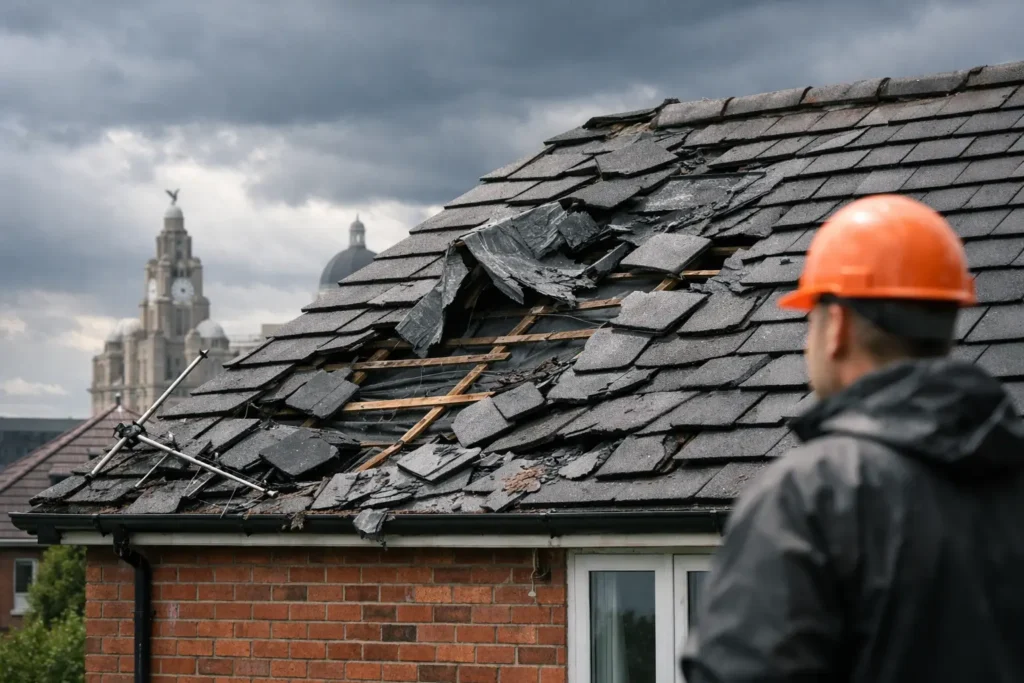
A windstorm can rip through Liverpool in one night and leave behind damage that is easy to miss from the ground. That is what makes Liverpool storm damage roofing issues so frustrating for homeowners. A few lifted shingles or a small flashing failure may not look serious at first, but once water gets under the roof system, the repair can grow quickly.
The first priority after a storm is not guessing. It is getting a clear look at what happened, protecting the home from further damage, and finding out whether a repair will solve the problem or whether the roof took a harder hit than it appears. In Central New York, roofs deal with more than one kind of storm stress, and that matters when you are deciding what to do next.
What storm damage looks like on a roof
Not every storm leaves a tree on the house. More often, the damage is subtle. Wind can break the seal on shingles, loosen ridge cap pieces, pull flashing away from a chimney, or expose nail lines that were protected before. Heavy rain then follows the weak spot and pushes moisture into decking, underlayment, insulation, or attic spaces.
Hail damage can be even harder to spot without an inspection. On asphalt shingles, it may show up as bruising, granule loss, or small impact marks that shorten the roof’s life even if there is no immediate leak. If the roof is older, a storm can turn normal wear into active failure.
You may also notice the signs indoors before you see anything outside. Water stains on ceilings, damp attic insulation, bubbling paint, or a musty smell after a storm are all warning signs. If you hear dripping or see water near vents, chimneys, or roof valleys, do not wait for it to dry out and hope for the best.
Liverpool storm damage roofing inspections should happen early
Timing matters. The longer damage sits, the harder it can be to separate storm-related issues from ongoing deterioration. That can affect repair costs, interior damage, and in some cases the insurance process.
A proper roof inspection after a storm should look at the full system, not just the obvious trouble spots. That includes shingles, flashing, valleys, vents, fascia, gutters, chimney connections, and the attic if needed. A good inspection also looks for damage that may not be leaking yet but is likely to fail during the next hard rain.
For homeowners, this is where experience counts. Storm damage is not always dramatic, and a quick look from the driveway does not tell you much. A contractor who works in this region understands how wind-driven rain, ice, aging materials, and repeated freeze-thaw cycles can work together to compromise a roof.
What you should do right after a storm
Start with safety. If there are downed power lines, major structural concerns, or large fallen branches, keep your distance and address those hazards first. If the roof appears unstable or water is entering the home near electrical fixtures, that should be treated as urgent.
After that, do a basic visual check from the ground. Look for missing shingles, metal pieces on the lawn, sagging gutters, debris impact, and anything unusual along the roofline. Inside the house, check ceilings, attic spaces, and upper walls for stains or fresh moisture.
Take photos if you can do so safely. This helps document conditions before temporary repairs or cleanup begin. Then call for a professional inspection. Waiting a week or two can turn a manageable roofing repair into damage involving drywall, insulation, trim, and even framing.
One thing homeowners should not do is climb onto the roof after a storm unless they have the right equipment and experience. Wet shingles, hidden soft spots, and loose materials make that risky. It is simply not worth a fall.
Repair or replacement – it depends on the damage
This is one of the most common questions, and the honest answer is that it depends on the age of the roof, the extent of the storm impact, and how widespread the compromised areas are.
If a newer roof lost a limited section of shingles and the rest of the system is sound, a targeted repair may be the right call. The same goes for isolated flashing damage around a chimney or vent boot failure caused by wind and rain. In those cases, a focused repair can restore protection without pushing you into a full replacement.
If the roof is already near the end of its service life, the situation changes. Storm damage on an older roof often reveals deeper problems. Shingles may be brittle, seals may already be weakened, and matching materials can be difficult. A repair might stop the immediate leak, but it may not give you the long-term performance you need.
A full replacement can make more sense when the damage is widespread, when multiple areas have been compromised, or when the underlying roof system has taken on moisture. It costs more upfront, but in some cases it prevents a cycle of repeated repairs and continued interior risk.
That is why a straightforward inspection matters so much. Homeowners need a clear recommendation based on the actual condition of the roof, not a sales pitch.
Insurance questions come up fast after storm damage
Storm-related roofing problems often lead to insurance questions, especially when wind or hail is involved. What homeowners usually need most is documentation and a clear explanation of what was found.
If you plan to file a claim, act promptly and keep records. Save photos, note the date of the storm, and document any interior signs of water intrusion. If emergency tarping or temporary repairs are needed to prevent further damage, that should be documented too.
It also helps to work with a contractor who understands how to identify storm damage clearly and explain it in practical terms. Homeowners should never feel lost in the process. The goal is to protect the home first, then make informed decisions with good information in hand.
Why local weather makes roof damage worse
Liverpool homes are exposed to a rough combination of wind, rain, snow, ice, and seasonal temperature swings. A storm does not hit a roof in isolation. It hits a roof that may already be carrying years of weather stress.
That is why two homes on the same street can have very different outcomes after the same storm. Roof age, ventilation, flashing quality, previous repairs, and shingle condition all play a role. A newer roof installed properly may come through with minor issues. An older roof with worn materials may start leaking right away.
This is also why temporary fixes have limits. A tarp can help protect the house in the short term, but it is not a long-term roofing solution. If underlying components are damaged, the problem is still there. The priority should be stabilizing the situation quickly and then completing the proper repair.
Choosing help for Liverpool storm damage roofing
When storm damage happens, homeowners do not need vague answers or long delays. They need someone who will show up, inspect the roof carefully, explain what is wrong in plain language, and lay out the next steps clearly.
Look for a contractor that is insured, experienced with storm restoration, and used to working on homes in Central New York conditions. Fast response matters, but so does workmanship. Poor repairs can create a second round of damage that is even more expensive than the original storm impact.
It also helps to choose a company that is comfortable handling both emergency needs and permanent solutions. If the roof needs temporary protection now and a larger repair later, that process should feel organized and transparent. Homeowners should know what is urgent, what can wait a little, and what the likely cost path looks like.
Alpha Omega Roofing LLC works with homeowners who need that kind of direct, dependable support after severe weather. The focus is simple – identify the damage, protect the property, and recommend the right repair or replacement without wasting time.
Do not wait for a small leak to prove itself
A storm-damaged roof rarely gets better on its own. It usually stays quiet for a while, then shows up during the next hard rain, the next thaw, or the next windy night. By then, what could have been a straightforward fix may involve insulation, ceilings, paint, and cleanup as well.
If your roof took a hit and something does not look right, trust that instinct and get it checked. A prompt inspection can save money, reduce stress, and help you protect the part of your home that protects everything underneath it.