
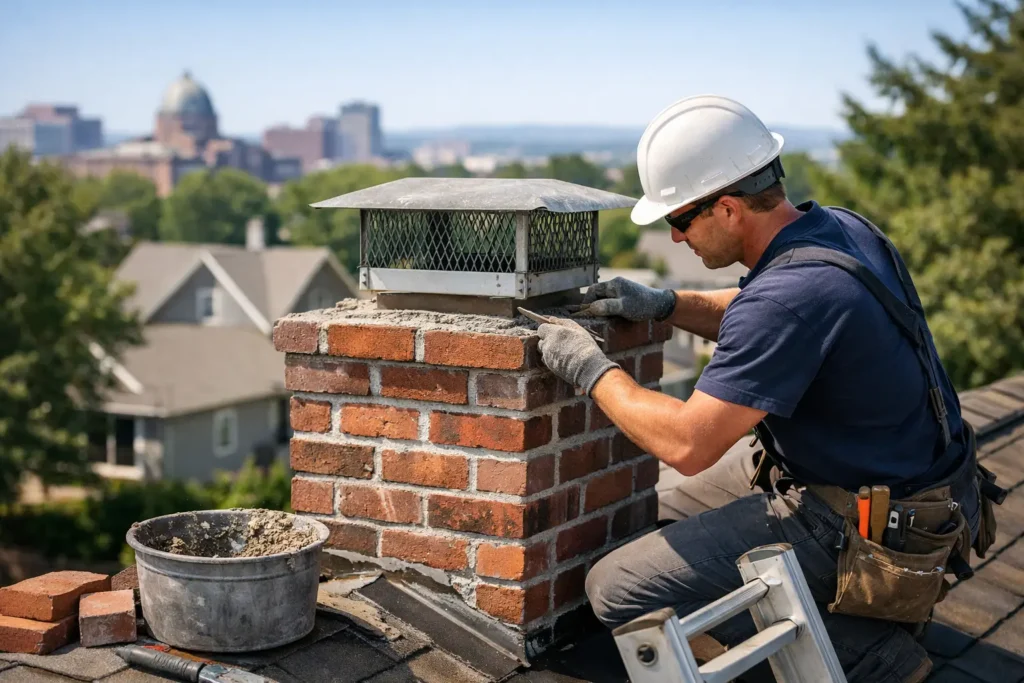
A chimney usually gets ignored until it starts staining brick, dropping pieces into the yard, or letting water into the house. That is why chimney repair Syracuse homeowners put off in summer often turns into a more expensive call by late fall, right when the first hard freeze and heavy winds hit Central New York.
If your chimney is cracked, leaning, leaking, or shedding mortar, the problem rarely stays cosmetic for long. Moisture gets into small openings, freezes, expands, and widens the damage. Add snow load, age, and roof wear, and a minor repair can quickly become a chimney rebuild or a roof leak around the flashing.
Why chimney damage gets worse fast in Syracuse
Chimneys in this area take a beating. Freeze-thaw cycles are tough on brick and mortar, and older homes often have masonry that has already seen decades of seasonal expansion and contraction. Even a well-built chimney can start showing wear when water gets behind the surface.
The trouble is that chimney problems do not always announce themselves with a dramatic leak. Sometimes the first signs are subtle – white staining on brick, crumbling mortar joints, rust around the chimney cap, or a musty smell in the attic or upper floor. Homeowners also notice interior wall stains near the fireplace, loose bricks, or pieces of mortar on the roof.
When those signs show up, timing matters. A repair done early is often straightforward. Wait through another winter, and the same issue may involve damaged flashing, rotted roof decking, or structural instability higher up the stack.
Common signs you need chimney repair in Syracuse
Not every chimney issue requires a full rebuild, but most visible damage deserves an inspection. Cracked mortar joints are one of the most common problems. Mortar is often the first part to fail, and once it starts breaking down, surrounding bricks can loosen and shift.
Spalling brick is another red flag. That happens when the face of the brick flakes, pops, or breaks apart because moisture has entered the masonry. If you see brick fragments on the roof or ground, the chimney is already deteriorating.
Leaking around the chimney is also common, especially where the chimney meets the roof. In some cases, the masonry itself is not the only issue. Flashing may be rusted, separated, or improperly sealed. Homeowners often assume they need a roof repair only, but chimney and roofing systems work together in that area, so both need to be evaluated.
A leaning chimney, missing chimney cap, cracked crown, or interior fireplace odor can also point to larger moisture problems. If smoke drafts poorly or the flue liner is damaged, there may be a safety issue as well as a repair issue.
What causes chimney leaks and masonry failure
Water is the main culprit, but there is usually more than one entry point. A cracked chimney crown lets water in from the top. Missing or damaged caps allow rain, snow, and debris directly into the flue. Worn mortar joints let moisture penetrate from the sides. Failed flashing creates a path where the chimney meets the roofing material.
Sometimes the issue is poor past repair work. Smearing caulk over cracked masonry or applying the wrong sealant may hide the problem for a season, but it does not stop ongoing deterioration. Paint can also trap moisture in older brick, which makes freeze-thaw damage worse.
Age is a factor too. Many Syracuse-area homes have chimneys that were built long before modern waterproofing and flashing standards became common. If the chimney has not had meaningful service in years, multiple issues may be happening at once.
Chimney repair options depend on what failed
The right fix depends on where the damage started and how far it has spread. If mortar joints are failing but the bricks are still sound, tuckpointing or repointing may be the best solution. That restores the joints, improves stability, and helps keep water out.
If bricks are spalling or loose, damaged masonry may need to be removed and replaced. When the top of the chimney is cracked or deteriorated, rebuilding the upper courses may make more sense than patching them. A chimney crown repair or replacement can stop recurring water entry from above.
For leaks at the roofline, flashing repair or replacement is often critical. This is where roofing and chimney experience matter. A chimney can have solid brickwork and still leak because the flashing was installed poorly or has pulled away over time.
Some chimneys need waterproofing after repairs are completed, but that only helps when the masonry is first restored properly. Waterproofing over failing mortar or damaged brick is not a real repair. It is a short-term cover that usually leads to another service call.
When a rebuild is the better investment
There are cases where repair is no longer the most cost-effective option. If a chimney is severely leaning, has widespread brick failure, or has been patched repeatedly without solving the problem, a partial or full rebuild may be the smarter long-term choice.
That does not mean every damaged chimney needs to be torn down. It means the repair should match the condition of the structure. A good contractor should explain whether a focused repair will hold up or whether the chimney has reached the point where rebuilding part of it is the safer and more durable route.
Why roof and chimney repairs often go together
Homeowners usually call about one visible issue, but chimneys and roofs affect each other more than most people realize. A damaged chimney can create roof leaks. A worn roof can expose chimney flashing. Ice and water buildup around the chimney can force moisture into both systems.
That is one reason a full exterior inspection matters. A contractor who understands both roofing and masonry can spot the actual source of the problem instead of guessing. For example, staining on a ceiling near a chimney might come from flashing failure, cracked masonry, missing cap protection, or all three.
This is especially important after storms. High winds can loosen flashing and caps. Heavy rain can expose hidden gaps. Freeze-thaw cycles then magnify the damage. If your home has had recent storm exposure and you are seeing chimney or roof symptoms, it makes sense to have both checked together.
What to expect during a professional chimney inspection
A proper inspection should go beyond a quick glance from the driveway. The contractor should assess visible brick and mortar condition, look for crown cracks, check the flashing at the roofline, and identify signs of water penetration or structural movement.
You should also get a clear explanation of what is happening and what needs attention now versus later. Not every flaw is an emergency, but homeowners deserve honest guidance. A small flashing repair is very different from advanced brick failure, and the estimate should reflect that clearly.
For many homeowners, peace of mind comes from knowing the scope before winter sets in. If the chimney is sound, that is good news. If repairs are needed, catching them early gives you more options and usually better pricing than waiting for active leaking or visible collapse.
How to think about chimney repair cost
Cost depends on access, height, materials, and the type of repair. Repointing a localized section will cost less than rebuilding the top of the chimney. Flashing work may be moderate on its own but increase if roof decking underneath has also been damaged.
The cheapest quote is not always the best value. Chimney work has to hold up against weather, and poor repairs tend to fail quickly in Central New York. Matching mortar correctly, replacing damaged brick instead of covering it, and integrating flashing with the roofing system all matter.
It is also fair to ask whether the repair solves the root problem or just the symptoms. A bargain patch that lasts one winter is usually more expensive than a durable repair done right the first time.
Choosing the right contractor for chimney repair Syracuse residents need
Local experience counts here. Syracuse weather is hard on exterior systems, and chimney repair should be approached with that in mind. You want a contractor who understands masonry deterioration, roof-to-chimney transitions, and the urgency of water intrusion before winter.
Look for clear communication, insured service, and a straightforward estimate. If the explanation is vague or the contractor pushes a full rebuild without showing why, it is worth slowing down. On the other hand, if visible masonry failure is being minimized with a tube of sealant and a promise, that is just as concerning.
A dependable contractor should give you a realistic picture of the chimney condition, the repair options, and what will protect your home long term. That practical approach is what homeowners across Central New York usually want most – not a sales pitch, just honest answers and solid workmanship.
If you have seen cracking, leaking, loose brick, or signs of water around the chimney, getting it inspected now is a smart move. Problems at the chimney rarely stay isolated, and the earlier they are addressed, the easier it is to protect the rest of the home.