
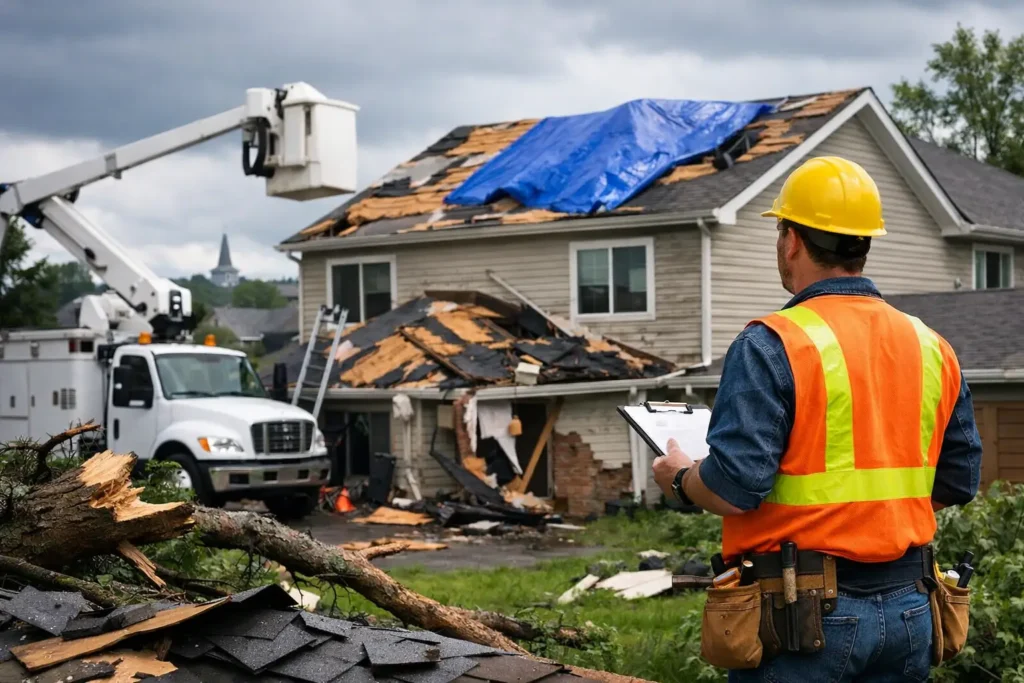
A storm can move through Syracuse in an hour and leave problems that last for months. One section of missing shingles, a lifted flashing line, or water slipping into the attic is all it takes to turn a bad weather day into an expensive repair. That is why Syracuse storm damage repair needs to happen quickly, but not carelessly. The goal is not just to patch what you can see. It is to find the full extent of the damage, stop more water from getting in, and make sure the repair actually holds up through the next round of Central New York weather.
What storm damage really looks like on a Syracuse home
Most homeowners notice the obvious issues first. You may see shingles in the yard, a piece of siding pulled loose, or water spots forming on a ceiling. Those are clear warning signs, but storm damage often spreads beyond the most visible area.
Wind can break the seal on shingles without tearing them off right away. Hail can bruise roofing materials and shorten their life even when there is no immediate leak. Heavy rain can expose weak points around vents, chimneys, skylights, and flashing. Ice and pooling water can make a small problem much worse if it is left alone.
In this area, weather does not usually damage just one part of the exterior. A storm strong enough to affect the roof may also impact gutters, siding, soffit, fascia, and masonry. That is one reason a full inspection matters. If one system fails, water often finds the next weak spot.
Syracuse storm damage repair starts with a full inspection
The first step after a storm is not guessing. It is getting a clear look at what happened.
A proper inspection should check the roof surface, flashing, ridge caps, valleys, gutters, attic signs of moisture, and any exterior components that may have taken impact. On some homes, storm damage is concentrated on one slope because of wind direction. On others, the roof may look mostly intact from the ground while the vulnerable areas around penetrations are where the trouble starts.
This is where homeowners can lose time and money by waiting too long. A leak rarely stays small. Moisture can spread into insulation, roof decking, trim, and drywall before the stain inside your home becomes obvious. Fast action gives you more repair options and lowers the chance that a targeted fix turns into a larger restoration project.
What you should do right after a storm
Start with safety. If there are downed power lines, major structural concerns, or active water coming in near electrical fixtures, stay clear and get emergency help first.
If the home is safe to enter, take a slow walk around the property from the ground. Look for missing shingles, bent gutters, pieces of metal, damaged siding, fallen tree limbs, and debris impact. Inside, check the attic and upper ceilings for damp insulation, dripping, discoloration, or musty smells. Take photos of anything that looks out of place.
Avoid climbing onto the roof yourself. Storm-damaged roofing can be slippery, unstable, or weakened in ways that are hard to see. What seems like a quick check can turn into an injury.
Then call a local contractor with storm restoration experience. A fast response matters, especially if tarping or temporary protection is needed to keep more water out before permanent repairs can be completed.
When a repair is enough and when it is not
Not every storm leads to a full roof replacement. In many cases, a repair is the right answer. If the damage is limited to a small section, the underlying structure is still sound, and the rest of the roof has useful life left, targeted repairs can restore protection without overbuilding the project.
But there are trade-offs. If the roof is already older, has multiple layers of wear, or has had repeated repairs in the same areas, another patch may only buy limited time. Matching shingles can also be difficult on aged roofs. If storm damage exposes broader deterioration, replacing the affected system may be more cost-effective than fixing one section now and another section later.
That is where straightforward guidance matters. Homeowners should be told what is damaged, what can realistically be repaired, and what may become a problem next season if only the minimum work is done.
Insurance questions come up fast after storm damage
Many homeowners are not sure what their insurance will cover, and that uncertainty can delay the process. The best first move is to document visible damage, review your policy basics, and schedule a professional inspection. If there is enough storm-related damage to justify a claim, good documentation becomes important.
Photos, inspection notes, dates of the storm, and records of interior leaks can all help support the situation. If emergency tarping or temporary protection is needed, keep records of that too. The process can feel frustrating when you are already dealing with a damaged home, which is why many homeowners prefer working with a contractor who understands how to document storm issues clearly and communicate what repairs are actually needed.
It also helps to move quickly. Waiting too long can make it harder to separate storm damage from damage caused by long-term neglect. Insurance companies often look closely at that difference.
Why local experience matters in Central New York
Storm repair is not the same everywhere. Syracuse roofs deal with high winds, freeze-thaw cycles, heavy rain, snow load, and ice buildup. Materials and repair methods need to make sense for those conditions.
A contractor familiar with local weather patterns is more likely to spot the details that matter here, like flashing failures around chimneys after winter stress, gutter problems that lead to ice backup, or wind damage that affects roof edges first. They also understand that an emergency repair done in one season may need a more permanent follow-up when weather conditions improve.
Local accountability matters too. When a company works in this market year-round, its reputation is tied to how well those repairs perform over time. That is the standard homeowners should expect.
What a dependable storm repair process should feel like
Homeowners usually do not want a long lesson in roofing systems. They want to know three things: what is wrong, what it will take to fix it, and how soon the work can start.
A dependable process should begin with a prompt inspection and a clear explanation of findings. From there, the scope of work should be straightforward. If a temporary fix is needed first, that should be explained. If other exterior components like siding, gutters, or chimney flashing were affected, those issues should be addressed as part of the same conversation rather than discovered one at a time after the job starts.
Pricing should be transparent. Insurance-related work should be documented carefully. And the repair itself should focus on long-term protection, not just getting the visible damage covered up.
That practical, no-nonsense approach is what homeowners tend to look for after a storm. They are already dealing with stress. The contractor should lower it, not add to it.
Common signs you should not ignore
Some storm damage is easy to miss until the consequences show up indoors. If you notice water stains, peeling paint near the ceiling, drafts in the attic, gutter sections pulling away, shingle granules collecting below downspouts, or damp insulation, there is a reason to schedule an inspection.
You should also pay attention to changes that seem minor. A single lifted shingle or a small piece of loose flashing may not look urgent from the ground, but those are exactly the openings that allow wind-driven rain to get under the roofing system. In Syracuse, one weak point can become a much bigger problem after the next storm front moves through.
Choosing the right contractor for Syracuse storm damage repair
Speed matters after a storm, but so does judgment. The right contractor should be licensed, insured, responsive, and able to explain repairs in plain language. You should know what materials are being used, what parts of the home are affected, and whether the repair is expected to solve the problem fully or serve as a temporary measure until additional work is scheduled.
This is also a good time to choose local over unknown storm-chasing crews. A contractor rooted in the community has to stand behind the work. For many homeowners in Syracuse and the surrounding area, that local reliability is just as important as the repair itself.
Alpha Omega Roofing LLC serves homeowners who need that kind of direct, honest support after severe weather. The focus should always be the same: protect the home, explain the options clearly, and get the job done right.
When a storm hits, waiting for the damage to become obvious is rarely the cheaper option. If something looks off, sounds off, or starts leaking, trust that instinct and get it checked before the next weather system gives the problem room to grow.