
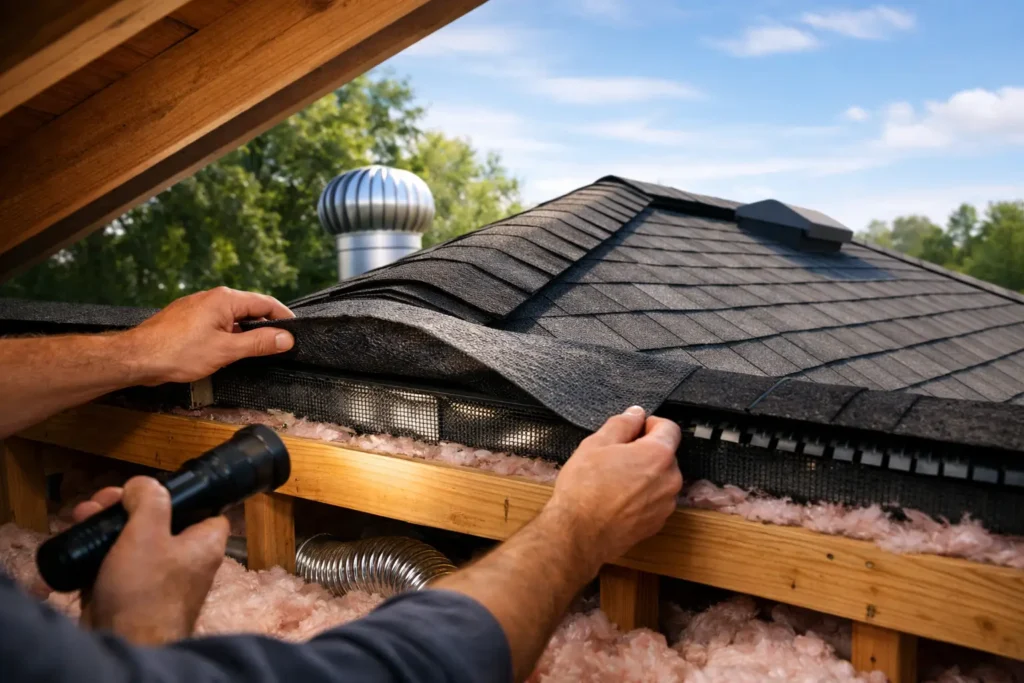
If your upstairs feels hot in summer, your roof grows icicles in winter, or you keep finding moisture in the attic, ventilation may be part of the problem. This guide to attic ventilation is built for homeowners who want straight answers about what proper airflow does, what can go wrong, and when it is time to have a roofing professional take a closer look.
Attic ventilation is not just about making the attic less stuffy. It affects roof lifespan, energy performance, indoor comfort, and moisture control. In Central New York, where homes deal with humidity, snow load, freezing temperatures, and summer heat, that balance matters even more.
What attic ventilation actually does
A well-ventilated attic allows outside air to move through the space in a controlled way. Fresh air typically enters through intake vents near the lower part of the roof, often at the soffits, and exits through exhaust vents near the ridge or upper roofline. That steady movement helps remove excess heat and moisture before they build up.
When that airflow is missing or poorly designed, the attic can trap hot air in summer and damp air in winter. Heat buildup can make your cooling system work harder and can shorten the life of roofing materials. Moisture buildup can lead to mold, mildew, wood rot, insulation problems, and staining on ceilings or walls.
Many homeowners assume a roof leak is always caused by damaged shingles. Sometimes that is true. Sometimes the bigger issue is moisture collecting inside the attic because the ventilation system is not doing its job.
Why a guide to attic ventilation matters in cold climates
In places like Syracuse and the surrounding area, attic ventilation is closely tied to winter roof performance. One of the most common cold-weather problems is the ice dam. This happens when heat from the home warms the roof deck, snow melts, and the water runs down to the colder eaves and refreezes. As that ice builds, water can back up under shingles and into the home.
Ventilation is only one part of preventing ice dams, but it is an important one. Good airflow helps keep the roof deck temperature more consistent. Proper insulation is also critical. If insulation is weak or uneven, warm air from the living space can still rise into the attic and create trouble. That is why roof and attic issues often need to be looked at as a system, not as one isolated defect.
The same attic that causes ice dams in January can also trap extreme heat in July. Poor ventilation tends to create year-round problems, just with different symptoms depending on the season.
Signs your attic ventilation may not be working
Some warning signs are obvious, while others are easy to miss until the damage grows. If you have frost on the underside of the roof decking in winter, a musty smell in the attic, warped roof sheathing, or insulation that looks damp or compressed, ventilation should be evaluated.
You may also notice peeling paint near the roofline, recurring ice dams, high second-floor temperatures, or shingles that seem to age faster than expected. In some homes, bathroom or dryer exhaust is vented into the attic instead of outdoors, which adds even more moisture to an already stressed space.
Not every hot attic means the system has failed. Attics do get warm. The issue is whether heat and moisture are escaping as they should. A professional inspection can help separate normal seasonal conditions from a ventilation problem that is affecting the roof.
The main parts of an attic ventilation system
Most effective systems rely on balance. Intake and exhaust need to work together. If you have plenty of exhaust vents but not enough intake, the system can struggle. If intake is blocked by insulation, airflow can be reduced even if the vents are technically there.
Intake ventilation
Intake vents are usually installed at the soffits or eaves. Their job is to let cooler outside air enter the attic. These vents are often overlooked, but they are essential. Without enough intake, exhaust vents cannot pull air through the attic efficiently.
A common issue is insulation packed too tightly over the eaves, which blocks the path of incoming air. Baffles can help maintain that channel between the soffit area and the attic space.
Exhaust ventilation
Exhaust vents allow hot, moist air to leave the attic. Ridge vents are one of the most common options because they run along the peak of the roof and provide continuous exhaust. Other homes may use box vents, roof louvers, gable vents, or powered vents.
Each type has pros and cons. Ridge vents often perform well when paired with proper soffit intake. Powered vents can move air aggressively, but if the attic lacks enough intake, they may pull conditioned air from the living space instead. Gable vents can help in some home designs, but mixing vent types without a clear plan can create short-circuiting, where air moves between nearby vents instead of through the full attic.
One size does not fit every roof
This is where homeowners often get mixed messages. Someone may say, “Just add more vents,” but more is not always better. Ventilation needs depend on roof design, attic size, insulation levels, existing vent placement, and how air actually moves through the space.
A simple ranch home with an open attic may ventilate differently than a complex roof with multiple valleys, dormers, and separated attic sections. Older homes can be even trickier because they may have been modified over time, with insulation upgrades, additions, or previous roofing work affecting airflow.
That is why a proper assessment matters. The goal is not just to add hardware to the roof. The goal is to create balanced, effective ventilation that fits the house.
Ventilation and insulation work together
Homeowners sometimes hear about attic ventilation as if it solves every comfort or moisture problem on its own. It does not. Ventilation and insulation need to work together.
If warm indoor air is leaking into the attic through recessed lights, attic hatches, plumbing penetrations, or poor air sealing, ventilation can only do so much. Likewise, if insulation is thin, uneven, or wet, your home may still lose heat into the attic even with decent venting.
When we inspect roofing systems, we often find that roof issues are tied to more than one condition. A home may have blocked soffits, poor insulation coverage, and signs of minor roof aging at the same time. Fixing only one piece can leave the larger problem unresolved.
When attic ventilation problems show up during a roof replacement
A roof replacement is one of the best times to correct ventilation issues. The roofing system is already being opened up, and it is much easier to evaluate exhaust options, ridge conditions, deck condition, and overall roof performance.
This is also when hidden damage may become visible. Rotten decking, mold staining, or signs of long-term moisture exposure are often discovered after old shingles are removed. If ventilation has been weak for years, the roof may show that history underneath the surface.
For homeowners, this is worth paying attention to because the cheapest roofing proposal is not always the best value. If a contractor simply installs new shingles over an attic system that is not functioning properly, the same conditions can continue affecting the new roof.
What to expect from a professional attic ventilation inspection
A solid inspection should look beyond the shingles. It should include the visible roof condition, attic airflow, intake and exhaust balance, insulation impact, moisture signs, and any evidence of heat-related wear or winter damage.
You should also get a clear explanation in plain language. If ventilation changes are recommended, the contractor should be able to explain why those changes make sense for your home, what problems they are intended to fix, and whether other improvements such as insulation or air sealing should also be considered.
That straightforward approach matters. Homeowners do not need a sales pitch. They need honest guidance on what is necessary, what is optional, and what can wait.
When to call for help
If you are seeing recurring ice dams, unexplained attic moisture, roof stains, mold concerns, or unusual temperature swings upstairs, it is time to have the roof and attic checked. The same goes if you are planning a roof replacement and want to avoid repeating an old ventilation problem under a brand-new system.
At Alpha Omega Roofing LLC, that kind of inspection starts with the home as it is, not with a one-size-fits-all recommendation. Good attic ventilation should support the life of your roof, protect your home from moisture damage, and help your house handle the weather it faces year after year.
A healthier attic is usually not about one vent or one quick fix. It is about getting the whole system to work the way it should, so your roof can do its job when the weather turns.