A windstorm can leave a few shingles in the yard, a ceiling stain in the hallway, and a much bigger question: what do you do first? Following the right filing roof insurance claim steps can protect your home, preserve the evidence your insurer needs, and reduce the chance that a small opening turns into expensive water damage.
For Central New York homeowners, timing matters. Wind, heavy snow, ice, and falling branches can damage a roof in ways that are not always visible from the ground. Your first job is not to guess whether the roof needs replacement. It is to make the property safe, document what happened, and get a qualified roofing professional to inspect the damage.
Filing Roof Insurance Claim Steps That Protect Your Home
1. Address immediate safety risks
Do not climb onto a damaged roof, especially after wind, rain, ice, or snow. Loose shingles, wet decking, hidden holes, and unstable gutters create real fall hazards. Stay clear of downed power lines, broken tree limbs, and any area where the roof appears to be sagging.
If water is coming into the house, move furniture, electronics, and valuables out of the affected area. Place containers beneath active drips and, if it is safe to do so, use a tarp or temporary covering to limit further water intrusion. Keep receipts for emergency materials and mitigation work. Most policies require homeowners to take reasonable steps to prevent additional damage after a loss.
Temporary protection is not the same as making permanent repairs. Avoid tearing off shingles, replacing large sections of roofing, or discarding damaged materials before the insurance company has had an opportunity to review the claim, unless emergency conditions make the work necessary.
2. Document the damage before cleanup begins
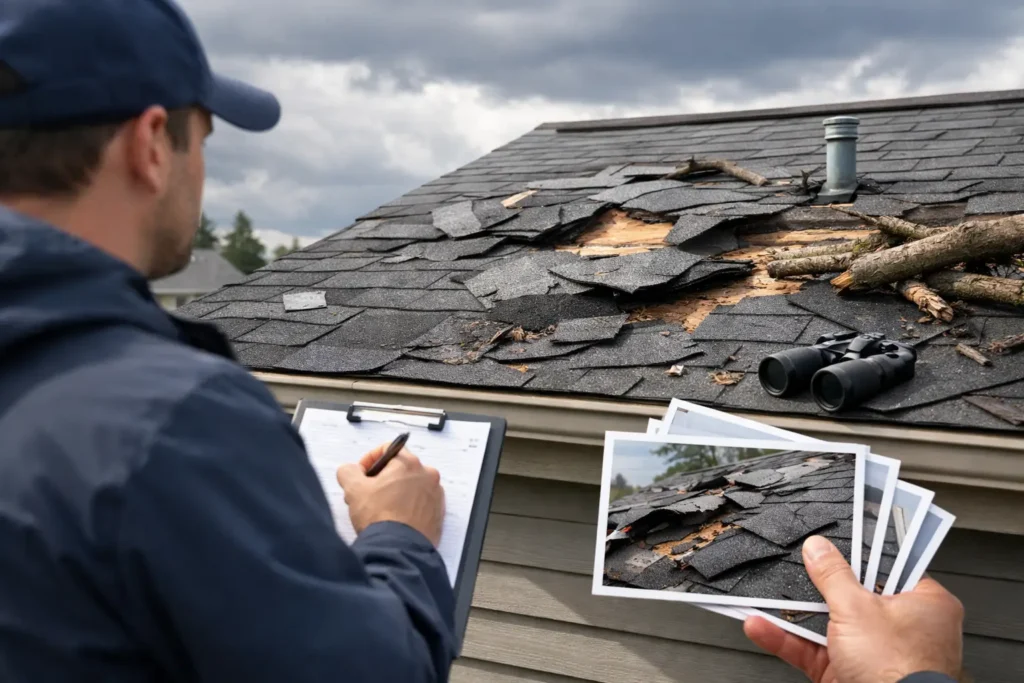
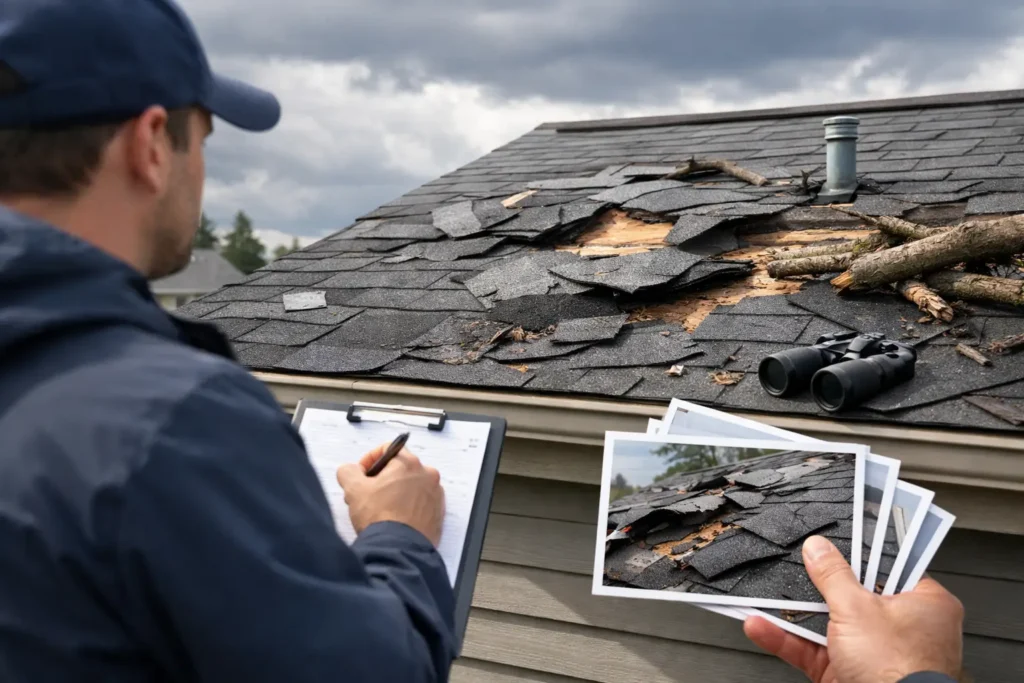
Clear documentation gives your claim a stronger foundation. Take wide photos of every affected area, then close-up images that show specific damage. Photograph missing or lifted shingles, dented metal, damaged flashing, torn gutters, fallen branches, exterior debris, and water stains on ceilings or walls.
Make a simple written record while the details are fresh. Include the date and approximate time of the storm, the weather conditions you observed, when you first noticed damage, and any steps you took to prevent further loss. If neighbors saw the event or experienced similar wind damage, their observations may help establish what occurred, though your claim will still be evaluated based on your own property and policy.
Do not throw away damaged personal property or roofing materials until you have clear photos and know whether the insurer wants to inspect them. Keep invoices for temporary repairs, water removal, or emergency service in one place.
3. Schedule a professional roof inspection
A roof can look mostly intact from the driveway while having wind-lifted shingles, cracked seals, damaged vents, compromised flashing, or punctures beneath the surface. A professional inspection helps identify the full scope of storm-related issues and separates new damage from normal aging or prior wear.
Ask the contractor for clear findings, photos, and a written estimate or damage assessment. A reputable local roofer should explain what they found in plain language, not pressure you into signing a contract before you understand your options. Alpha Omega Roofing LLC can inspect storm-related roof concerns and explain the condition of the roof so you can make an informed decision.
An inspection does not guarantee insurance coverage. Coverage depends on the cause of loss, your policy language, exclusions, deductibles, and the insurer’s assessment. Still, having an experienced contractor document visible damage can help you report the claim accurately.
4. Review your policy and deductible
Before calling your insurer, locate your policy documents or access them through your insurance portal. Look for your deductible, coverage type, and any deadlines for reporting a loss. Some policies have separate deductibles for wind, hail, or named storms, so do not assume the amount is the same as your standard deductible.
Also check whether your policy provides replacement cost value or actual cash value coverage. Replacement cost coverage generally pays the cost to repair or replace covered damage, subject to policy terms and depreciation rules. Actual cash value coverage accounts for depreciation, which can leave you with a lower payment for an older roof.
If policy wording is unclear, ask your insurance representative to explain it. A roofing contractor can explain repair needs and provide an estimate, but your insurer is the party that determines coverage.
5. Report the claim promptly and accurately
Call your insurer or submit the claim through its approved reporting method as soon as practical. Describe the date of loss, the weather event, the damage you observed, and whether you took emergency steps to limit additional damage. Stick to the facts. Avoid guessing about the cause or cost if you do not yet know.
Write down the claim number, the name and contact information of the claims representative, and the date of every conversation. Ask what documentation the insurer needs, whether an adjuster will inspect the property, and whether you need approval before proceeding with non-emergency work.
Prompt reporting matters, but there is no need to rush into a repair agreement during the first phone call. You have time to understand the process, compare written estimates when appropriate, and make sure the proposed work addresses all documented damage.
Working With the Insurance Adjuster
The adjuster represents the insurance company and evaluates the loss under the terms of your policy. Be present for the inspection if possible. Have your photos, storm timeline, repair receipts, and contractor documentation available. Point out every area of concern, including attic moisture, ceiling stains, damaged vents, and detached gutters.
It can be helpful to have your roofing contractor available during the adjuster’s visit, particularly when the damage is difficult to see from the ground. The contractor can identify roofing components, explain the repair scope, and answer construction-related questions. They should not promise a claim result or tell you that a specific outcome is guaranteed.
After the inspection, request a copy of the insurer’s estimate. Read it carefully. It should identify the covered work, material quantities, labor items, depreciation if applicable, and deductible. Compare it with your contractor’s written scope. Differences do not automatically mean either estimate is wrong. They may reflect missed damage, different repair methods, code-related questions, or limits in the policy.
What to Do if the Claim Estimate Falls Short
If the insurer’s estimate does not appear to include documented storm damage, ask questions before starting work. Request clarification in writing and provide photos, inspection notes, and a detailed contractor estimate. In some cases, additional documentation supports a supplement request for work that was not visible or fully known during the initial inspection.
Do not approve a reduced repair scope simply because it is the first estimate you receive. An incomplete repair can leave vulnerable flashing, underlayment, decking, or ventilation issues unresolved. At the same time, do not assume every item in a contractor estimate will be covered. The goal is a repair plan that is technically sound and aligned with the policy determination.
If you disagree with the final coverage decision, review the appeal or reconsideration process in your policy. For complicated disputes, you may choose to speak with your insurance agent, a licensed public adjuster, or an attorney. That decision depends on the size and complexity of the loss.
Avoid These Common Claim Mistakes
The most costly mistakes usually happen early. Homeowners may wait too long to report damage, make permanent repairs before documenting the loss, or accept a verbal promise instead of getting the scope in writing. Others focus only on the missing shingles and overlook interior water damage or damaged flashing.
Be cautious with anyone who offers to cover your deductible, demands a large payment before work begins, or promises to get the claim approved. A trustworthy contractor will be insured, provide a clear scope of work, answer questions directly, and let the insurance process stay transparent.
A roof claim can feel like one more problem after a storm, but you do not have to solve it from a ladder or make decisions in a hurry. Start with safety, keep good records, and get clear professional information before moving forward. That approach gives your home the best chance of being repaired properly for the next Central New York weather event.