
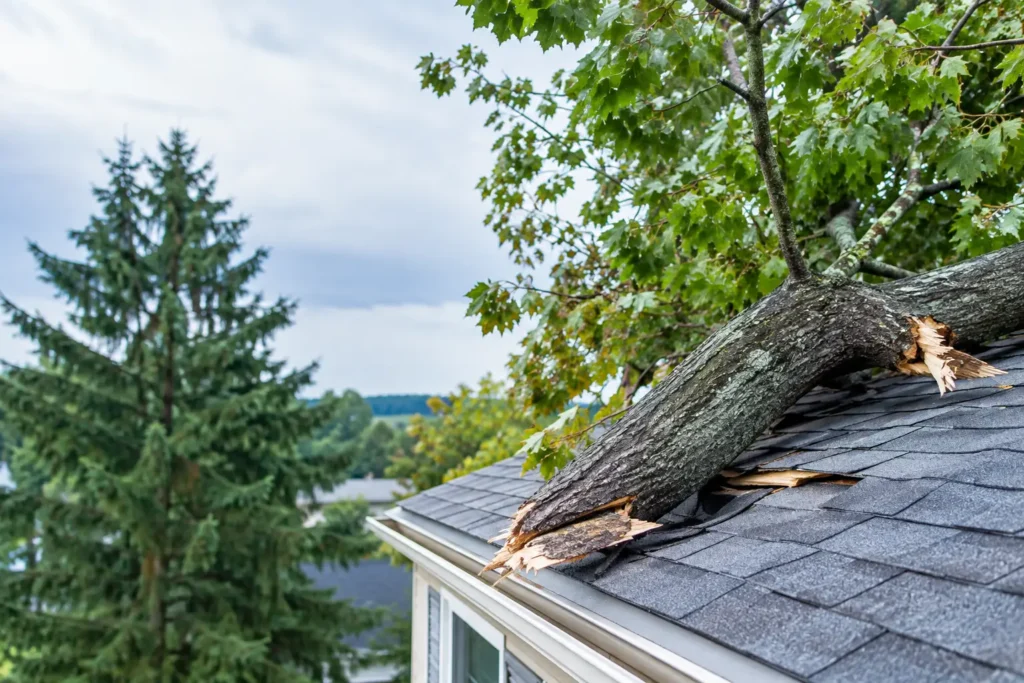
A hard Central New York windstorm can lift shingles, loosen flashing, bend siding, and send branches across a roof in a matter of minutes. Wind damage claims are often stressful because the damage is not always obvious from the ground, yet waiting too long can allow a small opening to become a costly interior leak. The right first steps protect your home and give your insurance claim the documentation it needs.
Start With Safety and Prevent Further Damage
Do not climb onto the roof after a storm. Wet shingles, wind-blown debris, hidden punctures, and unstable tree limbs create real hazards. Start with a walk around your property from the ground when conditions are safe. Look for shingles in the yard, damaged gutters, fallen branches, bent fascia, loose siding, or pieces of flashing near chimneys, vents, and roof edges.
Inside, check the attic and upper-level ceilings for water stains, damp insulation, dripping, or a musty odor. A leak may begin at one point and show up several feet away from the actual roof opening, so do not assume a ceiling stain tells the full story.
If water is entering the home, take reasonable steps to limit additional damage. Move furniture and valuables, place containers under active drips, and use a temporary protective covering if it can be installed safely by a qualified professional. Keep receipts for emergency mitigation or temporary repairs. Most policies require homeowners to prevent further damage when possible, but permanent repairs should generally wait until the insurer has had an opportunity to review the loss.
Document Storm Damage Before It Changes
Good documentation can make wind damage claims easier to understand and less likely to become a dispute over timing or cause. Take clear photos and video from safe locations as soon as possible. Capture wide shots of the house, then closer images of visible damage. Photograph fallen branches, shingle debris, damaged screens, bent gutters, and any water entering the home.
It also helps to record the date of the storm, the approximate time you noticed the damage, and the weather conditions in your area. Save weather alerts or local reports if they are available, but focus first on your own property evidence. Insurers need to see what happened to your home, not just that a storm occurred nearby.
Keep a simple file with your photos, videos, receipts, contractor paperwork, and notes from every conversation. Write down the name of each insurance representative, the date and time of the call, and any claim number provided. This may feel tedious while you are dealing with a damaged roof, but it keeps details from getting lost as the claim moves forward.
Get a Professional Roof Inspection
Wind damage can be difficult to identify without a close inspection. A shingle does not need to be completely missing to cause trouble. High winds can break the seal that holds it in place, crease it, lift its edges, or expose nails and underlayment. These issues can allow water intrusion later, especially when rain, ice, and snow arrive.
A qualified roofing contractor can inspect the roof, flashing, vents, skylights, gutters, siding, and other affected exterior areas. Ask for a clear explanation of what was found, including photographs of the damage where possible. A good inspection should distinguish between recent storm damage and normal wear from an aging roof.
That distinction matters. Insurance typically addresses sudden, accidental covered damage, while deterioration, improper installation, and long-term maintenance issues may not be covered. A storm may expose a pre-existing weakness, and coverage can depend on the policy language and the adjuster’s findings. Honest documentation is more useful than trying to make a damaged area appear worse than it is.
File the Claim Promptly and Read Your Policy
Contact your insurance company as soon as you have identified likely storm damage. Delays can complicate the process, particularly if later weather worsens the condition of the roof or makes it harder to determine what caused the damage. When you report the loss, explain the facts plainly: when the storm occurred, what you observed, and what steps you took to protect the property.
Before assuming what is covered, review the declarations page and relevant policy sections. Pay close attention to your deductible, wind or hail exclusions, roof settlement terms, and whether the policy pays replacement cost value or actual cash value. Replacement cost coverage may provide funds for covered repairs or replacement based on current costs, subject to policy requirements. Actual cash value coverage generally accounts for depreciation, which can leave the homeowner responsible for a larger portion of the bill.
Some policies also have separate wind deductibles. In Central New York, homeowners should not assume every storm-related issue is handled the same way simply because wind was involved. The exact outcome depends on the policy, the cause of loss, the age and condition of the roof, and the documentation available.
Prepare for the Adjuster’s Visit
After a claim is opened, the insurer may schedule an adjuster inspection. Be available if possible, and have your documentation ready. Share the photos you took after the storm, a list of visible concerns, receipts for temporary protection, and any contractor inspection report or estimate you received.
A roofing contractor can often be present during the inspection to point out damage that may not be easily visible from the ground. That does not mean the contractor decides coverage. The insurance company makes that decision. However, having an experienced professional explain roof components, damaged materials, and the scope of needed repairs can help ensure the inspection considers the full condition of the affected area.
Ask questions if the adjuster identifies only a limited repair while your contractor has found broader storm-related damage. Request clarification in writing when needed. If the claim estimate leaves out important work, such as flashing replacement, decking repairs, code-required upgrades, or interior water damage, ask how those items were evaluated. Differences can sometimes be resolved with additional photos, measurements, or a more detailed contractor estimate.
Avoid Mistakes That Can Hurt Your Claim
The period after a storm brings out legitimate contractors and opportunistic sales crews alike. Be cautious of anyone who pressures you to sign immediately, promises they can guarantee insurance approval, or asks you to sign over insurance benefits without a clear explanation. No contractor can promise what an insurer will pay.
You should also avoid throwing away damaged materials before they are photographed or reviewed, unless they pose a safety risk. Do not make broad statements about the roof’s age, past leaks, or prior repairs if you are unsure of the facts. It is better to say you will check your records than to guess.
Four practical habits can prevent unnecessary problems:
- Do not authorize permanent work before understanding the claim decision, except for necessary emergency protection.
- Do not rely only on verbal estimates or verbal insurance discussions.
- Do not ignore small leaks or lifted shingles because the home appears dry after the storm.
- Do not choose a contractor solely because they offer the lowest price or promise a fast insurance payout.
A low estimate may omit materials, ventilation work, flashing details, cleanup, or workmanship protections that affect the long-term performance of the roof. The goal is not simply to close the claim quickly. It is to restore the home correctly.
When Repair Makes Sense and When Replacement May Be Needed
Not every wind claim requires a full roof replacement. If the damage is isolated and matching materials are available, a targeted repair may be the most sensible option. Replacing a few wind-lifted shingles, resealing flashing, or repairing a damaged ridge cap can restore protection without unnecessary expense.
Replacement becomes more likely when damage is widespread, shingles are brittle or cannot be repaired without causing additional breakage, or the roof is already near the end of its useful life. Material availability and color matching can also affect the repair decision. A contractor should explain the condition of the roof, the risks of spot repairs, and the practical options without pushing work your home does not need.
For homeowners in Syracuse and surrounding communities, storm damage also needs to be viewed through the next season’s weather. A roof that barely holds through summer rain may struggle under freeze-thaw cycles, lake-effect snow, and ice buildup. Addressing legitimate wind damage promptly can prevent a manageable repair from turning into damaged insulation, stained ceilings, mold concerns, or structural rot.
Keep Communication Clear Until the Work Is Complete
Once coverage is approved, compare the insurance scope with the contractor’s proposed work. Make sure you understand what is included, what may be out of pocket, how depreciation is handled, and whether any additional damage discovered during repairs will be documented before work continues.
Alpha Omega Roofing LLC helps homeowners assess storm-related roof concerns, document visible damage, and understand repair or replacement options in straightforward terms. The final insurance decision remains with the carrier, but an experienced local contractor can help you move from uncertainty to a clear plan for protecting your home.
A prompt inspection after high winds is one of the most practical decisions a homeowner can make. Even if the roof looks fine from the driveway, finding and addressing a small problem early may protect both your home and your ability to present a well-supported claim.