
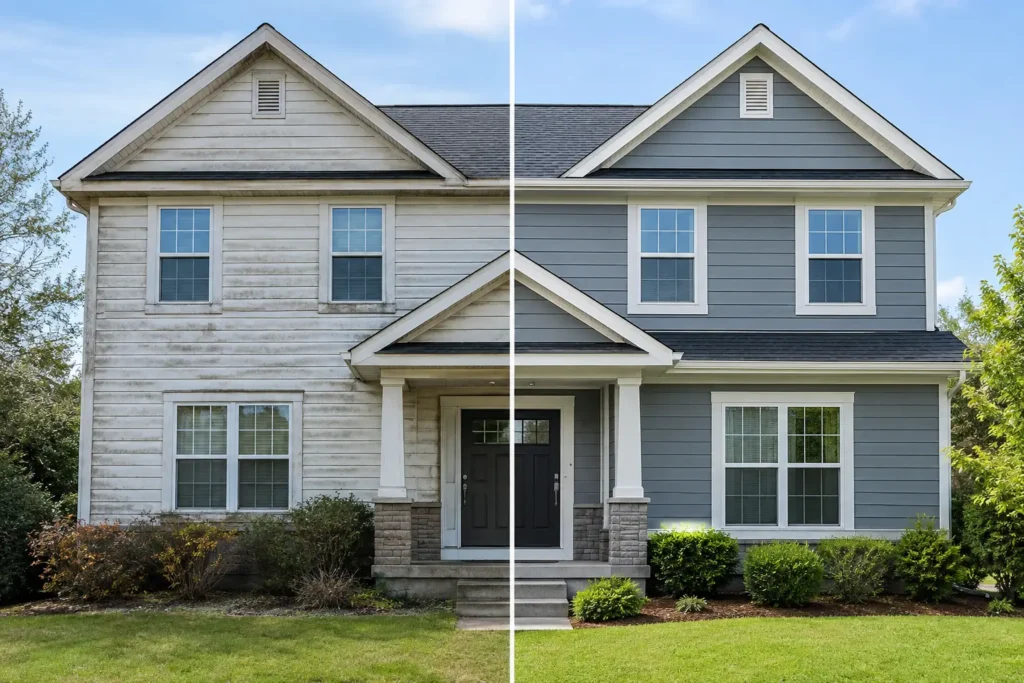
A siding replacement before after comparison can make a home’s transformation look simple: faded panels disappear, fresh lines sharpen the exterior, and curb appeal returns. But the most valuable changes are often behind the new siding. For Central New York homeowners, a properly planned replacement can address moisture exposure, failing trim, drafts, and weather-related wear that photos alone cannot show.
New siding should do more than give your home a cleaner appearance. It should create a dependable exterior system that stands up to snow, wind-driven rain, freeze-thaw cycles, and the temperature swings common around Syracuse.
What You Can See Before Siding Replacement
The “before” condition usually tells a homeowner why it is time to call for an inspection. Cracked or warped panels, peeling paint, loose sections, and visible gaps around windows are clear warning signs. So are boards that feel soft when pressed, recurring staining, or caulk that repeatedly separates from trim.
Some homes have damage concentrated on one wall, often where prevailing wind and rain hit hardest. Others show broad aging across the exterior: color fading, chalking, brittle vinyl, swelling engineered wood, or old wood siding that needs more frequent maintenance than it can reasonably deliver.
Appearance matters, especially if you are preparing to sell or simply want your property to reflect the care you put into it. Still, an experienced contractor looks past appearance. The siding may be the visible symptom while the underlying concern is water getting through a failed seam, damaged flashing, deteriorated sheathing, or an improperly sealed window opening.
What Changes After a Proper Siding Replacement
A strong siding replacement begins with removal and inspection, not with covering old problems. Once existing siding comes off, the crew can assess the condition of the wall surface, trim areas, window and door openings, and transition points where siding meets the roof, masonry, or foundation.
A Cleaner, More Protected Wall System
The most important before-and-after change may be a weather-resistant barrier installed or repaired behind the siding. This layer helps manage water that gets past the outer cladding and directs it away from vulnerable areas. Proper flashing at windows, doors, roof-to-wall intersections, and other transitions is equally important.
If damaged sheathing or trim is discovered, it should be addressed before new siding goes up. Skipping this step can leave rot or moisture issues trapped behind a beautiful new exterior. It may add to the project scope, but it is far less costly than tearing into recently installed siding later.
Straighter Lines and Stronger Details
After replacement, homeowners often notice the details first: crisp corners, secure trim, even panel courses, clean soffit and fascia connections, and properly finished areas around windows and doors. These are not just cosmetic touches. They help the siding perform as designed and give the home a finished, well-maintained appearance.
Good installation also accounts for movement. Many siding materials expand and contract with changing temperatures. Panels that are fastened too tightly can buckle, while loose or poorly aligned panels can rattle in high winds. The finished exterior should look neat while still allowing the material to perform through Central New York’s changing seasons.
Better Comfort May Be Part of the Result
New siding is not automatically an insulation upgrade, but it can be an opportunity to improve comfort. If there are gaps around openings or air leaks at exterior walls, repairs during the project can help reduce drafts. Some homeowners also choose insulated siding or add appropriate wall improvements where practical.
The results depend on the home’s existing construction, attic insulation, windows, and heating system. No contractor should promise a specific energy savings number without evaluating the property. What a quality replacement can do is improve the exterior envelope and eliminate obvious pathways for wind and moisture intrusion.
Why Before-and-After Photos Do Not Tell the Whole Story
Photos are helpful for seeing color choices, profiles, trim combinations, and general craftsmanship. They can help you picture how a lighter color brightens a ranch home or how darker siding creates contrast around white windows. They cannot confirm what was found behind the old siding or whether the wall was properly prepared.
When reviewing a contractor’s work, ask about the process behind the finished photo. Was damaged material replaced? How are windows flashed? What happens if rot is discovered after removal? How will the crew protect landscaping and clean up debris? Straight answers to these questions tell you more about the project than a dramatic color change.
Choosing Materials for Central New York Weather
The right siding material depends on your budget, maintenance expectations, architectural style, and the condition of your home. Vinyl siding remains a practical choice for many homeowners because it offers dependable weather resistance, low maintenance, and a wide range of colors. It is not indestructible, however. Impact damage, extreme temperature changes, and poor installation can still cause problems.
Fiber cement offers a more substantial look and strong durability, but it typically costs more and requires careful installation. Engineered wood can provide a warm, traditional appearance with improved resistance compared with older wood siding, although it still requires attention to proper sealing and maintenance. Natural wood delivers character that many homeowners love, but it demands the most consistent upkeep.
There is no one material that is right for every house. A clear estimate should explain the available options, what is included in the installation, and where costs may change if concealed damage is found.
The Before-and-After Decisions That Affect Cost
A siding estimate is shaped by more than square footage. Homes with multiple stories, steep rooflines, extensive trim, dormers, porches, masonry transitions, or difficult access require more labor and detail work. Tear-off and disposal, sheathing repair, new trim, soffit, fascia, gutters, and window or door updates can also affect the final investment.
This is why unusually low estimates deserve a closer look. A lower price may not include removal of existing materials, replacement of damaged wood, flashing work, or cleanup. It may also rely on shortcuts that can create problems once the weather turns.
Transparent pricing does not mean every unknown can be predicted before the siding comes off. It means you understand the base scope, the materials being used, and how the contractor will communicate if hidden conditions are uncovered. That approach gives homeowners control rather than surprises.
When to Schedule a Siding Inspection
Do not wait until a section falls away from the house. Schedule an inspection if you see persistent moisture stains, loose or cracked panels, wood rot, insect activity, bubbling paint, rising maintenance needs, or drafts near exterior walls. After a severe windstorm, inspect the siding from the ground for missing pieces, shifted panels, and damage around corners and roof edges.
Storm damage can be easy to miss, particularly when wind loosens siding without fully tearing it away. Prompt documentation and a professional assessment can help clarify whether the issue is limited to a repair or whether replacement makes more sense. For homeowners navigating a storm-related claim, clear photos, an itemized scope, and an honest explanation of damage are useful from the start.
Plan for an Exterior That Holds Up
A successful project is not measured only by the dramatic reveal on installation day. It is measured by how well the siding protects your home through the next hard rain, winter freeze, and summer heat wave. Alpha Omega Roofing LLC helps homeowners evaluate exterior concerns honestly, explain the available options, and complete siding work with the attention to detail a long-term investment deserves.
If your exterior is showing its age, start with an inspection rather than a guess. The right plan can turn a worn-looking wall into a cleaner, better-protected part of your home – and give you confidence in what is behind the finished surface.