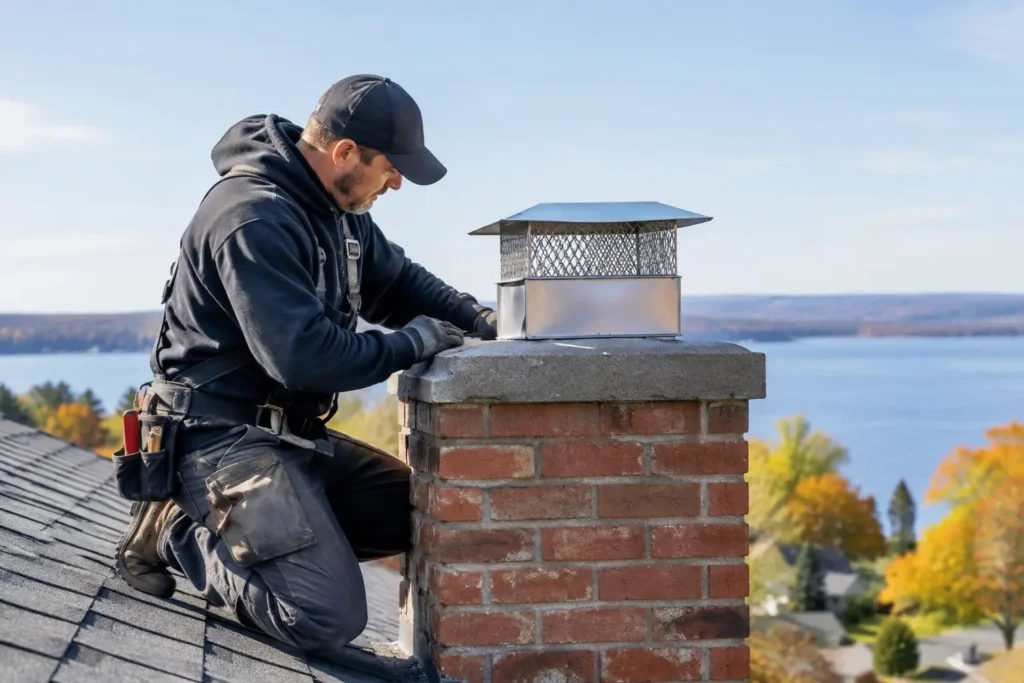
A chimney can look solid from the driveway while water is already working its way through cracked mortar, failing flashing, or loose brick near the roofline. A qualified Baldwinsville chimney repair contractor helps homeowners find the actual source of the problem before a small masonry issue turns into interior water damage, roof rot, or a more expensive rebuild.
Central New York chimneys take a hard hit from snow, ice, wind, and repeated freeze-thaw cycles. When moisture enters even a small crack in masonry, it expands as temperatures drop. Over time, that pressure can loosen mortar joints, break brick faces, and create openings where water can enter the home. Prompt repair protects more than the chimney itself. It protects the roof system and the structure around it.
When Chimney Damage Needs Professional Attention
Some chimney concerns are easy to spot. A leaning stack, missing bricks, crumbling mortar, or a metal cap that has blown loose should be inspected quickly. Other warning signs show up inside the house first, such as a ceiling stain near the chimney, damp insulation in the attic, a persistent musty smell, or paint that bubbles on an interior wall.
Water stains do not always mean the roof is failing. Chimney flashing, the metal transition where the chimney meets the roof, is one of the most common leak points on older homes. A repair may involve replacing damaged flashing, but it may also require masonry work if water is entering through deteriorated crown concrete or open mortar joints above the roof.
A professional inspection matters because the visible damage is not always the whole story. Repointing a few loose joints may be the right fix for one chimney. For another, widespread spalling brick or a cracked crown may mean a more involved restoration is the better long-term value.
What a Baldwinsville Chimney Repair Contractor Should Inspect
A proper chimney assessment should look beyond a single cracked area. The goal is to identify where water enters, how far the deterioration has spread, and whether adjacent roof components have been affected.
The inspection should include the chimney crown, cap, flue area, brick and mortar joints, flashing, roof shingles around the chimney, and the attic or interior areas when accessible. Contractors should also check whether the chimney is pulling away from the home, whether bricks are shedding their faces, and whether past repairs are holding up.
Homeowners should expect a clear explanation in plain language. You should know what is urgent, what can be monitored, and what repair approach is being recommended. A dependable contractor will not push a full rebuild when localized repairs can safely address the issue. At the same time, patching a severely compromised chimney may only delay a larger problem.
Common Chimney Repairs and Why They Matter
Chimney repair is not one service. The right scope depends on the location and cause of the damage.
Tuckpointing and mortar joint repair
Mortar usually fails before the brick does. Tuckpointing, often called repointing, removes damaged mortar from joints and replaces it with new mortar designed to hold up against weather exposure. This keeps water from reaching deeper into the masonry and helps preserve the chimney’s structural strength.
The trade-off is timing. If only a few joints are failing, spot repair may be enough. If mortar is soft, cracked, or missing across much of the stack, addressing the wider area can prevent repeated service calls and a patchwork appearance.
Chimney crown repair
The crown is the concrete or masonry top that directs water away from the chimney. Cracks, poor slope, and worn edges allow water to soak into the brickwork below. A repair may involve sealing small cracks or rebuilding the crown when it is badly deteriorated.
A crown is exposed to every storm and temperature change. Repairing it before winter is often far less costly than dealing with extensive brick damage after several seasons of water intrusion.
Flashing repair or replacement
Flashing is critical because it bridges two different parts of the house: masonry and roofing. It must be installed correctly, layered with the roofing materials, and sealed without relying on caulk alone. Failed flashing can create a leak that appears near the fireplace, in an upstairs room, or along a nearby exterior wall.
Temporary sealants can sometimes help in an emergency, especially when active water is entering during a storm. They are not a substitute for properly installed flashing and a sound masonry surface.
Brick replacement and partial rebuilds
Bricks that are cracked, loose, or flaking apart need attention. In Central New York, spalling often happens after brick absorbs water and freezes repeatedly. Replacing compromised bricks and rebuilding unstable sections protects the chimney from further deterioration.
When the upper portion of a chimney is failing while the lower section remains sound, a partial rebuild can be a practical option. Full rebuilding is generally reserved for major structural instability, extensive masonry failure, or a chimney that cannot be safely restored in sections.
Why Roof and Chimney Work Often Belong Together
A chimney repair should not be treated as separate from the roof around it. The shingles, underlayment, flashing, and masonry all work together to keep water outside. If shingles near the chimney are damaged or aging, replacing flashing without addressing the surrounding roof materials may limit the lifespan of the repair.
This does not mean every chimney repair requires a roof replacement. It means the contractor should evaluate the entire area and explain how each component affects the others. That approach avoids the frustration of fixing one visible issue only to discover another leak path after the next heavy rain.
Alpha Omega Roofing LLC handles both roofing and chimney-related exterior repairs, giving homeowners one clear point of contact when the problem involves both systems. That is especially useful after windstorms, ice damage, or a long winter that exposes several weak spots at once.
Questions to Ask Before Hiring a Chimney Repair Contractor
A contractor should be able to answer straightforward questions about the repair without making the process confusing. Ask whether they are insured, what they found during the inspection, why a particular repair is recommended, and whether the estimate includes flashing or roof repairs if needed.
It is also reasonable to ask how the work will be protected from weather, what materials will be used, and whether damaged debris will be removed from the property. Photos of damaged areas can be helpful, particularly for masonry high above the roofline where homeowners cannot safely inspect the condition themselves.
Be cautious with vague estimates that only say “chimney repair” without describing the work. A detailed scope does not need to be overly technical, but it should identify whether the project includes repointing, crown work, brick replacement, flashing repair, or rebuilding. Clear pricing and a clear scope reduce surprises once work begins.
Do Not Wait for a Chimney Leak to Get Worse
Chimney problems rarely improve on their own. Rain may expose the issue first, but snow buildup and freeze-thaw weather can accelerate the damage quickly. If water is actively coming into the home, protect the interior as best you can and call for prompt service. Avoid climbing onto a wet or icy roof to inspect the chimney yourself.
For non-emergency concerns, scheduling an inspection before winter or after a major storm gives you time to make informed decisions. A small repair completed under dry conditions can prevent a midwinter leak, emergency tarp work, or damage to ceilings and insulation.
Your chimney should be a dependable part of your home, not a source of recurring water worries. If you see cracked mortar, loose bricks, damaged flashing, or stains near the chimney, a professional inspection can give you a practical repair plan and the confidence to move forward before the next stretch of rough weather.