
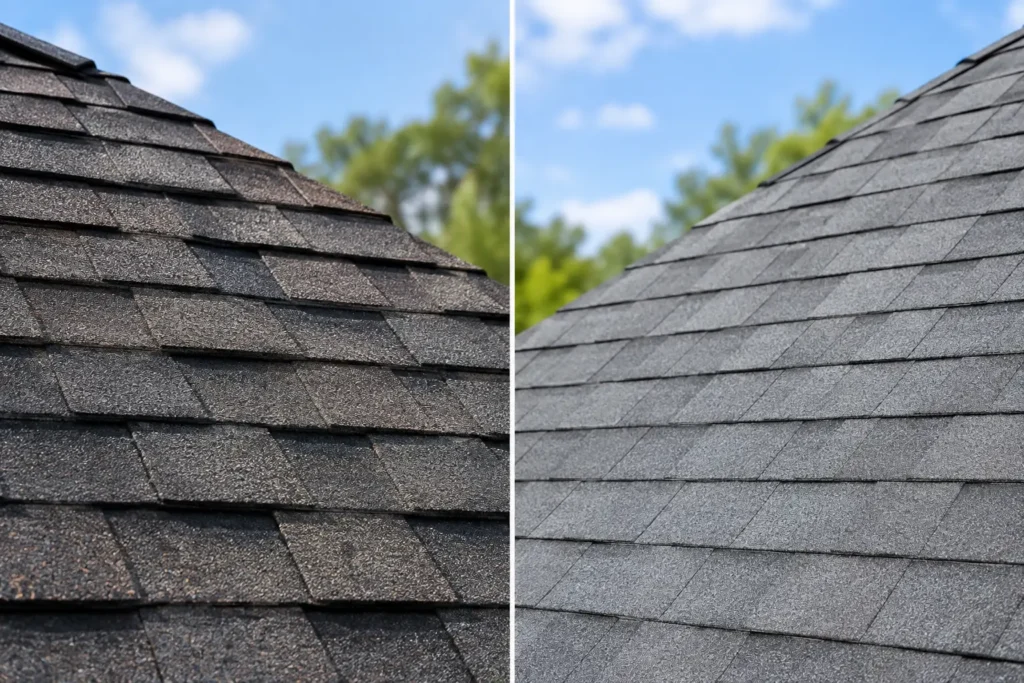
A roof replacement is not the time to choose shingles based on the lowest number on an estimate. In architectural shingles vs three tab comparisons, the right answer comes down to your home, your budget, and how much protection you need from Central New York snow, wind, ice, and heavy rain. Three-tab shingles can still serve a purpose, but architectural shingles are now the preferred choice for many homeowners because they offer a stronger look and more dependable long-term performance.
If your roof is aging, leaking, or missing shingles after a storm, a professional inspection can show whether replacement is needed and which material makes practical sense for your property.
Architectural Shingles vs Three Tab: The Basic Difference
Three-tab shingles are the traditional flat asphalt shingle. Each piece has three evenly sized tabs, creating a clean, uniform pattern across the roof. They are lighter, simpler in appearance, and generally less expensive than other asphalt roofing options.
Architectural shingles, sometimes called dimensional or laminated shingles, are built with multiple asphalt layers bonded together. That layered construction gives them more thickness and creates a textured, dimensional appearance. Rather than a repetitive tab pattern, they can resemble wood shake or high-end slate from the ground.
Both products are asphalt shingles, and both can protect a home when properly installed. The difference is not just appearance. Construction, wind rating, expected service life, repair considerations, and total ownership cost can all change with the shingle you select.
Why Architectural Shingles Are Usually the Better Investment
Architectural shingles cost more upfront, but that added cost often buys meaningful benefits for a homeowner planning to stay in the house. Their thicker construction generally makes them more resistant to wind uplift, impact from ordinary debris, and the wear that comes with changing seasons.
Many architectural shingle products have wind ratings around 110 mph when installed as part of the manufacturer-approved roofing system. Ratings vary by product and installation details, so homeowners should not assume every shingle offers the same protection. Still, the heavier build is a real advantage during the strong winds that can accompany Central New York storms.
They also tend to last longer. A properly installed architectural roof may provide roughly 25 to 30 years of service, and some premium products are designed for longer performance. Actual lifespan depends on attic ventilation, roof slope, sun exposure, ice dam history, maintenance, storm events, and installation quality.
Curb appeal is another major reason homeowners choose architectural shingles. A roof covers a large portion of the visible exterior. The shadows and depth of dimensional shingles can make an older home look more finished and can complement siding, brick, stone, and chimney features better than a flat three-tab pattern.
For homeowners considering resale within the next several years, architectural shingles are often the safer presentation. Buyers may not know the technical details of a roofing system, but they can recognize when a roof looks substantial, current, and well maintained.
When Three-Tab Shingles May Still Make Sense
Three-tab shingles are not automatically a poor choice. They are usually the lower-cost option, which can make them appropriate for a tight budget, a short-term property plan, or a simple repair where matching an existing three-tab roof is the priority.
They can also work well on smaller accessory structures, such as a detached garage or shed, when the owner wants basic protection without paying for a premium appearance. A three-tab roof may be a reasonable solution if the structure has limited value, low exposure, and no plans for a high-end exterior upgrade.
The trade-off is that three-tab shingles are thinner and flatter. They typically have lower wind resistance than architectural products and commonly offer a shorter service life, often in the range of 15 to 20 years under favorable conditions. On a home exposed to frequent wind, snow loads, ice, and freeze-thaw cycles, that lower initial price can become less attractive over time.
A roof should also be considered as a complete system. Underlayment, ice and water protection, flashing, ventilation, starter shingles, ridge caps, and workmanship matter just as much as the field shingles. Choosing an inexpensive shingle does not offset poor installation or skipped components.
Cost: Look Beyond the Estimate Total
Three-tab shingles generally cost less in material and may be somewhat faster to install because of their simpler design. Architectural shingles cost more per bundle, and premium styles may add further expense. The price difference for a full replacement depends on roof size, roof pitch, tear-off needs, decking repairs, accessibility, ventilation upgrades, and the roofing system selected.
The better question is not simply, “Which roof is cheaper?” It is, “Which roof gives this home the best value over the years I expect to own it?”
A homeowner who expects to move soon may place more weight on immediate cost. Someone planning to remain in the home for 15 or 20 years may find that the longer life, stronger appearance, and improved weather resistance of architectural shingles justify the investment.
Be cautious with estimates that compare only a single material price. A transparent roofing estimate should identify the scope of tear-off, underlayment, ice and water barrier areas, flashing work, ventilation, cleanup, and any potential decking repairs. That is how you compare roofing proposals fairly.
Weather Performance in Central New York
Syracuse-area roofs face conditions that test every part of a roofing system. Wind can loosen aging shingles. Driven rain can find weak flashing. Heavy snow and repeated freezing can expose ventilation problems and contribute to ice dams along the eaves.
Architectural shingles are not immune to storm damage, and no shingle can prevent problems caused by failing flashing, damaged decking, or severe ice buildup. However, their heavier, laminated construction typically gives them a better margin of protection than standard three-tab shingles.
That matters most on exposed homes, open lots, higher rooflines, and properties that have already experienced blown-off tabs or recurring shingle damage. If your roof has lost shingles after a wind event, the solution may involve more than replacing a few pieces. An inspection should check the surrounding shingles, seals, flashing, attic ventilation, and signs of moisture intrusion.
Appearance and Repair Considerations
Three-tab roofs have a simple, consistent appearance. If you prefer a traditional, understated roofline, that uniform pattern may appeal to you. Architectural shingles offer more color blends and visual depth, making it easier to select a roof color that works with the rest of the exterior.
Repairs can be possible with either style, but matching is not always straightforward. Shingles fade over time, and manufacturers may change colors or discontinue lines. A new repair can look noticeably different from an older roof, especially on a sun-exposed slope.
With three-tab shingles, individual replacement may be relatively simple when matching material is available. Architectural shingles can require more care to preserve the pattern and prevent damage to surrounding laminated shingles. In either case, a contractor should determine whether a targeted repair is reliable or whether widespread aging makes replacement the more sensible choice.
How to Choose the Right Shingle for Your Home
Start with the condition of the current roof. If it is near the end of its life, has widespread granule loss, curling, repeated leaks, or storm-related damage across multiple slopes, replacing it with a stronger architectural product is often the practical move.
Then consider your ownership plans, neighborhood expectations, and the home’s exposure. Architectural shingles are usually the best fit for a primary residence where long-term protection and curb appeal matter. Three-tab shingles can make sense for a lower-cost project, a secondary structure, or a situation where you are matching an existing roof.
Do not choose based on color samples alone. Ask the contractor to explain the shingle type, wind rating, warranty requirements, ventilation plan, ice and water protection, and flashing details. The best roof is the one installed correctly for your home, not simply the most expensive option on the shelf.
If wind, leaks, or visible shingle wear have you questioning your roof, Alpha Omega Roofing LLC can provide a clear inspection and straightforward replacement recommendation. A good roofing decision should leave you confident before the next hard rain or winter storm arrives.