
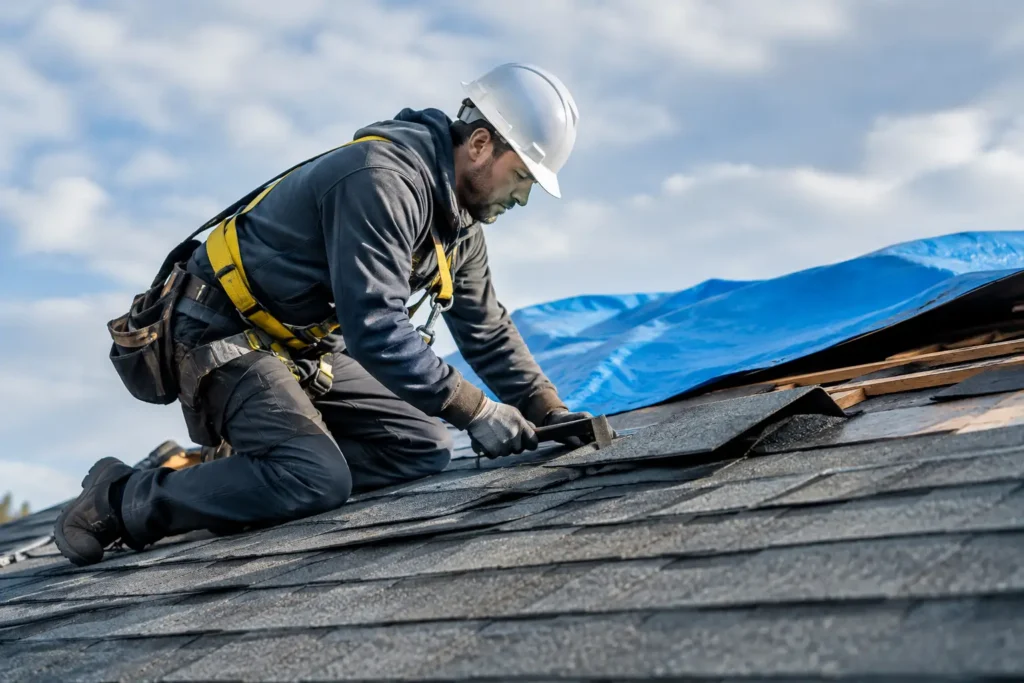
A 2 a.m. ceiling drip after a windstorm is not the time to guess whether a roof problem can wait. This emergency roofing example shows what a smart response looks like when water is getting into your home, shingles have blown off, or a tree branch has damaged the roof. The immediate goal is simple: protect people, limit interior damage, and get a qualified local roofer involved as soon as conditions are safe.
For homeowners in Syracuse and across Central New York, roof emergencies often follow high winds, heavy snow, ice buildup, driving rain, or falling limbs. The damage may look small from the ground, but a few missing shingles or a puncture in the roof can let water reach insulation, framing, drywall, and electrical components.
Emergency Roofing Example After a Windstorm
Imagine a homeowner wakes up after a strong overnight storm and finds water staining the ceiling in an upstairs bedroom. Outside, several shingles are visible in the yard. From the attic, the homeowner can see moisture on the roof decking near the leak.
This is an emergency because active water intrusion is already occurring. The right response is not to climb onto a wet, dark, wind-damaged roof with a tarp. That creates a serious fall risk and can cause more damage to weakened materials. Instead, the homeowner should move furniture and electronics away from the affected area, place a bucket beneath the drip, and use towels to contain spreading water. If the ceiling begins to bulge, treat it carefully as a potential collapse hazard and keep people out of the room.
The next call should be to an emergency roofing contractor. A professional crew can assess the damage safely, identify the source of the leak, and install temporary protection when needed. In this example, the contractor finds wind-lifted shingles and exposed underlayment around a roof penetration. Temporary weatherproofing stops additional water from entering until dry conditions allow for a proper repair.
That distinction matters. An emergency repair is designed to stabilize the situation. A permanent repair addresses the failed shingles, damaged flashing, underlayment, decking, and any related components that contributed to the leak.
What Counts as a Roofing Emergency?
Not every roofing concern requires same-day service. A small stain that has not changed, a few granules in a gutter, or an aging roof near the end of its expected life calls for an inspection, but it may not require emergency work.
A roofing issue becomes urgent when it threatens the home or the people inside it. Active leaks, missing shingles exposing the roof system, storm-created holes, fallen tree limbs, sagging areas, and chimney or flashing damage that allows water inside should be treated seriously. If water is near a light fixture, outlet, or electrical panel, avoid contact with the area and seek immediate help from the appropriate professional.
A roof can also be compromised without an obvious interior leak. After severe wind, an inspection is worthwhile if you see shingles scattered around the property, metal flashing pulled loose, bent gutters, visible roof debris, or branches resting on the roof. Catching the problem early can prevent a manageable repair from becoming a larger restoration project.
Temporary Protection Is Not a Finished Repair
Homeowners sometimes assume a tarp means the roof is fixed. It does not. A properly installed emergency tarp or temporary seal can be essential for preventing more water damage, especially when rain is still expected. But it is a short-term measure, not a substitute for restoring the roof system.
The permanent scope depends on the damage. It may involve replacing a limited section of shingles and flashing. In more serious cases, damaged decking must be replaced before new roofing materials can be installed. If storm damage affects a large portion of an older roof, a full replacement may make more sense than patching multiple weakened areas.
A trustworthy contractor should explain that difference clearly. You should know what is being done today to protect the home, what needs to be repaired later, and why the recommended scope is appropriate.
An Emergency Roofing Example With a Fallen Branch
A second emergency roofing example involves a large branch that falls during wet, heavy snow. The branch does not completely collapse the roof, but it punches through shingles and leaves a visible opening near the edge of the home.
The homeowner’s first instinct may be to remove the branch. That is not always safe. The branch may be under tension, roof framing may be damaged, and moving it can enlarge the opening. Keep everyone away from the affected area, especially if the roofline is sagging or debris has reached the attic or living space.
Once the area is safe, a roofing professional can inspect the extent of the damage and coordinate the next steps. The crew may remove debris, cover the exposed section, inspect roof decking and framing, and document damage for the homeowner. If the event may qualify as covered storm damage, clear photographs, dates, and a detailed assessment can help support an insurance claim.
Insurance claims can be stressful, particularly when water damage is developing by the hour. The practical priority is preventing additional damage while keeping records of what happened. Save photos of the roof, interior leaks, fallen debris, and any temporary protective measures. Keep receipts for reasonable emergency mitigation as well.
What Homeowners Should Do Before Help Arrives
You do not need roofing experience to take sensible steps during an emergency. Focus on safety and containment. Stay off the roof, keep children and pets away from damaged areas, and avoid touching wet electrical fixtures or wiring.
Inside the home, move valuables away from the leak and place containers under dripping water. If the water is spreading across a ceiling, protect floors with towels or plastic sheeting where possible. Take photos before moving items or cleaning up extensive damage. Those images may be useful for the repair process and for an insurance claim.
Outside, do a visual check only from the ground. Look for missing shingles, branches, loose metal, or visible holes, but do not stand beneath unstable limbs or damaged gutters. If conditions are still dangerous, wait for trained professionals.
Questions to Ask Your Emergency Roofer
When you are dealing with a leak, straightforward answers matter. Ask whether the roof can be safely stabilized today, what materials have been damaged, and whether temporary protection is needed before permanent work can begin. You should also ask whether the contractor sees signs of hidden decking damage or issues around flashing, vents, chimneys, or skylights.
Pricing should be explained in plain terms. Emergency response, temporary weatherproofing, and permanent repair may be separate parts of the project. That is normal, especially when a storm requires immediate action before a complete inspection is possible. What matters is receiving a clear explanation and a written scope for the work recommended.
For storm-related damage, ask what documentation the contractor can provide. A detailed inspection report and photos can give homeowners a clearer picture of the condition of the roof and the work required.
Why Fast Response Protects More Than the Roof
The cost of roof damage is rarely limited to shingles. Water that enters through a small opening can soak insulation, stain drywall, feed mold growth, damage flooring, and compromise wood framing over time. In winter, repeated thawing and refreezing can make an existing opening worse. In spring and summer, heavy rain can quickly overwhelm a roof that was only partially damaged during a prior storm.
Fast service does not mean rushing into an unnecessary replacement. It means getting an experienced set of eyes on the problem, stopping active water intrusion, and giving the homeowner a practical path forward. Sometimes that path is a focused repair. Sometimes the age and condition of the roof make replacement the better long-term decision. The answer depends on the damage, the existing roof system, and how much of the roof has been affected.
If your roof is leaking, missing shingles, or damaged by a storm, do not wait for the next rainfall to find out how serious it is. A prompt inspection and honest recommendation can protect your home, your budget, and your peace of mind. Alpha Omega Roofing LLC is ready to help Central New York homeowners assess urgent roof damage and take the right next step.