
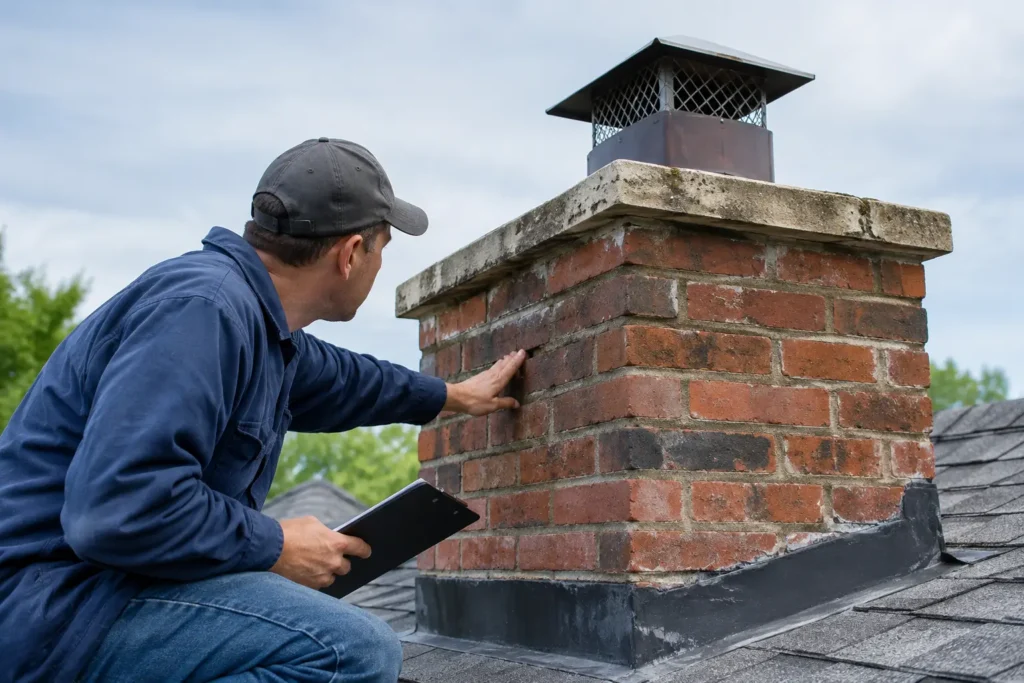
A water stain near the fireplace does not always mean the roof is failing. Chimneys create several points where roofing, metal flashing, brick, mortar, and concrete must work together. This guide to chimney leak causes explains where water commonly gets in, what the warning signs mean, and why a professional inspection is usually the fastest way to stop the damage before a Central New York winter makes it worse.
Why Chimney Leaks Are Easy to Misdiagnose
Water does not always appear directly below the opening that let it in. It can run down chimney framing, follow a roof deck, or travel along flashing before it reaches a ceiling or wall. A damp spot in the attic beside the chimney may come from cracked masonry, but it could also come from failed step flashing, worn shingles, or an ice dam higher on the roof.
That is why a proper chimney leak inspection should look at the chimney and the surrounding roof system. Sealing the visible crack without identifying the true entry point can leave the homeowner with the same leak after the next heavy rain or snowmelt.
The Most Common Chimney Leak Causes
Damaged or improperly installed flashing
Flashing is the metal material that seals the joint where the chimney meets the roof. It is one of the most common sources of chimney leaks because it must accommodate two very different surfaces: a fixed masonry structure and a roof that expands, contracts, and sheds water.
Step flashing should be woven correctly into the shingles along the chimney sides. Counterflashing should cover and protect the upper edge of that flashing at the brick or mortar joint. If either piece is loose, rusted, bent, missing, or covered with deteriorating caulk, water can work behind it.
Quick caulk repairs sometimes help temporarily, but caulk alone is rarely a long-term flashing solution. A lasting repair may require removing shingles around the chimney, replacing damaged flashing, and integrating new materials properly with the roof.
Cracked chimney crowns
The chimney crown is the concrete slab at the very top of the chimney. Its job is to direct rain and melting snow away from the brickwork and flue. When a crown cracks, water enters the masonry from above.
Small cracks can become major problems in Syracuse-area weather. Water enters, freezes, expands, and widens the crack. Over time, this cycle can break apart the crown, damage mortar joints, and allow moisture to reach the interior of the chimney structure.
A sound crown should slope outward and extend beyond the chimney walls so water does not sit against the brick. Depending on its condition, a crown may be sealable, repairable, or in need of replacement.
Missing or damaged chimney caps
A chimney cap sits over the flue opening. It keeps out rain, snow, leaves, nesting animals, and windblown debris while still allowing exhaust to vent safely. Without a cap, water can drop straight into the flue and collect inside the fireplace or chimney.
Signs of a cap-related issue include a musty fireplace odor, water in the firebox, rust on the damper, or moisture around the chimney base. A cap is a relatively straightforward component, but it must fit the flue correctly and be securely installed to withstand high winds.
Deteriorated mortar and porous brick
Brick is durable, but it is not waterproof. Mortar joints and masonry surfaces naturally wear down over time, especially after years of freeze-thaw cycles. Crumbling mortar, cracked joints, flaking brick faces, or white powdery deposits on the masonry can all point to moisture exposure.
When mortar fails, water can seep behind the brick and into the chimney structure. The repair may involve repointing, which means removing failing mortar and replacing it with new mortar suited to the masonry. After repairs cure, an appropriate breathable masonry water repellent may help reduce water absorption. The key word is breathable. A coating that traps moisture inside the masonry can create more damage over time.
Roof damage around the chimney
The chimney may be sound while the roof next to it is not. Missing shingles, cracked shingle tabs, failed underlayment, exposed nail holes, and damaged valleys can all send water toward the chimney opening.
This is especially common after strong winds or ice-related damage. Roof debris can collect behind a chimney, holding moisture in place and slowing drainage. On a steep roof, the upslope side of the chimney also needs a properly designed cricket or saddle in many cases. This small peaked structure directs water, snow, and debris around the chimney instead of letting it pile up behind it.
Condensation mistaken for a roof leak
Not every moisture problem is rainwater intrusion. An unlined, poorly vented, or cold chimney can develop condensation, particularly when warm indoor air meets a cold chimney surface. Condensation can cause dampness, odors, and staining that may look like a roof leak.
The timing offers a clue. If moisture appears mainly during cold weather or when the fireplace is in use, rather than after rain, condensation deserves consideration. A qualified contractor can help distinguish between condensation, a chimney leak, and an attic ventilation issue before recommending repairs.
Warning Signs That Should Not Wait
Homeowners do not need to climb onto the roof to recognize a potential chimney problem. Watch for these signs inside and outside the home:
- Brown ceiling stains or peeling paint near the chimney
- Damp insulation, wet framing, or a musty attic smell
- Loose, rusted, or visibly lifted flashing at the roofline
- Cracked crowns, missing caps, or broken chimney bricks
- White mineral staining, spalling brick, or crumbling mortar joints
A minor drip can turn into rotted roof decking, damaged insulation, mold growth, and interior repairs. If water is actively entering the home, place a container beneath the drip if it is safe to do so, move valuables away from the area, and arrange an inspection promptly. Do not climb a wet roof or try to cover a chimney yourself during a storm.
How Professionals Find the True Source
A useful inspection starts with the roof, not just the stain on the ceiling. A contractor should examine the shingles and underlayment around the chimney, step and counterflashing, chimney crown, cap, mortar joints, brick condition, and attic area when accessible.
The goal is to identify the path of water, not simply the nearest visible defect. For example, a cracked crown and loose flashing can exist at the same time. Repairing only one issue may reduce the leak without fully stopping it.
Photos and a clear explanation matter. Homeowners should understand whether the recommended work is a targeted repair, a masonry restoration, or part of a broader roof repair. The right solution depends on the chimney’s condition, roof age, slope, flashing design, and whether storm damage is involved.
Repair Choices Depend on the Cause
There is no single “chimney leak repair.” Replacing a cap will not solve failed flashing. Repointing mortar will not correct shingles that have blown off. A dependable repair plan matches the material and method to the actual source.
For flashing issues, the repair may involve new step flashing, counterflashing, ice and water protection, and replacement shingles around the chimney. For masonry issues, the work may include crown repair, repointing, brick replacement, or a breathable water-repellent treatment after the masonry is restored. If storm damage affected both the roof and chimney, documenting the condition early can also help when discussing a potential insurance claim.
Be cautious with anyone who recommends coating the entire chimney or applying a heavy bead of sealant without inspecting the roof transition. These approaches can be useful in limited situations, but they should not substitute for correcting failed flashing, deteriorated mortar, or structural damage.
Preventing Future Chimney Water Damage
A chimney should be checked as part of regular roof maintenance, particularly after severe wind, hail, or a harsh winter. Keep roof valleys and the area behind the chimney clear of branches and heavy debris. From the ground, periodically look for loose caps, damaged brick, open mortar joints, and flashing that appears pulled away.
If your roof is nearing replacement age, ask how the chimney flashing and any cricket behind the chimney will be handled. Reusing severely worn flashing during a roof replacement can create a weak point in an otherwise new roof.
When water shows up near a chimney, acting early protects more than the masonry. Alpha Omega Roofing LLC can inspect the roof and chimney transition, explain what is causing the problem, and help you choose a repair that protects your home through the next Central New York storm.