
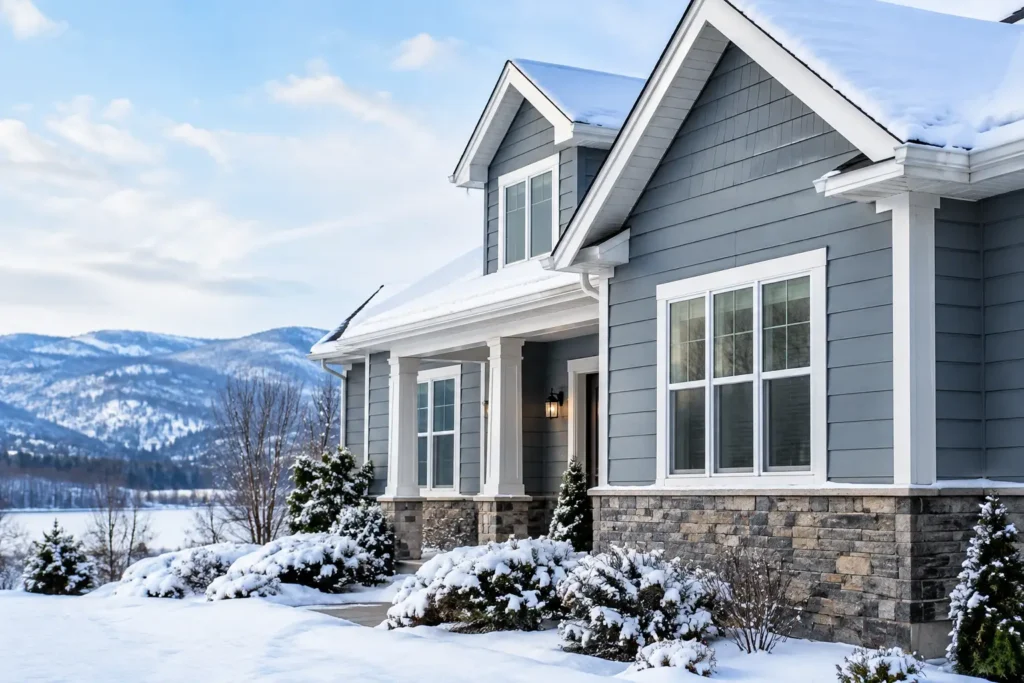
A Central New York winter can expose every weakness in a home’s exterior. Wind-driven snow finds loose panels, repeated freeze-thaw cycles stress joints and trim, and melting snow can push moisture where it does not belong. The best siding options cold climates demand are not simply the ones that look good in a showroom. They need to handle moisture, temperature swings, impact, and years of seasonal wear without becoming a constant repair project.
For homeowners in Syracuse and surrounding communities, the right choice depends on the home, the budget, and the condition of the wall assembly underneath the existing siding. Material matters, but installation details matter just as much. Proper flashing, house wrap, insulation, trim work, and ventilation are what help siding perform through long winters and wet springs.
What Cold Weather Does to Siding
Cold weather does not damage every type of siding in the same way. Vinyl can become more brittle in extreme temperatures. Wood can absorb moisture, then expand and contract as conditions change. Fiber cement and engineered wood can perform well, but only when they are installed with the correct clearances, fasteners, and moisture protection.
Ice dams and roof runoff can also affect siding near eaves, gable ends, chimneys, and lower wall sections. If gutters overflow or snow sits against the home, water can work behind siding and cause rot, staining, mold, or damaged sheathing. That is why a siding project should begin with an honest look at the roofline, gutters, fascia, and any existing water intrusion.
Best Siding Options for Cold Climates
There is no single best material for every Central New York home. The strongest choice is the one that matches your maintenance expectations, budget, architectural style, and the amount of weather exposure your property receives.
Insulated Vinyl Siding
Vinyl siding remains a practical choice for many homeowners because it is cost-effective, low maintenance, and available in a wide range of colors and profiles. Quality vinyl siding resists rot and insect damage, and it does not require regular painting. Insulated vinyl adds a rigid foam backing that can improve the look of the wall by reducing waviness while providing a modest boost in thermal performance.
The trade-off is that vinyl can crack if it takes a hard impact during very cold weather. It also expands and contracts with temperature changes, so it must be installed with the right nail placement and room for movement. Tight nailing or poorly finished trim can lead to buckling and visible gaps.
For a well-maintained home with proper roof drainage, insulated vinyl is often a sensible balance of appearance, value, and weather resistance. It is especially appealing when homeowners want a clean exterior update without the cost of premium cladding materials.
Fiber Cement Siding
Fiber cement siding is a strong contender for homeowners who want a more substantial, painted-wood appearance without the maintenance demands of traditional wood. It is resistant to fire, pests, and rot, and it stands up well to wind and temperature changes when installed correctly.
This material is heavier and more labor-intensive than vinyl, which means installation costs are typically higher. It also needs a quality paint finish and periodic repainting over its service life. Those maintenance requirements are not necessarily a drawback, but they should be part of the budget from the start.
Fiber cement is a good fit for homeowners who prioritize durability, crisp curb appeal, and a material that can handle the changing seasons without the vulnerability of natural wood. Proper clearances from roofs, decks, grade, and hard surfaces are critical, particularly where snow and moisture can collect.
Engineered Wood Siding
Engineered wood siding offers the warm, traditional look many homeowners want, with better moisture and impact resistance than conventional wood siding. It is often lighter and easier to install than fiber cement, and factory-applied finishes can provide a durable starting point for long-term performance.
Like any wood-based product, it depends on correct installation. Cut edges, fasteners, joints, and transitions around windows and doors need careful treatment to keep water out. It also requires periodic repainting or refinishing, depending on the product and exposure.
For homes in established neighborhoods where architectural character matters, engineered wood can be an attractive middle ground. It delivers a more authentic wood look than vinyl while avoiding some of the upkeep associated with cedar or pine.
Natural Wood Siding
Wood siding has lasting appeal, especially on historic homes, cottages, and properties with a traditional Central New York style. Cedar can resist decay better than many other wood species, and wood can be repaired in smaller sections rather than requiring a full wall replacement.
However, natural wood demands consistent maintenance. Paint or stain needs attention, caulk joints must be monitored, and any damaged boards should be addressed quickly. Without that care, moisture can lead to peeling finishes, rot, and insect activity.
Wood is not the easiest option for a homeowner seeking low maintenance, but it can be the right choice when appearance is the priority and there is a realistic plan for upkeep. A professional inspection can identify whether existing wood siding can be restored or whether replacement makes better long-term sense.
Brick or Stone Veneer Accents
Masonry veneer is rarely used as the only siding material on a typical home, but it can be an excellent complement around entryways, lower wall sections, chimneys, and front-facing gables. It brings durability and a high-end appearance, and it does not react to cold the way vinyl or wood products can.
The concern is water management. Cracked mortar, failed flashing, and poor drainage behind veneer can allow moisture into the wall system. In freeze-thaw conditions, trapped water can worsen cracks and lead to spalling. When masonry is part of the exterior plan, it should be installed or repaired by professionals who understand flashing and drainage details.
Do Not Choose Siding on Material Alone
Even premium siding can fail early if the wall beneath it has unresolved problems. Before installing new siding, check for soft sheathing, rotted framing, leaking windows, missing kick-out flashing, failing gutters, and roof damage near the eaves. Covering these issues may improve curb appeal temporarily, but it will not stop moisture from causing more damage.
A complete siding project should include properly installed water-resistive barrier material, flashing around windows and doors, sealed penetrations, and correctly integrated trim. If your home has cold rooms or high heating costs, it is also worth discussing exterior wall insulation while the siding is removed. That may be the best opportunity to improve comfort without opening finished interior walls.
Color deserves a practical conversation, too. Dark siding can look sharp, but it may show fading differently over time and can make expansion and contraction more noticeable on vinyl. Lighter colors may be more forgiving on highly exposed walls. The right answer comes down to material, sun exposure, and the look you want for the home.
When Existing Siding Needs Attention
You do not need to wait for a major failure to schedule an exterior inspection. Look for cracked or loose panels, peeling paint, swollen trim, soft spots, recurring stains, gaps at joints, or siding that has pulled away from the wall. Inside the home, drafty rooms, damp wall areas, and unexplained discoloration can also point to an exterior moisture problem.
After a windstorm, inspect the areas around roof edges, chimneys, and gutters. A roofing issue can quickly become a siding issue when water is directed down the wall. Addressing both systems together is often more cost-effective than repairing the same damage in separate phases.
Choose Installation Built for Central New York Weather
The best siding material will only perform as well as the installation behind it. A contractor should explain what they find, show you where water may be entering, and give you clear options instead of pushing a one-size-fits-all product. Ask how flashing will be handled, whether damaged sheathing will be replaced, and how the new siding will integrate with roofing, gutters, windows, and masonry.
Alpha Omega Roofing LLC helps homeowners evaluate exterior damage and choose siding solutions built for harsh local conditions. A careful inspection can separate a cosmetic update from a necessary repair and help you invest in work that protects the home for the long term.
If your siding is showing its age, do not wait for another freeze-thaw season to make a small opening a larger water problem. A straightforward exterior assessment can give you a clear path forward and more confidence before winter weather returns.