
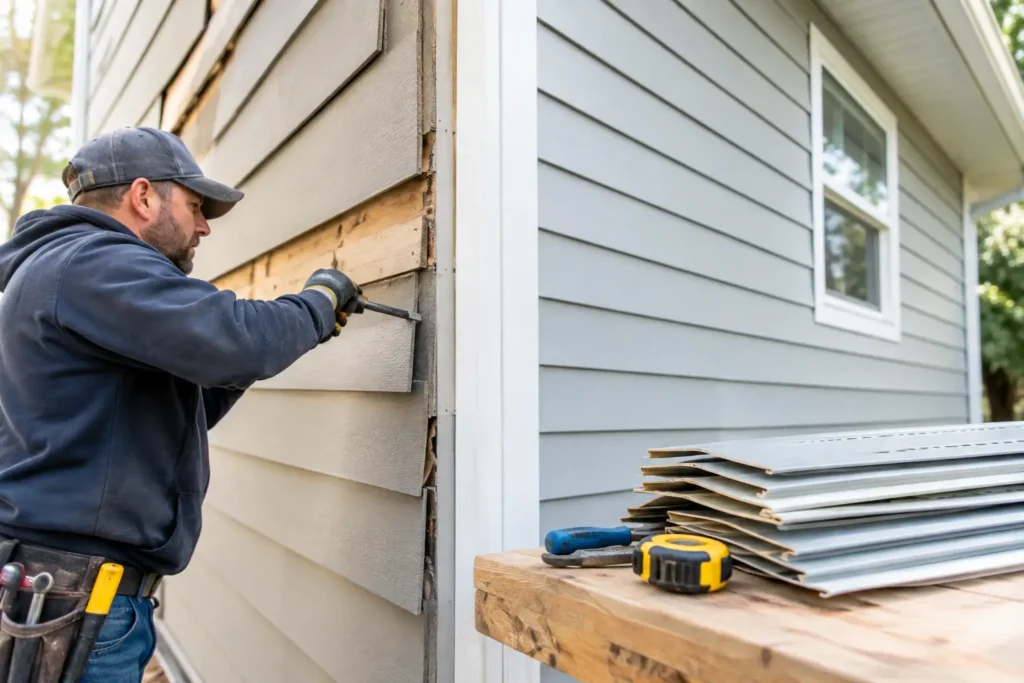
A loose panel after a windstorm may look like a small problem, but siding damage can allow water to reach the sheathing and framing behind it. When homeowners compare siding repair versus replacement costs, the real question is not just what costs less today. It is whether a targeted repair will reliably protect the home through another Central New York winter.
The right answer depends on the age and condition of the siding, how widespread the damage is, the material on your home, and whether moisture has gotten behind the exterior. A professional inspection helps separate a manageable repair from a problem that will keep growing.
What Does Siding Repair Usually Cost?
Siding repair is typically the more affordable option when damage is contained to one area. A contractor may be able to replace a few cracked vinyl panels, refasten loose sections, repair trim, seal a small opening, or replace damaged wood boards without disturbing the rest of the exterior.
For many homes, a minor siding repair can range from a few hundred dollars to around $1,500. More involved repairs can cost more when they include multiple elevations, specialty materials, difficult access, damaged trim, or water-related work beneath the siding. If the wall needs new house wrap, sheathing, or framing repairs, the project is no longer just a cosmetic siding fix.
Material makes a difference. Vinyl is often less expensive to repair than fiber cement or natural wood, while aluminum repairs may involve matching older profiles or addressing dents and corrosion. Brick veneer, stone, and other masonry exteriors require a different repair approach altogether.
A repair is usually the best value when the siding is otherwise in good shape and the affected area is limited. Examples include a few panels blown loose by wind, isolated impact damage, a small section affected by a roof leak, or a localized area of rot around a window that has already been corrected.
Siding Repair Versus Replacement Costs: The Bigger Picture
Whole-home siding replacement has a much higher upfront price because it involves removing or covering the existing siding, preparing the walls, installing new materials, finishing trim details, and properly flashing openings. For a typical home, replacement often falls in the several-thousand-dollar range and can reach well beyond that based on square footage, material, architectural details, insulation upgrades, and repairs found after old siding comes off.
Vinyl siding generally has a lower installed cost than fiber cement, engineered wood, or premium composite options. However, the least expensive material is not always the least expensive ownership choice. A durable product installed correctly can reduce maintenance demands, improve weather resistance, and avoid recurring patchwork repairs.
The key comparison is simple: one repair may be economical, but repeated repairs across several walls can become an expensive way to postpone replacement. If a homeowner spends $1,000 to $2,000 every year or two correcting cracks, loose panels, rot, fading, or leaks, a replacement estimate deserves serious consideration.
Replacement can also provide value that is harder to measure on an invoice. New siding can improve curb appeal, help correct poor flashing details, create an opportunity to inspect the wall system, and improve the home’s resistance to wind-driven rain. For a homeowner planning to stay in the house for years, that added protection may carry real weight.
When Repair Is the Smart Financial Choice
A focused repair makes sense when the problem has a clear cause and the rest of the siding still has useful life left. It is especially practical after a recent storm when debris, wind, or ice has damaged a limited area.
Repair is often worth pursuing when:
- Damage is limited to a small, accessible section of one wall.
- The existing siding is structurally sound and not near the end of its service life.
- Replacement panels or boards are available in a close color and profile match.
- There are no signs of widespread water intrusion, rot, pest damage, or failing house wrap.
Color matching deserves an honest conversation. Even if the same siding product is still made, older panels may have faded from sunlight and weather exposure. A new section can stand out. Sometimes the difference is minor; other times, it is visible enough that a homeowner may choose to replace a full wall for a more consistent appearance.
For storm-related damage, documentation matters. Photos, inspection notes, and a detailed scope of work can help establish what happened and what repairs are necessary. Insurance coverage depends on the policy and the cause of loss, so homeowners should avoid assuming that every aging or maintenance issue is covered.
Signs Replacement May Save You More Over Time
Replacement becomes the better investment when the damage is not isolated or when the siding has stopped doing its primary job: keeping water out of the wall assembly. A fresh-looking patch cannot solve a system-wide problem.
Watch for cracking, warping, buckling, soft spots, recurring loose panels, widespread fading, peeling paint, or sections that feel spongy when pressed. On wood siding, rot and repeated paint failure can signal moisture problems. On vinyl, brittle panels, frequent cracking, and missing sections after ordinary winds may indicate that the material has aged beyond practical repair.
Interior clues matter too. Staining around windows, musty odors, peeling interior paint, or drafts along exterior walls can point to water or air leaks that deserve prompt attention. The siding may not be the only cause, but it should be inspected as part of the exterior system.
Replacement is also worth considering when repairs would require work in many separate locations. A contractor can patch five areas, but if every patch reveals another weak section, homeowners can end up with uneven color, repeated disruption, and no clear endpoint.
Factors That Change Your Final Price
Online price ranges are useful for setting expectations, but they cannot replace an on-site inspection. Two homes with the same square footage can have very different siding costs.
The home’s height and layout matter. A single-story ranch with clear access is generally simpler than a two-story home with gables, dormers, porches, bump-outs, and landscaping close to the walls. Labor increases when crews need additional safety equipment or must carefully work around masonry, decks, utility lines, and finished outdoor spaces.
Hidden damage is another major variable. Once damaged siding is removed, a contractor may find compromised sheathing, failed flashing, deteriorated trim, or moisture damage near windows and roof-to-wall intersections. Addressing those issues raises the project cost, but leaving them behind undermines the purpose of the repair.
Material selection affects both current cost and future maintenance. Vinyl can be a practical choice for many budgets. Fiber cement offers a different look and durability profile but requires more labor-intensive installation. Engineered wood and composite products may appeal to homeowners seeking a specific appearance or added impact resistance. The right fit depends on the home, budget, and maintenance expectations.
Do Not Let a Small Opening Become a Wall Repair
Siding does more than define curb appeal. It works with flashing, trim, house wrap, roofing, gutters, and windows to direct water away from the structure. A gap near a window or roofline can allow water in long before a homeowner sees evidence indoors.
That is why quick fixes should be handled carefully. Caulk may be appropriate in certain trim details, but it is not a substitute for a properly installed siding panel, flashing repair, or replacement of rotten material. Covering a damaged area without finding the source of the moisture can trap the problem where it is hardest to see.
If damage followed high winds, falling branches, ice, or a roof leak, ask for an inspection that looks beyond the visible siding. A reliable contractor should explain what is damaged, what can be repaired, what should be monitored, and what replacement would solve. Straight answers make it easier to spend wisely.
Get a Clear Scope Before You Decide
The best estimate is not automatically the lowest number. It should clearly identify the damaged areas, materials being used, preparation work, repairs that are included, and conditions that could change the price. If replacement is recommended, ask why spot repair is not expected to last. If repair is recommended, ask how the contractor will prevent the same failure from returning.
For Syracuse-area homeowners, Alpha Omega Roofing LLC can inspect siding concerns after storms, leaks, or years of weather exposure and explain the practical options without pressure. The goal is simple: protect the home with work that makes sense for its condition and your budget.
A damaged panel may be a small repair, or it may be the first visible warning that the exterior needs more attention. Getting a professional assessment early gives you the best chance to choose the right fix before water turns a siding decision into a larger wall repair.