
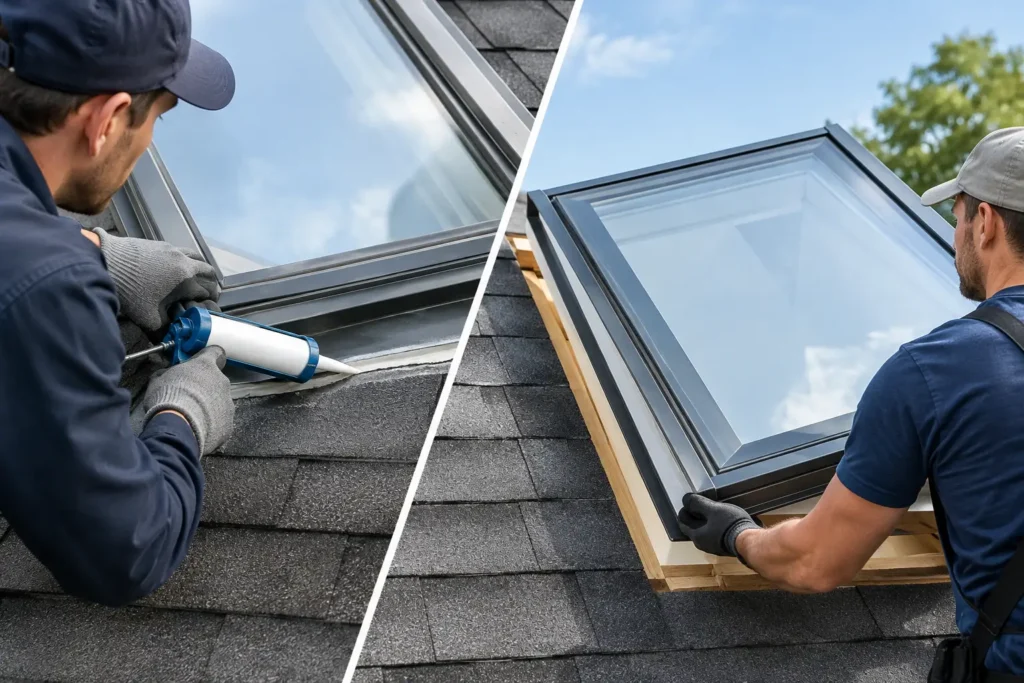
A skylight leak can look minor at first: a damp ring around the trim, a drip during heavy rain, or condensation that never seems to clear. But water around a roof opening deserves a fast, professional look. When weighing skylight repair versus replacement, the right answer depends on where the water is coming from, the skylight’s age, its condition, and how well it is integrated with the roof.
For Central New York homeowners, that decision matters even more. Snow loads, freeze-thaw cycles, wind-driven rain, and ice can all expose weak flashing, failed seals, and aging skylight frames. The goal is not simply to stop the visible drip. It is to protect the roof deck, insulation, ceilings, and structure below it.
Skylight Repair Versus Replacement: Start With the Source
Not every wet spot near a skylight means the skylight itself has failed. Water can enter through damaged shingles above the unit, deteriorated flashing, an ice dam, worn roof sealants, or a problem with the skylight glass or frame. Condensation can also mimic a leak, especially in bathrooms, kitchens, and rooms with limited ventilation.
That is why an inspection should come before a repair recommendation. A dependable roofer should examine the skylight, surrounding roofing materials, flashing system, interior ceiling area, and attic conditions when accessible. Replacing a skylight when the real issue is roof flashing wastes money. On the other hand, repeatedly patching a failed, outdated skylight can lead to bigger interior repairs later.
When Skylight Repair Makes Sense
Repair is often the practical choice when the skylight itself is in good shape and the issue is isolated. A newer unit with intact glass, a solid frame, and no signs of widespread seal failure may only need work around the exterior.
Common repairable problems include damaged or improperly installed flashing, loose roofing materials around the opening, small gaps in exterior sealing, and localized storm damage. A roof repair may also resolve a leak caused by missing shingles or worn underlayment above the skylight rather than the unit itself.
The skylight is relatively new
Quality skylights can provide many years of service when they are properly installed and maintained. If the unit is still within the earlier part of its expected lifespan, has no fogging between panes, and the frame is not cracked or warped, targeted repair can be a smart investment.
The leak is tied to flashing or roofing
Flashing directs water away from the skylight and onto the roof surface. If it has corroded, lifted, cracked, or was installed incorrectly, water can work its way beneath shingles and into the home. In many cases, removing the surrounding roofing materials and rebuilding the flashing system is enough to correct the problem.
Damage is limited and accessible
A small crack in a curb, a minor seal issue, or localized storm damage may be repairable if the rest of the skylight is sound. The key is whether the repair addresses the full cause of the problem rather than covering it with caulk or roof cement.
Temporary sealants can have a place during an emergency, especially when active water intrusion needs to be controlled. They are not a long-term solution for failed flashing, damaged glazing, or an aging skylight system.
Signs It Is Time to Replace a Skylight
Replacement is usually the better long-term choice when the skylight has reached the end of its useful life or has multiple failure points. Older skylights were often less energy-efficient than current models, and repeated repairs can add up quickly without delivering reliable protection.
Foggy or cloudy glass is one of the clearest warning signs. When moisture appears between glass panes, the insulated glass seal has failed. Surface condensation may be related to indoor humidity, but moisture trapped between panes cannot be wiped away and typically calls for glass or skylight replacement.
Visible cracks in the frame, brittle plastic domes, discolored glazing, warped components, and recurring leaks are also serious concerns. If water has been entering for some time, there may be hidden damage to the roof deck, framing, drywall, or insulation that needs attention during the project.
Replacement becomes especially sensible in these situations:
- The skylight is 15 to 20 years old or older and has recurring issues.
- The glass is fogged, cracked, or no longer insulating the room effectively.
- The frame, curb, or dome is deteriorating from age and weather exposure.
- Past leak repairs have failed or water keeps returning after storms.
- The roof is being replaced and the existing skylight is near the end of its service life.
Replacing Skylights During a Roof Replacement
If your roof is due for replacement, this is often the most cost-effective time to replace aging skylights. The roofing materials around the unit will already be removed, allowing the contractor to install new flashing and properly tie the skylight into the new roof system.
Keeping an old skylight while installing a new roof can create an avoidable weak point. If the skylight fails a few years later, the new shingles around it may need to be removed and reinstalled to complete the work correctly. That can add labor costs and disturb a roof section that was otherwise in good condition.
This does not mean every skylight must be replaced with every roof. A newer, high-quality skylight in excellent condition may be worth keeping. The decision should be based on its age, model, energy performance, visible condition, and the manufacturer’s flashing compatibility with the new roofing system.
Consider Energy Efficiency and Comfort
A replacement skylight can do more than stop a leak. Modern units may offer better insulated glass, improved seals, UV protection, and options designed to reduce unwanted heat gain or heat loss. That can make a noticeable difference in rooms that feel too cold in winter or too hot in direct summer sun.
For a bathroom, kitchen, or other high-moisture area, proper ventilation matters just as much as the skylight itself. Persistent interior condensation can damage trim and paint even when the roof and skylight are watertight. In some cases, improving ventilation, insulation, or humidity control should be part of the solution.
Homeowners should also think about function. A fixed skylight is often a straightforward choice for additional daylight. A venting skylight can help release warm, humid air from certain rooms, but it has more moving parts and should be selected and installed carefully. The best option depends on the room, roof slope, and how the space is used.
Do Not Judge the Decision by Repair Cost Alone
A repair usually costs less upfront than a full replacement. That makes repair attractive when the issue is isolated and the skylight has years of useful life left. But the lowest immediate price is not always the best value.
Consider the condition of the entire assembly. A small flashing repair on a sound skylight can be money well spent. Replacing failed seals on an old, brittle unit with fogged glass and a history of leaks may only delay the inevitable. It can also leave your home exposed to drywall damage, mold growth, and roof deck deterioration if another failure occurs.
Ask for a clear explanation of the findings, what work is recommended, and why. A trustworthy contractor should be able to explain whether the problem is the roof, the flashing, the skylight, or a combination of those factors. You should also understand whether the proposed work is intended as a lasting repair or a short-term measure.
Protect the Area While You Wait for Service
If water is actively dripping, move furniture and valuables away from the area and place a container under the leak. Avoid climbing onto the roof or applying sealants from inside the house. Roof surfaces can be slippery, and improper repairs can trap water or make a professional repair more difficult.
Take photos of the ceiling stain, dripping water, and any visible exterior damage from the ground. If a storm caused the damage, documentation may also help with an insurance claim. Then arrange an inspection promptly, particularly if the ceiling is sagging, water is near electrical fixtures, or the leak worsens during rain or snowmelt.
A skylight should bring natural light into your home, not uncertainty every time the forecast changes. Alpha Omega Roofing LLC can inspect the full roof area, explain whether repair or replacement is the sensible path, and help you move forward with a solution built for Central New York weather.