A Baldwinsville siding installation contractor should do more than make a house look better from the street. Your siding is part of the protection system that keeps wind-driven rain, snow, moisture, and cold Central New York air away from the structure of your home. When it is worn, cracked, loose, or improperly installed, the problem can move beyond curb appeal quickly.
For homeowners, the right siding project starts with a clear assessment of the home, honest recommendations, and materials installed to handle local weather year after year. Whether you are dealing with storm damage, aging wood siding, faded vinyl, or visible moisture issues, the goal is simple: protect your investment without being pressured into work you do not need.
When Siding Replacement Makes More Sense Than Repair
A few loose panels or a small area of damage can often be repaired. A qualified contractor should inspect the full exterior before recommending replacement. Matching existing siding, the condition of the wall beneath it, and the age of the material all matter.
Replacement may be the better long-term choice when damage is widespread, the siding has become brittle, or water has been getting behind the exterior for an extended period. Repeated repairs can add up, especially if the original material is no longer available or no longer matches because of fading.
Watch for warning signs such as cracked or warped panels, siding that pulls away from the wall, soft spots near windows and doors, peeling paint indoors, unexplained drafts, or visible rot around trim. These issues do not always mean every wall needs new siding, but they do warrant a professional inspection.
Storm damage deserves timely attention. Strong winds can loosen panels and trim, while hail can leave cracks or impact marks that are easy to miss from the ground. Once the outer layer is compromised, water can work its way into places it does not belong.
What a Baldwinsville Siding Installation Contractor Should Inspect
Siding is only as dependable as the surface and details behind it. A proper inspection looks beyond the face of the siding to identify conditions that could shorten the life of the new installation.
The contractor should examine wall sheathing where accessible, flashing around windows and doors, trim, soffit and fascia, exterior penetrations, and the transition points where siding meets roofing or masonry. These areas are common paths for moisture intrusion. If rot or damaged sheathing is found, it should be addressed before new siding covers it.
Ventilation and drainage details also matter. Siding needs room to expand and contract with seasonal temperature changes, particularly vinyl products. It also needs correctly installed water-resistive barriers and flashing so incidental moisture can drain out instead of becoming trapped behind the panels.
A good estimate explains what is included and what may be discovered once old siding is removed. No contractor can see through every wall before work begins, but they can be direct about likely risks, how hidden damage will be documented, and how change orders are handled if repairs are necessary.
Choosing Siding for Central New York Weather
There is no one material that is right for every home. Budget, maintenance preferences, architectural style, and the condition of the exterior all play a role. The best choice is usually the one that offers dependable performance without creating maintenance demands that do not fit your household.
Vinyl siding remains a practical option for many Baldwinsville homes because it is cost-effective, low-maintenance, and available in a wide range of colors and profiles. Quality matters here. Thicker panels generally resist impact and warping better than entry-level products, and proper installation is essential to prevent buckling or wind damage.
Fiber cement siding offers a more substantial appearance and strong resistance to fire, insects, and rot. It can be an excellent fit for homeowners who want the look of painted wood with less concern about decay. The trade-off is a higher material and installation cost, plus eventual repainting depending on the finish selected.
Engineered wood siding can provide a traditional wood look with improved moisture and insect resistance compared with older wood products. It still needs careful installation, proper clearances from grade and roofing, and attention to paint or finish maintenance over time.
Your contractor should explain the practical differences without steering you toward the most expensive option automatically. A material that performs well and fits the home is more valuable than one chosen only for a showroom appearance.
Color, Trim, and Curb Appeal
Siding replacement is also an opportunity to correct details that make an exterior look unfinished or dated. Trim color, window wraps, corner boards, shutters, and soffit can change the overall appearance as much as the siding itself.
Before settling on a color, consider the roof, brick or stone accents, driveway, and neighboring homes. Dark colors can make a statement, but they may show dust, pollen, and weathering differently than lighter shades. The right choice depends on the home’s style and how much routine cleaning you are comfortable doing.
The Installation Details That Protect Your Home
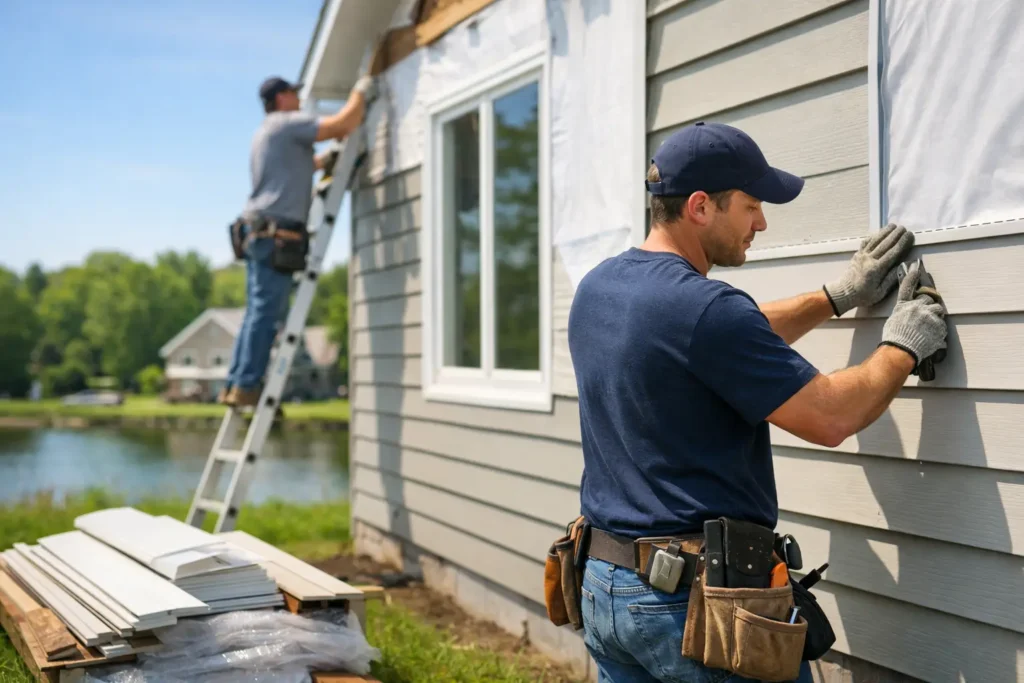
A clean-looking siding job can still fail if the installation details are rushed. The work should begin with protection for landscaping, walkways, and nearby surfaces, followed by careful removal of old material. The underlying wall should be inspected before new layers are installed.
Moisture barriers, flashing, starter strips, trim, and fasteners all have a role in the finished result. Panels must be installed level and secured correctly, with the appropriate allowance for movement. Nailing siding too tightly can cause warping. Leaving edges, trim, or flashing poorly sealed can create entry points for water and insects.
Windows and doors require particular attention. These areas need correctly layered flashing that directs water outward, not behind the siding. It is a detail homeowners may never see after the job is complete, but it is one of the most important parts of long-term exterior protection.
Cleanup should be part of the job, not an afterthought. Ask how debris, old siding, nails, and discarded materials will be handled, especially if children or pets use the property.
Questions to Ask Before You Hire
The lowest estimate is not always the lowest cost over the life of the siding. Before choosing a contractor, make sure you understand the scope of work, materials, and accountability behind the price.
Ask whether the company is insured, who will perform the installation, whether permits are required, and what manufacturer and workmanship warranties apply. Request a written estimate that identifies the siding product, trim work, removal and disposal, flashing or sheathing repairs, and payment schedule.
It is also reasonable to ask how the crew handles unexpected damage uncovered during removal. A professional contractor will communicate before moving ahead with added work and provide clear documentation of the issue. Homeowners should never be surprised by vague charges after the project is underway.
For storm-related siding damage, take photos as soon as it is safe to do so and avoid throwing away damaged pieces until the claim process is clear. A contractor experienced with storm restoration can help identify damage and provide information needed for an insurance discussion, while the insurance company makes the final coverage decision.
Get Straight Answers Before Work Begins
Siding work affects the comfort, appearance, and weather resistance of your home. You deserve a contractor who explains the condition of your exterior in plain language, gives you options, and installs every component with care.
Alpha Omega Roofing LLC provides homeowners with straightforward exterior assessments, durable workmanship, and free estimates for siding projects in Baldwinsville and throughout Central New York. If your siding is damaged, aging, or simply no longer protecting the home the way it should, scheduling an inspection now can help you address small concerns before another season of wind, rain, and snow makes them more expensive.