
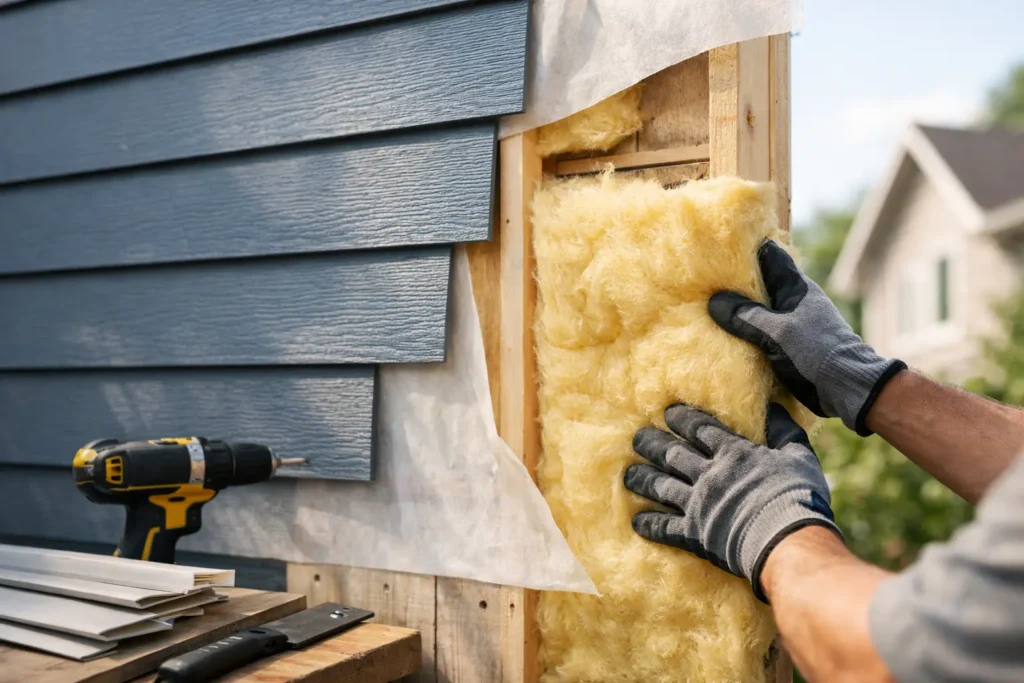
A cold wall is not always a heating-system problem. In many Central New York homes, it is a siding and exterior-wall problem that has been building for years: gaps around trim, aging materials, damaged house wrap, or walls with too little insulation. Choosing siding for better home insulation can make a noticeable difference in comfort, draft control, and energy use, but only when the full wall system is addressed.
New siding is a major exterior investment. It should improve how your home looks, but it should also help protect it from wind-driven rain, snow, and long Syracuse winters. The right material matters. So do the layers behind it and the quality of the installation.
How siding for better home insulation actually helps
Siding itself is not usually the main source of a wall’s insulating value. A standard vinyl, fiber cement, or engineered wood panel is relatively thin. The bigger opportunity comes during a siding replacement, when the old exterior is removed and the wall assembly becomes accessible.
That is the time to inspect sheathing, replace damaged house wrap, seal openings around windows and doors, and consider adding continuous exterior insulation. These details can limit air movement through the wall, reduce heat loss, and make rooms near exterior walls feel less cold.
Think of the exterior as a protective system, not a single product. Your siding sheds water. Flashing directs water away from vulnerable areas. House wrap helps manage wind and moisture. Insulation slows heat transfer. Properly installed trim and sealants close the gaps where drafts often begin.
When one of those layers is missing or poorly installed, even premium siding may not deliver the comfort improvement a homeowner expects.
The wall problems new siding can reveal
Older homes throughout the Syracuse area often have insulation gaps, aging sheathing, or areas where past repairs were completed without proper flashing. You may not see these issues from inside the home. Common warning signs include cold rooms, peeling paint, damp spots, high heating bills, musty odors, or siding that has warped, cracked, or pulled loose.
A siding project can also reveal wood rot around windows, roof-to-wall intersections, chimneys, and exterior doors. Water intrusion should be corrected before new siding goes up. Covering damaged sheathing or deteriorated framing only traps the problem behind a new finish.
This is why a thorough inspection matters. A contractor should explain what is in good shape, what needs repair, and which upgrades will provide real value for your house. Homeowners deserve a clear scope of work, not a vague promise that new siding will fix every draft.
Which siding materials make sense in Central New York?
There is no single best siding material for every home. Budget, maintenance expectations, architectural style, and the condition of the existing walls all affect the right choice.
Insulated vinyl siding
Insulated vinyl siding has a rigid foam backing attached to the panel. It can help reduce thermal bridging and provide a more solid appearance than standard hollow vinyl. It is low-maintenance, available in many colors and profiles, and often makes sense for homeowners who want practical weather protection without frequent painting.
Its insulation value is modest compared with a dedicated layer of continuous foam insulation installed beneath siding. It can still be a worthwhile part of the system, particularly when paired with careful air sealing and sound wall preparation. The key is not to confuse insulated siding with a full exterior insulation upgrade.
Fiber cement siding
Fiber cement is valued for its durability, crisp appearance, and resistance to rot and insects. It performs well as an exterior cladding in changing weather, but it does not add much insulation on its own. If energy performance is a priority, fiber cement is often paired with a properly selected insulation layer behind it.
It is heavier and more labor-intensive to install than vinyl. That can increase project cost, but homeowners may find the appearance and long-term durability worth the investment.
Engineered wood siding
Engineered wood can offer the warm, traditional look many homeowners want while requiring less upkeep than natural wood. Quality products are designed to resist moisture and impact, but installation details remain critical. Proper clearances, flashing, and paint or finish maintenance protect the material over time.
Like fiber cement, engineered wood is primarily a cladding choice. Its energy benefit comes from the wall improvements completed behind it, rather than the siding panel alone.
Exterior insulation can make the biggest difference
If your walls lack insulation or have substantial thermal bridging through studs, exterior continuous insulation may be worth considering during replacement. Rigid foam boards or mineral wool panels can be installed over the wall sheathing before the weather-resistive barrier and siding system are completed.
This approach helps create a more consistent thermal layer across the wall. Wood studs conduct heat more readily than insulated wall cavities, so adding insulation outside the framing can reduce those weak points. It may also improve comfort in bedrooms, living rooms, and other spaces with large exterior walls.
The right thickness and material depend on the home, local building requirements, siding type, and moisture-management plan. Adding exterior insulation changes the depth of the wall, which means window and door trim, flashing, fasteners, and siding attachment methods must all be planned correctly. This is not a shortcut project.
For some homes, targeted air sealing and repairs may deliver a better return than adding thick exterior insulation. For others, especially houses with old or minimally insulated walls, combining siding replacement with continuous insulation can be a smart long-term upgrade.
Installation details matter more than the brochure
A siding product can have an excellent warranty and still fail early if the installation is careless. Water management is especially important in Central New York, where freeze-thaw cycles can turn a small leak into significant damage.
A reliable siding installation should include attention to the areas that commonly fail: window and door flashing, kick-out flashing where a roof meets a wall, penetrations for vents and utilities, trim joints, ground clearance, and transitions to masonry or roofing. The crew should also inspect the condition of the sheathing before covering it.
Air sealing deserves the same level of attention. Small gaps around exterior openings, wiring, pipes, and structural transitions can allow cold air into wall cavities. New siding may cover those locations, but it will not stop the airflow unless they are sealed appropriately.
Ask how the contractor will handle damaged wood, house wrap, flashing, and insulation upgrades before signing a contract. A detailed answer is a good sign that the work is being planned as a complete exterior system.
Do not ignore attic and roof insulation
Siding upgrades can improve wall performance, but heat loss often starts above the walls. If your attic has insufficient insulation, open bypasses, or poor ventilation, it may remain the largest source of winter heat loss. Ice dams, cold ceilings, and uneven room temperatures can point to attic issues as well as siding concerns.
The best results come from looking at the entire exterior envelope. Roof condition, attic insulation, ventilation, wall insulation, windows, doors, and siding all work together. Addressing only one area may help, but it may not solve the underlying comfort problem.
For example, a homeowner may replace drafty-looking siding and still notice cold upstairs rooms because warm air is escaping through attic gaps. Another home may have adequate attic insulation but deteriorated siding and damaged house wrap that allow wind to wash through wall cavities. An honest inspection helps separate assumptions from the actual cause.
When is siding replacement worth it for energy savings?
If your siding is structurally sound and you only want lower utility bills, a siding project may not be the first upgrade to consider. Air sealing, attic insulation, and HVAC maintenance can sometimes produce faster savings at a lower initial cost.
But if your siding is already failing, faded beyond repair, allowing water intrusion, or nearing the end of its service life, replacement creates the right opportunity to improve insulation and weather protection at the same time. You are already investing in access to the exterior walls, so it makes sense to evaluate what is behind the old cladding.
The goal should be lasting performance, not a quick cosmetic cover-up. Better comfort, reduced drafts, improved curb appeal, and stronger protection against moisture can all be part of the same well-planned project.
If you are seeing damaged siding, cold walls, or signs of water around windows and trim, start with a professional exterior inspection. Alpha Omega Roofing LLC can help you understand the condition of your walls and siding, explain practical repair or replacement options, and recommend a solution built for the weather your home faces year after year.