
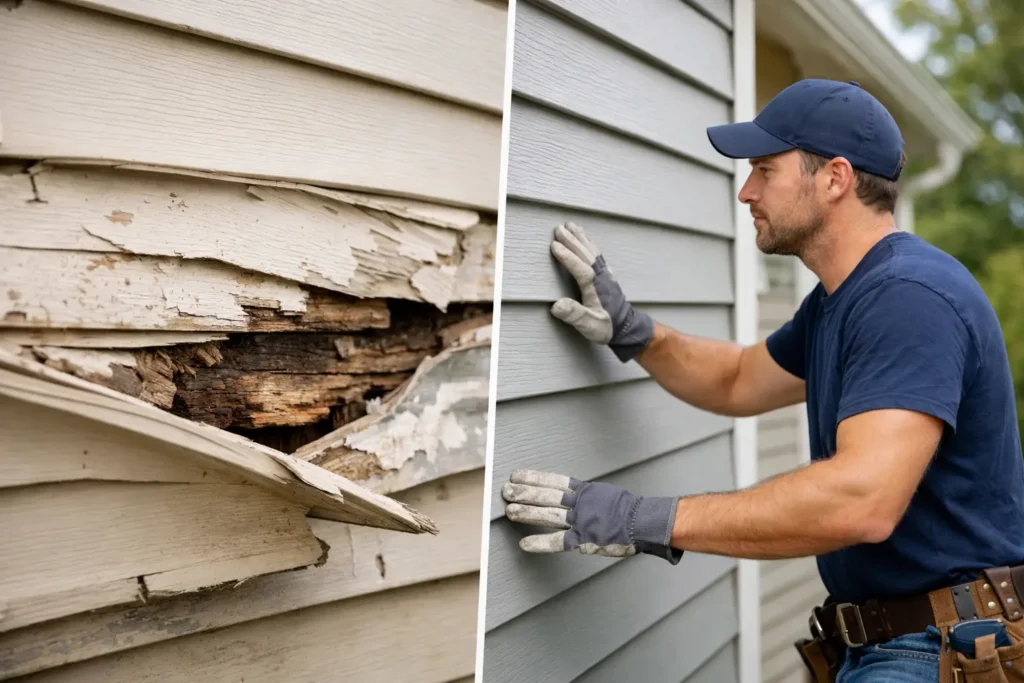
A few cracked panels after a rough winter might not look urgent, but damaged siding has a way of turning into a bigger problem fast. If you are asking when should siding be replaced, the real answer depends on what the siding is doing beneath the surface, not just how it looks from the street.
In Central New York, siding takes a beating. Snow, wind, freeze-thaw cycles, heavy rain, and summer sun all work on your home year after year. Some siding problems are cosmetic. Others are a warning that moisture is getting in, insulation is not doing its job, or the wall system is starting to fail. Knowing the difference can save you from more expensive repairs later.
When should siding be replaced instead of repaired?
Repair is often the right call when the damage is small and isolated. A few loose pieces after a storm, a limited section of hail damage, or one area that pulled away from the house can sometimes be fixed without replacing the whole exterior. If the rest of the siding is still solid, properly attached, and not showing widespread wear, a targeted repair may buy you more time.
Replacement makes more sense when the issue is spread across multiple sides of the home, when moisture has gotten behind the siding, or when the material has simply reached the end of its useful life. Age matters, but condition matters more. A 15-year-old siding system that was poorly installed can fail sooner than an older one that was installed correctly and maintained well.
If repairs are starting to stack up every season, that is usually a sign the siding is no longer giving you reliable protection. At that point, patching sections may cost more in the long run than replacing the system and starting fresh.
The clearest signs your siding may need replacement
One of the biggest red flags is visible warping, buckling, or loose panels. Siding should sit flat and stay secure against the home. When it begins to shift, curl, or pull away, water and wind can get behind it. Once that happens, the problem is no longer just exterior appearance.
Cracks, holes, and impact damage are also worth taking seriously. A single crack may be repairable, but repeated breakage across several areas often points to aging material that has become brittle. In storm-prone areas, even small openings can let water into places it does not belong.
Rot, mold, or soft spots are signs of a more serious issue. If siding or trim feels spongy, if paint is peeling inside the home near exterior walls, or if you notice staining, that can mean moisture intrusion has already started affecting the structure underneath.
Fading by itself does not always mean replacement is necessary, but severe fading can signal that the siding has lost much of its weather resistance. If the finish is worn down and the material is becoming chalky, brittle, or inconsistent in color, it may be nearing the end of its service life.
Higher energy bills can also be part of the story. Siding is not your home’s only line of insulation, but when it is damaged or failing, drafts and heat loss can increase. If certain rooms feel colder in winter or harder to keep cool in summer, the siding and the wall system deserve a closer look.
How weather speeds up siding failure
Harsh weather does not damage every type of siding in the same way, but it accelerates wear on all of them. In Syracuse and surrounding areas, freeze-thaw cycles are especially hard on exterior materials. Water can enter small gaps, expand when temperatures drop, and gradually widen those openings over time.
Wind-driven rain is another issue homeowners often underestimate. Even if your siding still looks decent from the curb, repeated moisture exposure can work behind seams and edges. Once trapped moisture starts affecting the sheathing or framing, replacement becomes more likely.
Hail and wind storms can create obvious damage, but they can also cause subtle damage that gets missed. A panel may loosen slightly, a seam may open, or protective layers may be compromised without dramatic visual signs. That is why post-storm inspections are worth scheduling when your home has been through severe weather.
Siding lifespan depends on the material
There is no one-size-fits-all replacement timeline. Vinyl siding can last a long time, but quality of installation, exposure, and storm damage all affect that lifespan. Fiber cement is durable, but it still needs proper installation and maintenance. Wood siding can look great and perform well, but it is more vulnerable to moisture problems and usually requires more upkeep.
What matters most is not whether your siding has reached a certain age on paper. It is whether it is still protecting the home the way it should. A newer system with installation issues can fail early. An older one may still have years left if it remains structurally sound.
That is why a condition-based inspection is more useful than guessing from age alone.
What happens if you wait too long?
Homeowners often delay siding replacement because the damage seems manageable. That is understandable. Full replacement is a bigger project than a simple repair, and no one wants to take it on sooner than necessary.
The risk is that failing siding rarely stays a siding-only problem. Moisture intrusion can lead to rotten sheathing, damaged trim, mold growth, interior staining, and even structural repairs. Pest entry can also become easier when gaps and holes develop along the exterior.
Waiting can also affect insurance conversations after a storm. If storm damage is layered on top of long-term neglect or old unresolved issues, claims can become more complicated. When damage is documented early and addressed promptly, homeowners are usually in a stronger position.
Should you replace all the siding or just one section?
Sometimes replacing one elevation or one badly damaged section is reasonable. If the rest of the siding is in good shape and matching material is available, partial replacement may be the practical option. That approach can make sense after localized storm damage or on a newer home with limited wear.
The challenge is consistency. Older siding may be discontinued, faded, or weathered enough that new sections stand out. More importantly, if the visible damage is only part of a larger moisture problem, replacing one section may not solve the root issue.
A good inspection should answer two questions clearly: where the damage is, and whether it is isolated or system-wide. That is the difference between a repair strategy and a replacement plan.
When should siding be replaced for curb appeal?
Protection comes first, but appearance still matters. If your siding is heavily faded, stained, mismatched from previous repairs, or dragging down the look of the home, replacement can be worth considering even before major failure sets in. For many homeowners, siding is both a protective system and a major part of property value.
That said, curb appeal alone should not drive the decision without looking at function. If the siding looks dated but is still performing well, you may have time to plan the project on your terms. If it looks bad and is also letting in moisture or pulling away from the home, waiting usually does not help.
What to expect from a professional siding inspection
A proper inspection should go beyond a quick glance. The contractor should check for movement, cracks, moisture-related damage, soft areas, trim issues, flashing concerns, and signs that water may be getting behind the siding. They should also explain whether repair is realistic or whether replacement is the smarter long-term move.
You want straight answers, not pressure. In many cases, homeowners do not need a full replacement immediately. In other cases, a few visible issues are only the tip of the problem. An experienced exterior contractor should be able to tell the difference and walk you through your options clearly.
If your home has been through recent storms, has visible damage, or just has siding that no longer looks or performs the way it should, it is worth getting it checked before another season puts more stress on the exterior. Alpha Omega Roofing LLC works with homeowners across Central New York to inspect exterior damage, explain what is urgent, and recommend the right next step. The best time to replace siding is not when the damage becomes impossible to ignore. It is when you can still protect the home before small issues turn into expensive ones.