
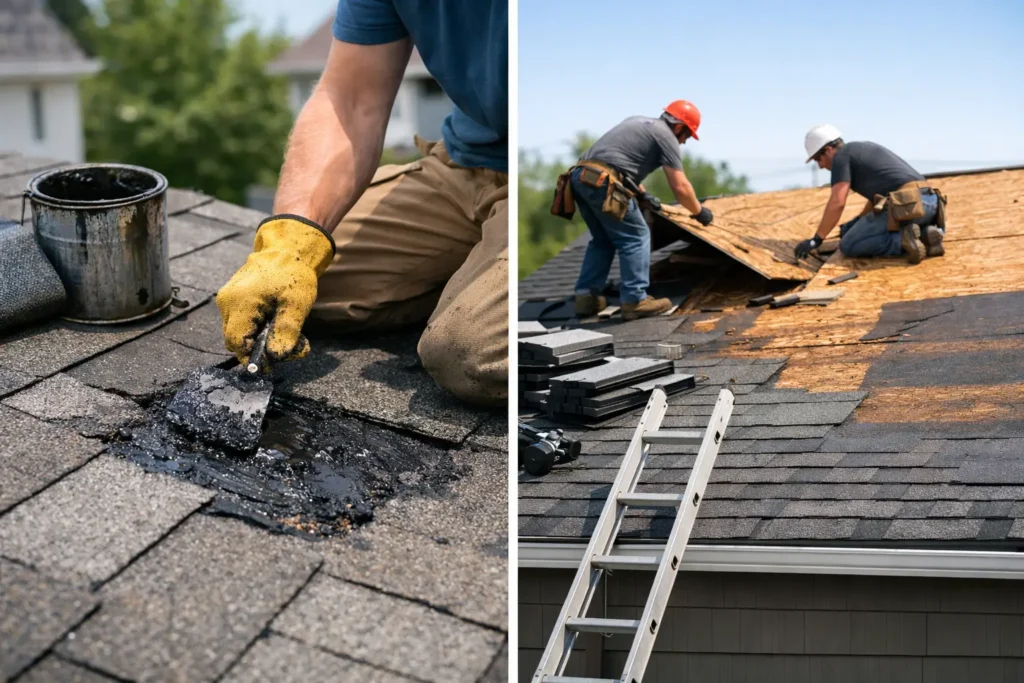
A small ceiling stain can turn into a big decision fast. When homeowners start comparing roof patching versus replacement, they are usually not shopping for options – they are trying to stop damage, control costs, and make the right call before the next storm hits.
In Central New York, that decision gets harder because roofs take a beating. Snow load, ice dams, freeze-thaw cycles, wind-driven rain, and aging shingles can all create problems that look minor from the ground but are more serious up close. The right answer is not always the cheapest one today. It is the one that protects your home without making you pay twice.
How to Think About Roof Patching Versus Replacement
A patch repair makes sense when the issue is limited, clearly defined, and the rest of the roof still has solid years left in it. Replacement makes more sense when the damage is widespread, the roofing system is near the end of its life, or repairs are starting to stack up without solving the underlying problem.
That sounds simple, but most homeowners are dealing with gray areas. A few missing shingles after a windstorm may be an easy repair. A leak around a flashing point might be repaired without replacing the whole roof. On the other hand, a roof with repeated leaks, curling shingles, soft decking, and visible granule loss is usually telling you the problem is no longer isolated.
The key is to look beyond the single leak. Water rarely stays where it first gets in. By the time a stain shows up inside, moisture may have already traveled across decking, underlayment, insulation, or framing.
When a Roof Patch Is the Right Move
Roof patching is often the smarter option when the damage is recent and limited to one section. If a branch tore off shingles in one area, if a few tabs blew loose, or if flashing around a vent pipe failed, a targeted repair can restore protection without the cost of full replacement.
This approach also works best when the roof is still in generally good condition. If the shingles are holding their seal, the roof deck is sound, and there are no signs of widespread wear, patching can extend the life of the roof and buy you time.
In practical terms, patching is usually worth considering when the roof is relatively younger, the materials needed for repair are still available, and the issue can be fixed without disturbing large surrounding sections. A good repair should not just cover the symptom. It should address the actual entry point, replace compromised materials, and blend with the existing roof as closely as possible.
That said, there are trade-offs. A patch is not always invisible, especially on older roofs where color fade and weathering make a perfect match difficult. More importantly, a successful patch only fixes the damaged area. It does not reverse overall roof aging.
When Replacement Is the Better Investment
A full replacement is often the better move when the roof has reached the stage where repairs are becoming temporary. If multiple sections are failing, if leaks keep returning, or if the shingles are brittle, curling, cracked, or losing heavy granules, patching may only delay a larger issue.
Age matters here. Even if one spot is leaking, an older roof may not respond well to repairs because surrounding materials are already weakened. Lifting brittle shingles to repair one section can create new breakage nearby. In those cases, homeowners can end up paying for patchwork now and replacement soon after.
Replacement also makes sense after major storm damage. If wind has lifted shingles across several slopes, hail has compromised the surface, or water intrusion has affected the decking beneath, a full system replacement often provides the most reliable long-term protection. That is especially true in climates where the next harsh season is never far away.
There is also a financial side to this decision. A repair is cheaper upfront, but repeated repairs add up. If you are calling for leak service every season, the lower immediate cost starts to lose its value.
The Biggest Factors That Should Drive the Decision
The first factor is roof age. A newer roof with isolated damage is usually a repair candidate. A roof nearing the end of its expected life usually is not.
The second is the extent of damage. One area of missing shingles is different from widespread storm damage, sagging, soft spots, or multiple leak points. If damage extends beyond the visible surface and into the decking or structural components, replacement becomes more likely.
The third is leak history. A first-time leak from a specific, identifiable source can often be repaired. Recurring leaks usually point to broader failure.
The fourth is material compatibility. Sometimes patching is limited by what can actually be matched or integrated with the existing roof. Older shingles may be discontinued, and weathered roofing may not seal properly after repair.
The fifth is timing. If you plan to stay in your home for years, replacement may be the better value because it resets the life of the roof and reduces the risk of ongoing damage. If the roof is otherwise sound and the issue is truly limited, patching may be the most reasonable short-term and mid-term solution.
What Homeowners Often Miss
A lot of homeowners focus only on the visible shingles, but a roofing system is more than the outer layer. Underlayment, flashing, ventilation, ice and water protection, decking condition, and roof penetrations all matter. A patch that addresses only the surface may not solve the full problem if moisture has already moved underneath.
This is why inspection matters so much. A roof can look repairable from the driveway and tell a different story up close. Soft decking around a leak, rusted flashing, hidden storm damage, or improper previous repairs can change the recommendation quickly.
Another thing homeowners miss is the risk of waiting. Small leaks are rarely static. In Syracuse-area weather, water intrusion can lead to mold, damaged insulation, interior staining, wood rot, and winter ice issues. What starts as a manageable repair can become a much more expensive project if it is left alone.
Cost Matters, but So Does Value
Most homeowners understandably start with cost. Patch repairs are less expensive than full replacement, and when the roof qualifies for repair, that can be the right choice. But the real question is not just what you spend today. It is what the decision costs over the next few years.
If a repair gives your roof several more reliable years, that is money well spent. If it only postpones replacement for a few months while water damage continues, it is not really saving you anything.
This is also where honest guidance matters. A trustworthy contractor should be able to explain why a repair will work, or why it will not, without pushing you toward the bigger invoice by default. Homeowners need a clear picture of current condition, remaining life, likely future repairs, and whether storm damage may be part of a larger insurance conversation.
What a Good Inspection Should Tell You
A proper roof inspection should answer more than whether there is a leak. It should tell you where water is entering, whether the problem is isolated or widespread, what condition the shingles and flashing are in, whether the decking appears compromised, and whether the roof still has dependable service life left.
You should also come away understanding your options. In some cases, the answer is a straightforward repair. In others, it may be reasonable to patch now and plan for replacement soon. And sometimes the right answer is to replace before more interior or structural damage develops.
For homeowners dealing with storm-related issues, documentation matters too. Photos, condition notes, and a clear scope can help you understand whether the problem is simple wear and tear or something more significant.
Roof Patching Versus Replacement in Real Life
The right choice comes down to condition, not wishful thinking. If your roof has one problem and the rest of the system is healthy, a patch may be the practical answer. If the roof is aging out, failing in multiple places, or taking on repeated water, replacement is usually the stronger investment.
At Alpha Omega Roofing LLC, that conversation starts with a straightforward inspection and an honest recommendation based on what your roof is actually doing – not what sounds easiest in the moment. If you are seeing leaks, missing shingles, storm damage, or signs your roof is wearing out, getting answers early gives you more options and fewer surprises later.
The best time to make this decision is before a small problem turns into interior damage, emergency tarping, or a rushed replacement in bad weather.