
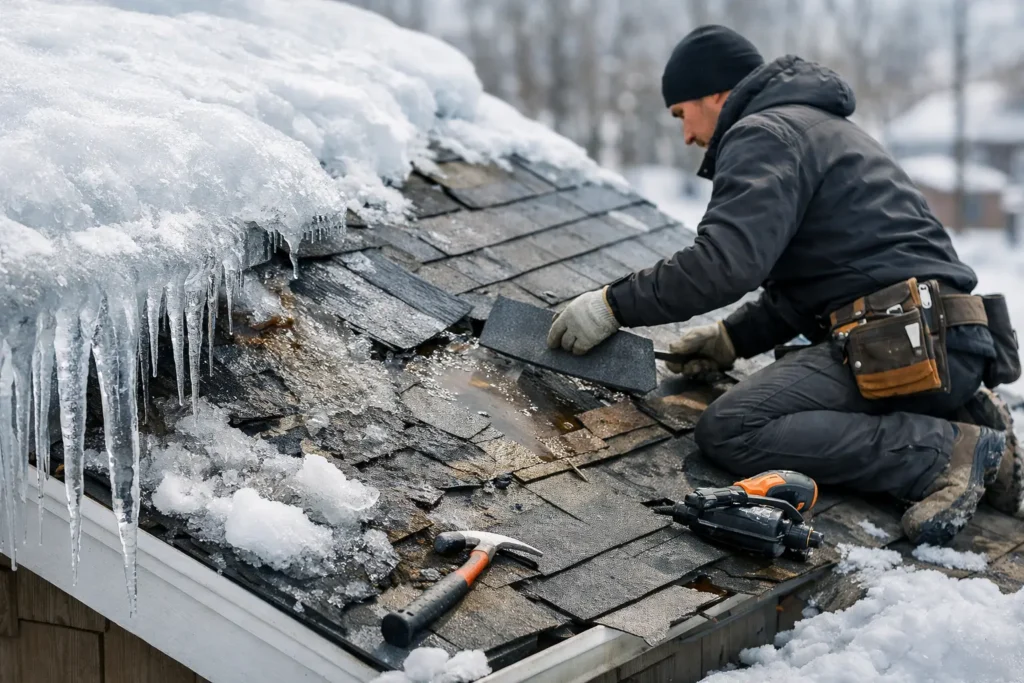
A ceiling stain that shows up after a snowstorm is rarely just a stain. Around Syracuse and across Central New York, winter roof problems often start at the edge of the roof, where melting snow refreezes and traps water. That is when ice dam roof damage repair becomes urgent. The visible leak is only part of the problem. Water can travel under shingles, soak decking, damage insulation, stain drywall, and create mold conditions inside the attic and living space.
If you are seeing water spots, peeling paint, dripping near exterior walls, or ice buildup along the eaves, the right move is not to guess. It is to get the roof inspected, stop active water intrusion, and repair the damaged areas before the next thaw makes things worse.
What ice dams actually damage
An ice dam forms when heat escaping from the house warms the roof surface enough to melt snow. That water runs down to the colder roof edge, freezes, and builds a ridge of ice. Once that ridge blocks drainage, additional meltwater backs up beneath shingles.
That backup can affect more than one part of the home. Shingles may loosen or crack. Underlayment can fail. Roof decking can absorb moisture and begin to rot if the problem repeats. In the attic, wet insulation loses effectiveness fast, which can make the roof even more vulnerable during the next freeze-thaw cycle. Inside the home, the damage often shows up as stained ceilings, bubbled drywall, warped trim, or damp wall cavities.
The frustrating part for homeowners is that the worst damage is not always obvious from the ground. A heavy icicle line may look dramatic, but a smaller dam can still force water into areas you cannot see.
Ice dam roof damage repair starts with leak control
The first priority is limiting damage inside the home. If water is actively entering, protect floors and furniture, place a container under drips, and move valuables away from the area. If the ceiling is bulging, that can mean water is pooling above the drywall. It needs to be assessed carefully, because a collapse can happen.
At the roof level, emergency action may include safely removing excess snow from the edge and creating drainage channels in the ice. This has to be done carefully. Aggressive chopping, scraping, or hammering at the ice can tear shingles, damage gutters, and create a much bigger repair than the dam itself.
For that reason, temporary control and permanent repair are two different jobs. Temporary work may reduce immediate leaking. Permanent repair means finding where water entered, replacing damaged roofing materials, and correcting the conditions that helped the ice dam form.
When a roof repair is enough and when it is not
Not every ice dam leads to a full roof replacement. In many cases, localized repair is the right solution, especially when the damage is limited to a section of the eaves or one roof plane. A contractor may need to remove shingles, inspect the decking, replace any compromised wood, install new underlayment, and re-shingle the affected area.
But it depends on the age of the roof, the extent of the leakage, and whether the roof was already near the end of its service life. If shingles are brittle, the decking is soft in multiple areas, or ice dam leaks have happened repeatedly over several winters, patching one section may not be the most cost-effective answer. A partial repair can solve the immediate issue, but it will not always fix a larger system problem.
That is why a thorough inspection matters. A dependable roofing contractor should explain whether the damage is isolated or part of a broader failure pattern. Homeowners deserve a straight answer, especially when winter damage puts pressure on fast decisions.
What a proper repair process should include
A real ice dam roof damage repair job is more than sealing a leak and replacing a few shingles. The roof should be evaluated as a full system.
Roof surface and edge inspection
The repair team should inspect the shingles, flashing, drip edge, underlayment condition, and the roof edge where water likely backed up. If the leak reached roof penetrations or valleys, those areas need close attention too.
Decking and structural check
If water got under the roofing materials, the decking beneath may be stained, swollen, or softened. Any compromised wood should be replaced before new materials go on. Covering damaged decking does not solve anything.
Interior moisture assessment
Attic insulation, ventilation paths, and interior ceilings may also need review. If insulation is wet, it often needs removal and replacement. Leaving it in place can trap moisture and reduce energy performance.
Prevention work
This is where quality matters most. If the source conditions are ignored, the same home may leak again next winter. Depending on the situation, prevention may involve better attic ventilation, improved insulation, air sealing, or installing ice and water shield in vulnerable roof sections.
Why Central New York homes are especially vulnerable
Homes in this region deal with long winters, snow loads, and constant freeze-thaw cycles. That combination is hard on roof edges and attic performance. Even a well-built home can develop trouble spots if insulation has settled, bathroom fans vent into the attic, or older roof systems lack proper ice barrier protection.
Many homeowners assume ice dams only happen on old houses. That is not always true. Newer homes can have them too if warm air is escaping into the attic or ventilation is unbalanced. On the other hand, an older roof with solid ventilation may perform better than expected. The point is simple: the cause is not always obvious from the age of the house alone.
Warning signs you should not ignore
Some signs show up before a major leak starts. Thick ridges of ice along the gutters, repeated icicles at the same roof edge, and snow melting unevenly across the roof can all point to a heat-loss problem. Inside, musty attic smells, damp insulation, ceiling stains near exterior walls, and peeling paint around window trim can signal hidden water intrusion.
If you have had to repaint the same ceiling area more than once after winter, the issue is probably not cosmetic. Water may still be getting in, even if the leak seems to disappear when temperatures change.
Repair now or wait for spring?
Homeowners ask this all the time, and the honest answer is that it depends on the severity of the leak. If water is actively entering the home, waiting can lead to more damage to drywall, insulation, framing, and finishes. Emergency mitigation is usually worth doing right away.
For permanent exterior repairs, weather conditions matter. Some work can be completed safely in winter, especially by experienced crews handling urgent roofing issues. Other repairs may need a temporary protective measure now and a final repair when conditions allow for the best long-term result. The key is having a contractor who will be clear about what can be fixed immediately and what should be scheduled for ideal conditions.
Choosing a contractor for ice dam roof damage repair
This is not the kind of problem to hand to the lowest bid without questions. Ice dam leaks are often part roofing repair, part moisture investigation, and part prevention planning. You want a contractor who understands all three.
Look for a company that is licensed and insured, responds quickly to active leaks, and can explain the repair scope in plain language. Photos, clear estimates, and honest recommendations matter. If the contractor only talks about removing ice but not about attic conditions, underlayment, or deck damage, that is a red flag.
For homeowners in Syracuse and nearby communities, local experience matters too. Winter roof behavior in Central New York is different from milder climates. A contractor who works in these conditions knows where damage tends to hide and what repair details hold up over time. That local, practical approach is exactly what homeowners should expect from a company like Alpha Omega Roofing LLC.
The best repair is one that reduces the chance of another leak
A proper fix should leave you with more than a dry ceiling. It should leave you with a roof system that is better prepared for the next storm. That may mean replacing damaged materials, improving ventilation, sealing attic air leaks, or reinforcing vulnerable edges with the right protective layers.
There is no single repair that fits every house. Some homes need a focused roof repair. Others need roofing work paired with attic corrections to stop the cycle. The good news is that this problem is manageable when it is addressed early and repaired correctly.
If your home is showing signs of winter water intrusion, trust what you are seeing. Small stains become bigger repairs when they are ignored. Getting the roof inspected now can save you from a much more expensive spring surprise.