
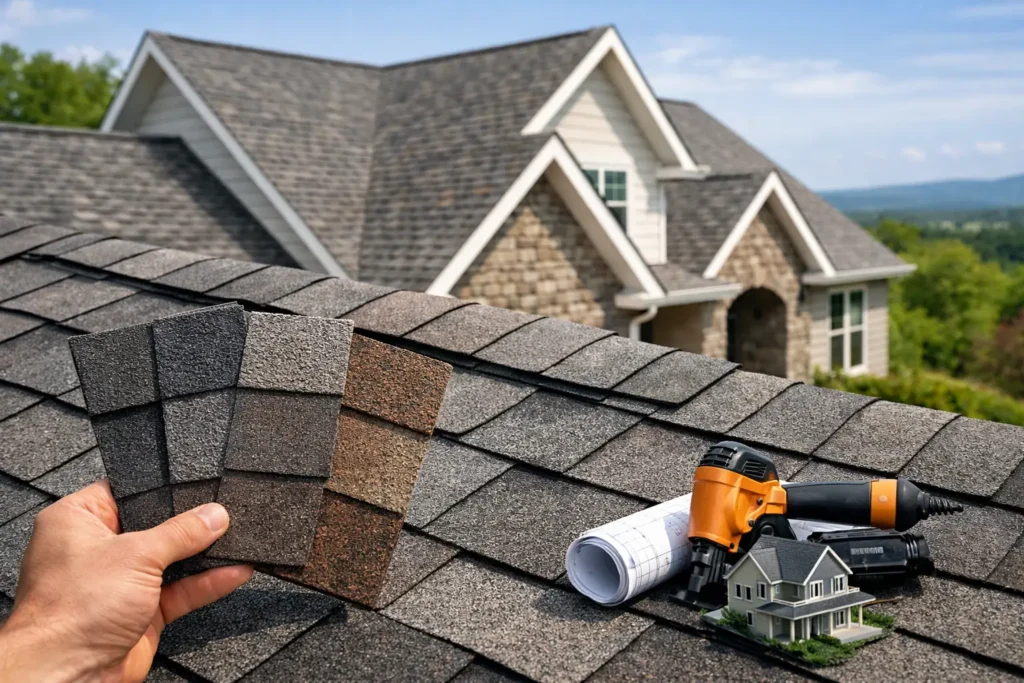
When a roof starts showing its age in Central New York, the question usually is not whether you need a replacement. It is what material will hold up best once the snow loads, wind, ice, and spring storms roll back in. This architectural shingles review is built for homeowners who want a clear answer without the sales fluff.
For most homes, architectural shingles hit the sweet spot between cost, appearance, and long-term performance. They are a step up from basic 3-tab shingles, but they do not carry the price tag of metal, slate, or other premium systems. That makes them one of the most common recommendations for homeowners who want reliable protection and better curb appeal without overbuilding the roof.
What architectural shingles are really offering
Architectural shingles are asphalt shingles made with a heavier, layered design. That extra thickness is not just for looks. It helps them resist wind better, hold their shape longer, and create a more dimensional appearance across the roofline.
Compared to traditional 3-tab shingles, they generally look better from the street and tend to last longer under normal conditions. For homeowners planning to stay in the house, that matters. A roof is not only there to stop leaks. It also affects resale value, energy performance, and how much repair work you may be facing after the next strong storm.
The biggest reason they are so popular is simple. They offer a noticeable improvement in durability and appearance without jumping into a completely different budget category.
Architectural shingles review: the main pros
The first advantage is lifespan. While actual roof life depends on attic ventilation, installation quality, roof slope, and weather exposure, architectural shingles typically outlast basic 3-tab products. That longer service life often makes the upfront upgrade worth it.
The second advantage is wind resistance. Many architectural shingle products are rated for stronger winds than entry-level shingles. In areas where gusts can lift tabs, tear edges, or create weak spots around ridges and valleys, that extra strength can reduce the chances of early failure.
The third advantage is appearance. Because they have a thicker, more textured profile, they give a home a more finished, higher-end look. For homeowners replacing an old roof, this can make a major difference in curb appeal without changing the home’s overall style.
There is also practical value in availability. Architectural shingles come in a wide range of colors and product lines, so matching your siding, trim, and neighborhood look is usually straightforward.
Where architectural shingles fall short
They are not perfect, and that matters in a fair review.
First, they cost more than 3-tab shingles. The material itself is more expensive, and depending on the product line, labor costs may also be slightly higher. If you are trying to solve a short-term issue on a tight budget, the price difference may feel significant.
Second, they are still asphalt shingles. That means they do not match the lifespan of premium materials like standing seam metal, slate, or tile. If your top priority is getting the longest roof system possible and budget is less of a concern, architectural shingles may not be your final choice.
Third, performance still depends heavily on installation. Even a quality shingle can fail early if the decking is compromised, ventilation is poor, flashing is sloppy, or ice and water protection is not handled correctly. Homeowners sometimes compare products when the bigger issue is workmanship.
That is especially true in climates with freeze-thaw cycles. A good shingle installed badly is still a bad roof.
How they perform in harsh weather
For homeowners in places like Syracuse and the surrounding area, weather performance is where this product category earns its reputation.
Architectural shingles generally handle wind better than 3-tab shingles because of their laminated build and stronger sealing characteristics. They also tend to resist surface wear more effectively over time. That does not make them storm-proof, but it does give them a better chance of standing up to repeated seasonal stress.
Snow and ice are a separate issue. No shingle alone solves ice dam problems. If your roof has poor ventilation, inadequate insulation, or weak edge protection, even a better shingle can still be part of a roof system that leaks. In other words, the product matters, but the full assembly matters more.
This is where local experience counts. A roof built for Central New York should not only use a solid shingle. It should also be designed around the region’s winter conditions, roof pitch challenges, and storm exposure.
Cost versus value
If you are comparing roofing estimates, architectural shingles usually land in the middle. They cost more than basic asphalt shingles but much less than metal or specialty roofing products.
For many homeowners, that middle ground is exactly the point. You are paying for improved durability, stronger visual appeal, and often better warranty coverage without moving into a premium price tier. Over the life of the roof, that can be a smart value.
Still, value depends on your goals. If you plan to sell soon, architectural shingles can improve the home’s appearance and buyer confidence. If you plan to stay long term, the added lifespan and storm resistance may reduce repair headaches. If the home is older and you are trying to manage expenses carefully, the right decision may come down to whether the added cost fits your timeline and budget.
There is no single answer for every house. Roof age, home value, ventilation, and neighborhood standards all play a role.
What to look for beyond the shingle itself
A lot of roofing problems blamed on shingles actually start elsewhere. When reviewing a roofing proposal, homeowners should pay attention to the full system, not just the brand or style of shingle.
Flashing around chimneys, walls, skylights, and pipe penetrations needs to be done correctly. Underlayment matters. Ice and water shield at eaves and vulnerable areas matters. So does ridge ventilation. If those details are skipped or downgraded, the roof may look fine on day one and start showing issues much sooner than expected.
It is also worth asking whether damaged decking will be replaced if needed. A new shingle installed over weak wood is not a long-term fix. A dependable contractor should explain what is included, what might trigger added repairs, and how the roof will be built to handle local conditions.
Is an architectural shingle roof right for your home?
For most residential properties, yes. Architectural shingles are a strong fit for homeowners who want dependable performance, a better-looking roof, and a reasonable return on their investment.
They make particular sense when your current roof is aging, missing shingles, showing granule loss, or starting to leak after storms. They also make sense when you want to improve resale appeal without paying for a high-end roofing system that may not match the home or the budget.
That said, there are cases where another option may be better. If your home has a low-slope section, complex drainage issues, or you want a roof with a much longer lifespan, it may be worth comparing other materials. If your attic ventilation is poor, that issue should be addressed no matter what shingle you choose.
A good roofing recommendation should be based on the condition of the house, not just a product preference.
Final take on this architectural shingles review
If you want a roof that balances durability, appearance, and affordability, architectural shingles remain one of the smartest choices for residential homes. They are not the cheapest option, and they are not the longest-lasting roofing material on the market. But for many homeowners, they are the most practical one.
The best results come from pairing the right shingle with the right installation team. That means honest inspection, clear pricing, proper ventilation planning, and workmanship built for real weather, not just a brochure promise. If your roof is starting to fail or you are weighing replacement options, getting a professional assessment now can save you from a much more urgent problem later.