
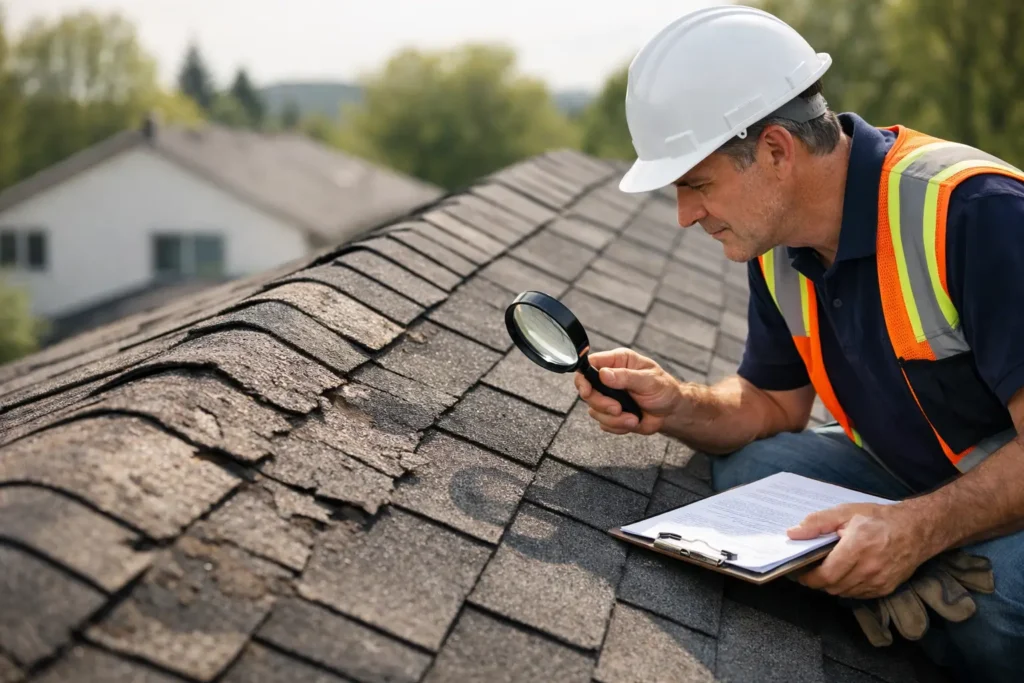
A roof usually does not send one clear warning before it starts causing expensive problems. More often, it gives small clues first – brittle shingles, worn flashing, granules in the gutters, or repairs that keep adding up. If you are trying to figure out how to tell roof age, the goal is not just to put a number on it. The real question is whether your roof still has dependable life left, especially with the snow, ice, wind, and freeze-thaw cycles we see in Central New York.
How to tell roof age with the most reliable clues
The most accurate way to estimate roof age is to start with paperwork, then confirm what you see from the ground and during an inspection. Homeowners are often surprised to learn that a roof can look acceptable from the driveway and still be nearing the end of its service life.
If you bought your home in the last several years, your closing documents may include a seller disclosure that mentions the roof replacement date. Insurance paperwork, permit records, contractor invoices, and warranty documents can also help. Those records matter because roofs do not all age the same way. Material type, ventilation, installation quality, storm exposure, and maintenance all affect lifespan.
If records are missing, the roof itself can still tell a pretty clear story. Asphalt shingles, which are the most common on homes in this area, usually show age through curling edges, cracking, bald spots where granules have worn off, and uneven color fading. Those signs do not always mean immediate failure, but they often mean the roof is no longer in its early years.
Another clue is repair history. A roof that has already had multiple patch jobs, especially around valleys, chimneys, skylights, or pipe penetrations, may be older than the homeowner realizes. Repeated repairs are often a sign that the system as a whole is wearing out, not just one isolated spot.
Start with the home records
Before looking at shingles, look at the paper trail. This is often the fastest way to answer the question.
Check your purchase documents, past inspection reports, and any receipts left behind by the previous owner. If the home is older and the roof has likely been replaced at least once, local permit history may help narrow down the date. If you have an active roofing warranty, the issue may be settled right there.
That said, records are not always complete. Some roofs are replaced without clear documentation, and some paperwork lists only a repair, not a full replacement. That is why visual condition still matters. A roof installed 15 years ago but poorly ventilated may be in worse shape than one installed 20 years ago with better materials and workmanship.
Visible signs your roof is aging
When homeowners ask how to tell roof age, they are usually really asking what wear looks like before leaks become obvious. There are a few signs that tend to show up as asphalt roofs move from mid-life into later years.
Shingles often start lying less flat. You may see corners lifting, edges curling, or tabs that look slightly warped. Granule loss is another common indicator. If you notice gritty material collecting in gutters or near downspouts, the protective surface of the shingles may be wearing down.
Color changes can help too, but they need context. Some fading is normal with sun exposure. What raises concern is uneven aging, dark streaking combined with surface wear, or patches that clearly do not match because sections were repaired at different times.
Flashing tells a story as well. Rusted metal, loose step flashing, failing sealant around penetrations, or worn chimney areas often appear as roofs get older. Sometimes the shingles are not the first part to fail. Details around transitions and roof openings can break down earlier and create leaks that make the whole roof seem older than it is.
Inside the house, water stains on ceilings or in attic spaces can also point to age-related roof issues. But a leak alone does not automatically mean full roof replacement. Sometimes it is a flashing problem, storm damage, or a localized failure. That is why the condition of the whole system matters more than one symptom.
Material type changes the timeline
Not every roof ages on the same schedule. Standard three-tab asphalt shingles generally have a shorter service life than architectural shingles. Premium materials can last longer, but longer on paper does not always mean longer in real conditions.
In a place like Syracuse, heavy snow loads, ice dams, wind-driven rain, and rapid temperature swings can shorten a roof’s useful life. Ventilation and attic insulation also play a major role. A roof that overheats in summer and traps moisture in winter may deteriorate faster even if the shingles themselves were rated for many years.
This is where homeowners can get misled by average lifespan charts. A manufacturer estimate is one piece of the puzzle, not a guarantee. A 20-year-old roof may still be serviceable. A 12-year-old roof may already be in trouble if installation shortcuts or storm damage are involved.
How to tell roof age from the ground safely
Most homeowners should not climb onto a roof to estimate its age. A ground-level review with binoculars can reveal a lot without risking a fall.
Look for missing shingles, sagging rooflines, heavy granule loss, exposed fiberglass mat, moss or algae buildup that is holding moisture, and visible damage near chimneys or vents. Pay attention to whether wear looks isolated or widespread. One damaged section after a storm is different from broad, consistent aging across the entire slope.
Also check your gutters and downspouts. If they are full of shingle granules, that often means the roof is well along in its life cycle. If you see pieces of shingles on the ground after wind events, the material may be drying out and becoming brittle.
Still, visual checks from the ground have limits. Some roof problems are hidden by angle, height, or the design of the home. A roof can also have storm-related bruising, lifted shingles, or soft spots that are not obvious until a trained inspection is done.
Why an inspection matters more than a guess
If you need to know whether your roof has five years left or should be replaced sooner, inspection matters more than rough estimates. Age is helpful, but condition is what drives good decisions.
A professional inspection can usually determine whether the roof is aging normally, whether repairs are still worthwhile, or whether replacement is the smarter investment. That distinction matters because homeowners often spend money patching a roof that is already near the end. At that point, another repair may only buy a short amount of time.
On the other hand, some roofs get replaced too early because they look old from the yard. If the decking is solid, ventilation is adequate, and the damage is limited, a repair may be enough. The right answer depends on how widespread the wear is, whether there are active leaks, and how the roof has held up through recent weather.
A local contractor also understands regional stress better than a generic online checklist. Roofs in Central New York deal with conditions that can expose weak points fast. Ice backup at the eaves, flashing movement around chimneys, and storm-driven shingle loss are not minor details here.
When roof age means replacement is likely
There is no single number that means every roof must be replaced, but some combinations of age and condition make replacement the more practical option. If your roof is nearing the upper end of its expected lifespan and you are seeing repeated leaks, widespread curling, missing shingles, soft decking, or failing flashing in multiple areas, repairs may become a short-term fix with long-term cost.
Insurance considerations can also come into play. Older roofs may be harder to insure fully, and claims can get more complicated when the roof was already near the end of its life before a storm hit. That does not mean every older roof is uninsurable, but age can affect what options are available.
For homeowners planning to stay in the house, replacement is often about predictability. A new roof can help you avoid emergency leaks, interior damage, and the cycle of patching one problem after another. For homeowners planning to sell, knowing the true age and condition of the roof helps avoid surprises during inspection and negotiation.
At Alpha Omega Roofing LLC, we see this often with homeowners who thought they only had a minor issue until a closer inspection showed years of wear underneath the surface.
The simplest way to think about roof age
If you are wondering how to tell roof age, think in layers. First, find the install date if you can. Second, compare that age to the material and the weather exposure the roof has actually faced. Third, look at the condition of the shingles, flashing, gutters, attic, and repair history as one complete picture.
A roof is not old just because someone says it is, and it is not healthy just because it is not leaking today. The best time to learn where your roof stands is before the next hard storm gives you the answer for you.