
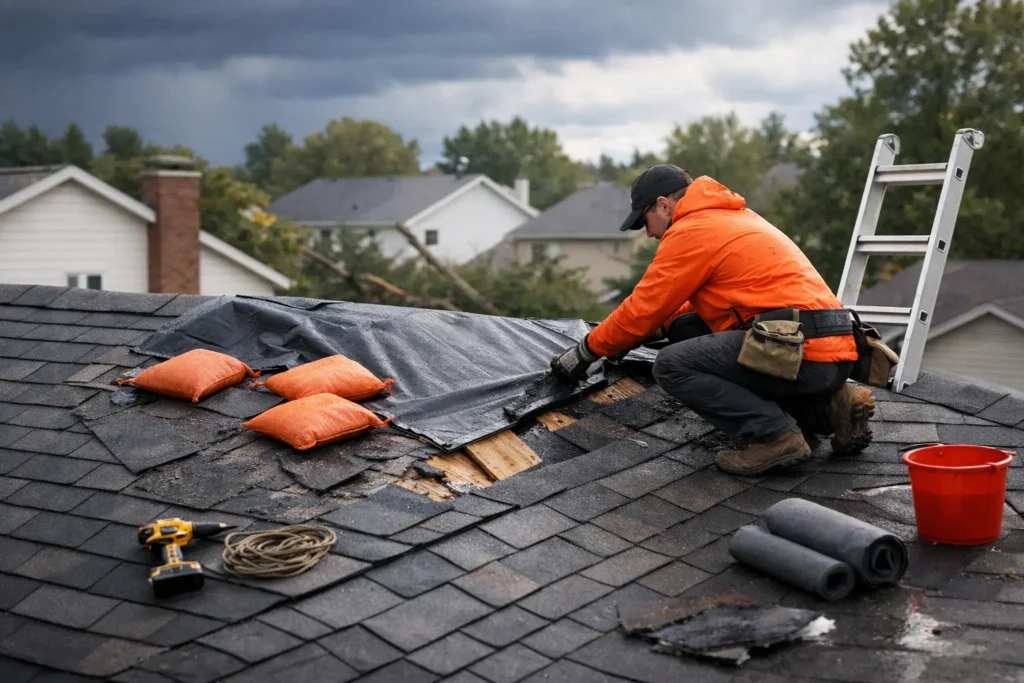
A roof problem rarely shows up at a convenient time. It starts with a water stain on the ceiling, a sudden drip during a storm, or shingles scattered across the yard after heavy wind. This guide to emergency roof repair is built for homeowners who need to protect their home quickly, limit interior damage, and make smart decisions before a small problem turns into a much bigger one.
When your roof is actively leaking or has visible storm damage, speed matters. So does judgment. Some situations call for a temporary fix to buy time. Others mean you should stay out of harm’s way and call a professional right away.
What counts as an emergency roof repair?
Not every roof issue is an emergency, but some clearly are. If water is entering the home, if part of the roof has lifted or collapsed, or if flashing has torn away around a chimney or vent, treat it as urgent. The same goes for tree impact, ice-related damage that is causing interior leaks, or missing shingles after a windstorm when more severe weather is on the way.
A roof can also be in emergency condition even if the damage looks small from the ground. One missing section near a valley, skylight, or roof edge can let in a surprising amount of water. In Central New York, that matters even more because rain, snow, freeze-thaw cycles, and wind can turn a weak spot into widespread damage fast.
If the issue can wait a few days without active leaking or exposed underlayment, it may be a standard repair rather than an emergency. But when there is uncertainty, it is safer to have the roof inspected quickly than to assume the problem is minor.
Your first steps in an emergency
The first priority is safety. Stay off the roof during storms, high winds, icy conditions, or after structural impact. A wet or damaged roof is dangerous even for people who are comfortable with ladders. If the ceiling is bulging with water or there are signs of electrical risk, keep clear of the area inside as well.
Once everyone is safe, limit interior damage. Move furniture, electronics, rugs, and valuables away from the leak. Place buckets or containers under active drips, and use towels to manage splashing. If water is pooling in a ceiling bubble and you can do so safely, some homeowners choose to puncture the lowest point to release the water into a bucket. That can reduce ceiling collapse, but only if you are sure there are no electrical hazards nearby.
Then document what you see. Take photos of the leak, damaged ceilings, shingles on the ground, or visible roof damage from a safe distance. If the problem followed a storm, note the date and time. This helps if you need to file an insurance claim and gives your contractor a clearer picture before the inspection.
Temporary fixes that may help
A practical guide to emergency roof repair should be honest about what homeowners can and cannot do. Temporary action can help reduce damage, but it is not the same as a real repair.
If the leak is coming from a specific area and conditions are safe, a heavy-duty tarp may protect the exposed section until a roofer arrives. The tarp needs to extend beyond the damaged area and be secured properly. A poorly placed tarp can fail in wind or channel water into the wrong place. That is why many homeowners are better off calling for emergency tarping rather than attempting it alone.
Roofing cement or sealant may slow a small leak around flashing or exposed fasteners, but this only works in limited cases and only if the source is obvious. It will not solve soaked decking, storm-torn shingles, damaged valleys, or hidden underlayment failures. Quick patch products can also make later repairs messier if they are applied in the wrong place.
Inside the house, your best temporary fix is often moisture control. Catch the water, dry affected materials as much as possible, and keep air moving with fans if it is safe to do so. That will not stop the leak, but it can help reduce damage to drywall, insulation, and flooring.
When to call a roofer immediately
Some roof emergencies are not DIY situations at all. If a tree limb struck the roof, if you can see exposed decking, if multiple shingles blew off, or if the leak is spreading across ceilings or walls, bring in a professional right away. The same is true if the issue involves steep roofing, second-story access, chimney flashing, or signs that the roof structure may be compromised.
A fast response matters, but so does choosing the right contractor. In an emergency, homeowners sometimes feel pressure to say yes to the first person who shows up. That is where mistakes happen. You want a licensed and insured roofing contractor that can inspect the damage, explain whether a repair is realistic, and provide a clear scope of work without vague promises.
For homeowners in Syracuse and the surrounding area, weather is a major factor. A contractor experienced with high winds, snow load, ice dams, and freeze-thaw damage will usually spot related issues that others miss. Emergency service should be about more than patching a leak for one night. It should protect the home now while setting up the right long-term fix.
What happens during emergency roof repair
In many cases, the first visit is about stabilization. The contractor identifies the source of water intrusion, checks the condition of shingles, flashing, underlayment, vents, and decking, and looks for signs that the problem extends beyond the obvious leak. If weather or roof conditions prevent a full same-day repair, they may install a tarp or other temporary protection first.
Once the roof is safe and protected, the next step is determining whether the damage calls for spot repair, partial section replacement, or a larger roofing project. This depends on the age of the roof, the extent of moisture intrusion, and whether matching materials are available. A newer roof with localized damage may be a good candidate for repair. An older roof with repeated leaks or widespread storm damage may be better served by replacement.
That is not upselling. It is a trade-off. A cheap emergency patch on a failing roof can cost less today and more over the next year. A larger repair or replacement costs more upfront but may save money and stress if the system is already near the end of its service life.
Insurance and storm damage questions
Emergency roof issues often happen after wind, hail, falling debris, or severe weather. If that is the case, your homeowner’s insurance may cover part or all of the damage, depending on the cause and your policy terms. Documentation helps here. So does having a contractor who knows how to identify storm-related damage clearly.
What homeowners should avoid is waiting too long. Delayed action can give insurers room to argue that preventable secondary damage made the claim worse. It can also lead to mold, insulation problems, ceiling collapse, or damaged framing.
You do not need to have every answer before you make the call. In fact, many homeowners are in the best position when they start with a prompt roof inspection, gather photos, and then review claim options with clear information in hand.
How to reduce the chance of the next emergency
No roof lasts forever, but many emergencies are made worse by issues that have gone unchecked. Loose flashing, aging pipe boots, brittle shingles, clogged gutters, and small leak points often show warning signs before they become urgent.
Regular inspections are one of the simplest ways to catch those problems early, especially after major storms and before winter. In a region where snow, ice, and wind put roofs under real stress, routine maintenance is not overkill. It is part of protecting the home.
Homeowners should also pay attention to the attic. Damp insulation, musty smells, discoloration on roof decking, or unexplained drafts can all point to roofing issues before water starts dripping into living space. By the time a leak reaches the ceiling, the roof may have been compromised for longer than you think.
If you are facing active roof damage, the goal is not to become a roofing expert overnight. It is to keep your family safe, reduce further damage, and get qualified help on site fast. Alpha Omega Roofing LLC works with homeowners who need that kind of straightforward emergency response, especially when harsh weather puts the roof to the test.
A roof emergency is stressful, but the right next step is usually simple – protect what you can, avoid unnecessary risk, and get a trusted professional to assess the damage before the weather gets another chance.