
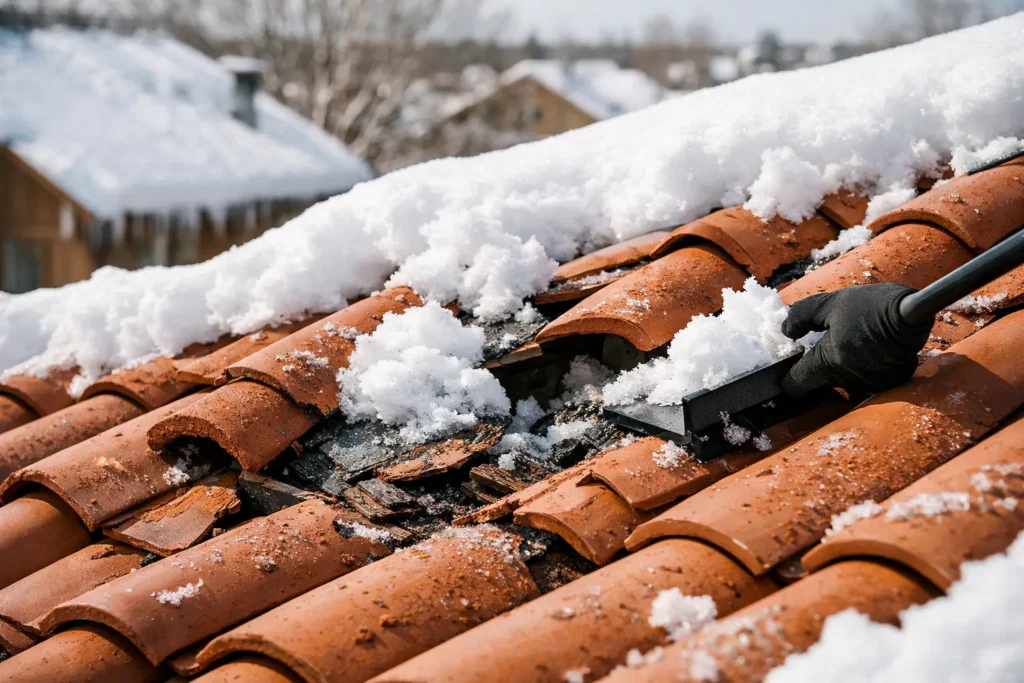
A heavy Central New York snowfall can make a clay tile roof look solid and protected. What homeowners cannot see from the ground is where Clay roof snow damage often begins: beneath packed snow, around flashing, and at tiles already weakened by age or past weather. By the time a ceiling stain appears, melting snow may have been working its way under the roof covering for days.
Clay is a durable roofing material when it is properly installed and maintained. It can also be more vulnerable to impact and freeze-thaw stress than many homeowners realize. Knowing what to look for after a storm can help you address a small repair before spring runoff turns it into interior water damage.
Why Snow Is Hard on Clay Tile Roofs
Snow alone does not automatically damage a clay roof. A properly built roof is designed to carry expected winter loads for its area. The concern is what happens when snow lingers, melts unevenly, refreezes, or slides across the tiles.
Clay tiles are strong under the right conditions, but they are not flexible. Repeated freezing and thawing can worsen hairline cracks that were already present. Water enters a small crack, freezes, expands, and leaves the tile weaker than it was before. A single winter may not cause a failure on a newer roof, but several seasons of this cycle can create loose, broken, or displaced tiles.
Ice dams are another major concern. When snow melts on the warmer upper portion of a roof and refreezes near the colder eaves, the ice can hold water behind it. That standing water may work beneath tiles and into the underlayment, flashing, or roof deck. Clay tiles shed water, but they are not the only barrier protecting your home. Once the layers underneath are compromised, a leak can develop even if most of the tiles still look intact.
Snow movement also matters. Heavy, wet snow can slide suddenly from smooth clay surfaces. As it moves, it can pull against snow guards, gutters, flashing, or tiles that are not securely fastened. This is particularly common on steep roof sections, valleys, and areas above entryways.
Clay Roof Snow Damage Warning Signs
The safest first step is to inspect from the ground after a storm and again during a thaw. Do not walk on clay tiles. Even a sound tile can crack under concentrated foot pressure, especially in cold weather. Use binoculars if needed, and call a professional for a close inspection.
Look for broken tile pieces on the ground, in gutters, or near downspouts. A tile that has shifted out of line, lifted at one edge, or appears darker than surrounding tiles may also indicate a problem. Pay close attention to roof valleys, chimneys, skylights, plumbing vents, and the transition where a roof meets a wall. These areas rely heavily on flashing and are common places for meltwater to enter.
Inside the home, watch for fresh water spots on ceilings, damp attic insulation, peeling paint near exterior walls, or a musty smell in the attic. A leak from snowmelt may be intermittent. You may see moisture during the day when temperatures rise, then see no active dripping once everything refreezes overnight.
Not every attic moisture issue is a roof leak. Poor ventilation and indoor humidity can create condensation during a cold Syracuse winter. The difference matters. A professional roof inspection can help determine whether you are dealing with failed roofing materials, an ice dam, or an attic ventilation issue that needs a different solution.
Signs That Call for Prompt Service
Some situations should not wait until spring. Contact a roofing contractor promptly if you notice active dripping, a growing ceiling stain, sagging drywall, multiple cracked tiles, bent or pulling gutters, or ice backing up at the roof edge. These problems can worsen quickly as daytime temperatures rise.
If water is near electrical fixtures, shut off power to that area if it is safe to do so and contact an electrician as needed. Protect belongings with containers or plastic sheeting, but avoid puncturing a bulging ceiling unless you have been advised by a qualified professional. A water-filled ceiling can be hazardous.
What Not to Do After a Snowstorm
Homeowners often want to clear the roof immediately, but the wrong approach can cause more damage than the snow. Avoid using metal shovels, ice picks, or roof rakes directly against clay tile. Scraping can chip tile edges, damage flashing, and tear the protective materials beneath the tiles.
Do not climb onto a snow-covered clay roof. Snow hides uneven surfaces and broken tiles, while ice makes roof access dangerous. Clay tiles can become extremely slick, and stepping in the wrong place can crack additional tiles or create a fall hazard.
Salt, chemical ice melts, and heated cables are not automatic answers either. Some products can discolor roofing materials, damage gutters, or create concentrated thawing that makes ice dam problems worse elsewhere. The right solution depends on the roof design, insulation levels, ventilation, and the exact source of the water intrusion.
If snow is creating an immediate load concern or a dangerous buildup above a doorway, professional snow removal is the safer choice. A trained crew can assess where snow can be removed without putting unnecessary stress on the roof system.
How a Professional Repair Protects the Roof
A proper inspection for clay roof snow damage goes beyond spotting visible cracks. The roofer should check the condition and placement of tiles, fasteners, underlayment, flashing, valleys, ridge areas, roof penetrations, gutters, and the attic side of the roof when accessible.
A small repair may involve replacing individual cracked tiles and securing loose pieces. If snow and ice have forced water below the tile layer, the repair may also require correcting damaged flashing or replacing compromised underlayment in a targeted area. This is why simply sealing a crack is not always a long-term fix. The visible tile could be only one part of the problem.
For older roofs, matching replacement tiles can be a consideration. Clay tiles vary by profile, color, size, and manufacturer. A qualified contractor can evaluate whether compatible replacement materials are available and explain the most practical repair path. In some cases, a localized repair is the right investment. In others, widespread tile failure or deteriorated underlayment may point to a larger restoration plan.
Homeowners with storm-related damage should also document what they see. Take clear photos from the ground, note when the leak began, and keep records of any interior damage. If an insurance claim may be involved, this information can support the conversation with your carrier. Avoid making permanent repairs before documenting the condition, but do take reasonable steps to prevent additional damage.
Preventing Winter Damage Next Season
The best time to prepare a clay roof for snow is before the first major storm. A fall inspection can identify cracked tiles, loose flashing, blocked gutters, and aging sealants while repairs are easier to complete. Clearing leaves and debris from valleys and gutters also helps meltwater move off the roof instead of backing up where it does not belong.
Attic insulation and ventilation deserve attention as well. A roof that loses excessive heat can melt snow unevenly and contribute to ice dams. The goal is not to make the attic warm. It is to keep the roof surface as consistently cold as possible while maintaining proper airflow. This is a building-system issue, so the best recommendation depends on your home’s layout and existing ventilation.
Snow guards may help manage sliding snow on certain clay roofs, especially above walkways, decks, or lower roof sections. They must be selected and installed correctly for the tile profile and roof structure. Adding them without proper planning can concentrate snow loads in the wrong area.
When winter weather exposes a problem, fast answers matter. Alpha Omega Roofing LLC can inspect suspected roof damage, explain what is happening in plain language, and recommend a repair approach that protects your home without pushing unnecessary work. If you see cracked tiles, interior moisture, or ice-related trouble, arranging an inspection before the next thaw can protect far more than the roof.