
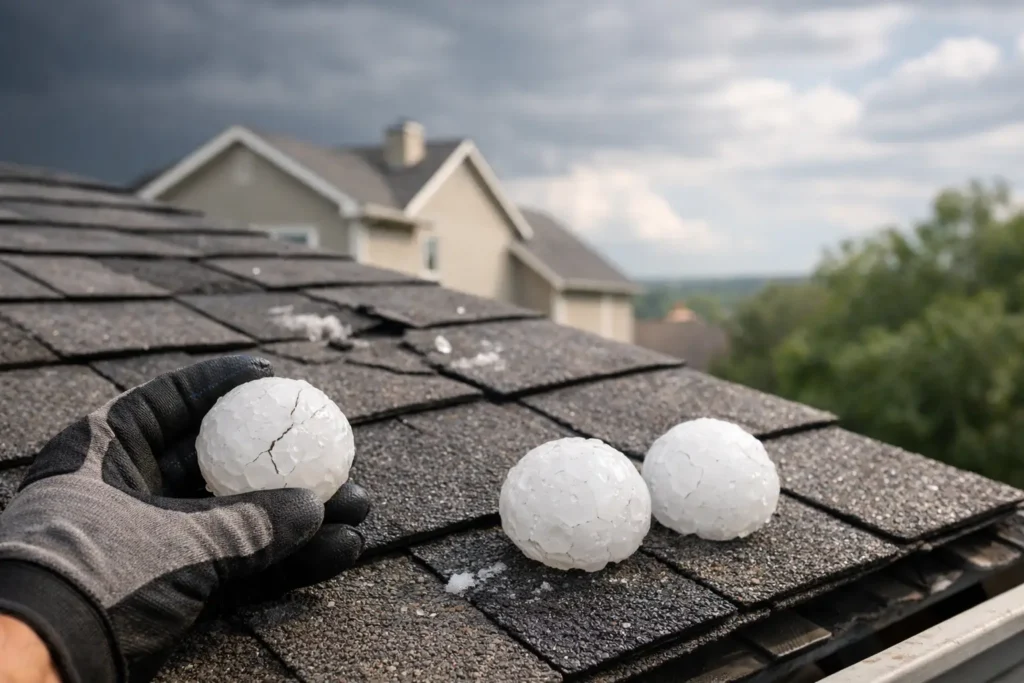
A roof can look perfectly fine after a storm and still have damage that shortens its life. That is why an impact resistant shingles review should go beyond a manufacturer label or a promise of “tougher” materials. For Central New York homeowners, the real question is whether the added protection makes financial sense for your home, roof condition, and exposure to hail, wind-blown debris, ice, and severe weather.
Impact-resistant shingles can be a smart upgrade, but they are not a cure-all for every roofing problem. They cost more than standard architectural shingles, and their value depends on proper installation, the specific shingle rating, available insurance discounts, and what your roof actually faces year after year.
Impact Resistant Shingles Review: What the Rating Means
Most impact-resistant asphalt shingles are tested under UL 2218, a widely used impact standard. During this test, a steel ball is dropped onto the shingle from specified heights to simulate a hard impact. Shingles receive a Class 1 through Class 4 rating, with Class 4 offering the highest level of impact resistance in the test.
For homeowners, Class 4 is usually the rating worth considering. These shingles are designed to better resist cracking, splitting, or puncturing when hit by hail or wind-driven debris. Many Class 4 products use a reinforced construction, such as a modified asphalt blend or a more flexible backing, to absorb impact rather than fracture.
That rating is valuable, but it needs to be understood correctly. A Class 4 label does not mean a roof is indestructible. It does not guarantee that no hailstorm will damage the shingles, nor does it mean the roof cannot leak after a major storm. It also does not rate a roof’s ability to handle poor attic ventilation, ice dams, aging flashing, or bad installation practices.
Think of the impact rating as one layer of protection. It can reduce the likelihood of certain types of storm damage, but the complete roofing system still matters.
Where Impact-Resistant Shingles Make the Most Sense
Impact-resistant shingles are often a strong fit for homeowners planning to stay in their home for many years. If your roof is already due for replacement, selecting a Class 4 option may be easier and more cost-effective than paying for repeated repairs after future storms.
They are especially worth a closer look when a property has open exposure, mature trees nearby, or a history of storm-related shingle damage. A home on a hill, near open fields, or in an area that sees frequent strong winds can face more flying debris than a more sheltered property.
In Syracuse and the surrounding region, hail is not the only concern. Heavy snow, freeze-thaw cycles, wind, and ice can all put a roof under stress. Impact-resistant shingles do not replace proper ice and water protection at vulnerable roof areas, but their tougher construction can be a practical benefit when wind carries branches or debris across the roof.
There is also a resale consideration. A newer roof with a documented Class 4 rating can be an appealing feature for buyers who understand the local weather. It is not a guarantee of a higher sale price, but it can support the overall story of a well-maintained, durable home.
The Cost Difference and Potential Insurance Savings
The main drawback is upfront cost. Impact-resistant shingles generally cost more than standard architectural shingles. The final difference depends on the manufacturer, color, roof size, roof complexity, tear-off needs, and the amount of accessory work required around chimneys, valleys, skylights, and roof penetrations.
On a simple roof, the material upgrade may feel manageable. On a large or complex roof with multiple slopes and detailed flashing, the total investment can climb quickly. That does not automatically make the upgrade a poor decision. It simply means the choice should be based on the long-term value, not the lowest proposal.
Some insurance carriers offer premium discounts for Class 4 roofing. Those savings can help offset part of the upgrade cost over time, but homeowners should never assume a discount is available. Carriers have different rules, discount amounts, documentation requirements, and eligibility limits. In some cases, the savings are meaningful. In others, they are modest or unavailable.
Before choosing a product, call your insurance provider and ask three direct questions: Does the policy offer a discount for UL 2218 Class 4 shingles? What paperwork is required? Does the discount remain in place for the life of the roof or only for a set period? Get the answer in writing if possible, and keep your final invoice and product documentation with your home records.
What an Impact Test Does Not Tell You
A roof is more than shingles. Even the best-rated shingle can fail early if it is installed over damaged decking, fastened incorrectly, or paired with inadequate ventilation. Water does not care how strong a shingle is if it finds an opening around a chimney, pipe boot, wall transition, or skylight.
A quality replacement should address the full system: roof deck condition, underlayment, ice and water protection, flashing, ventilation, starter shingles, ridge materials, and proper fastening. This is where comparing estimates becomes important. A lower estimate may use a similar-looking shingle while leaving out materials and workmanship details that protect the home from leaks.
Homeowners should also understand that impact resistance is different from wind resistance. Many premium shingles have strong wind ratings, but those ratings depend on following the manufacturer’s installation requirements. The correct number of fasteners, appropriate placement, sealed starter courses, and proper ridge installation all affect how the system performs.
How to Compare Class 4 Shingle Options
Not all Class 4 shingles are the same. Two products may carry the same impact classification while differing in appearance, wind warranty terms, algae protection, available colors, and overall warranty coverage. The best product is not always the most expensive one. It is the one that fits your home, budget, and weather exposure while being installed as a complete roofing system.
When reviewing proposals, ask the contractor to identify the exact shingle line and rating, not just say “impact resistant.” Confirm whether the quoted shingle is Class 4 under UL 2218 and whether the estimate includes all required components. Ask how damaged decking is handled if it is discovered during tear-off, and make sure flashing work is clearly addressed.
It is also reasonable to ask about the manufacturer warranty and the contractor workmanship warranty. Read the exclusions. Most shingle warranties do not cover every type of storm event, installation issue, or maintenance problem. A clear explanation upfront is far more useful than a broad warranty promise after the work is complete.
Are Impact-Resistant Shingles Right for Your Roof?
Class 4 shingles are usually a worthwhile consideration if you are replacing an aging roof, have experienced storm damage before, or want added confidence against hail and debris. They can be particularly sensible when the insurance savings and long-term ownership plan support the added investment.
They may be less necessary for a homeowner who expects to move soon, has a tight replacement budget, or lives on a highly protected lot with no meaningful history of impact damage. In that situation, a high-quality standard architectural shingle installed correctly may provide the better overall value.
The right choice starts with an honest inspection, not a sales pitch. Alpha Omega Roofing LLC can assess your roof’s current condition, explain whether impact-resistant shingles fit your needs, and provide a clear estimate for the work required. Before the next storm tests your roof, have a local professional look at the full system and help you choose protection that makes sense for your home.