
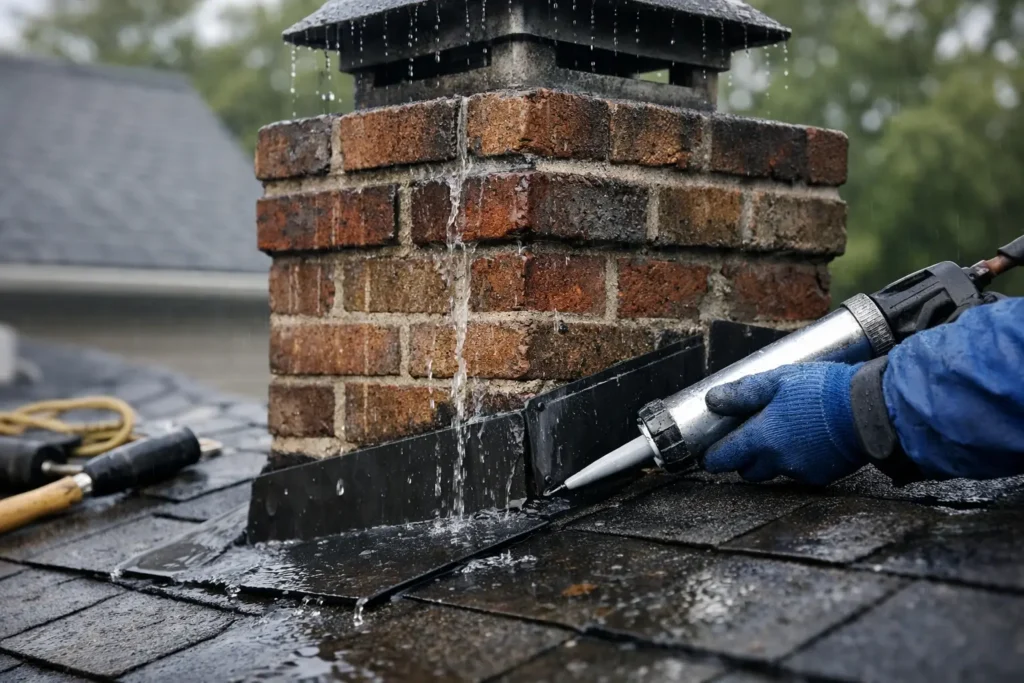
A wet spot beside the fireplace, a brown ceiling stain, or dripping during a hard rain is not a problem to watch for another week. To stop chimney water intrusion fast, start by limiting interior damage, then get the chimney and roof connection inspected before the next Central New York storm pushes more water into the home.
Chimney leaks are frustrating because water does not always enter where the stain appears. It can travel along framing, masonry joints, flashing, or the underside of the roof deck before showing up indoors. A quick patch may slow the leak, but a lasting repair depends on finding the actual entry point.
What to Do Right Away When Your Chimney Leaks
Move furniture, rugs, electronics, and anything valuable away from the affected area. Place a bucket or shallow container under active drips, and use towels to contain small amounts of water. If a ceiling is bulging with water, do not puncture it unless you can safely control the release and avoid electrical hazards. Water near light fixtures, outlets, or a breaker panel calls for extra caution.
Take clear photos and short videos of the stain, drip, damaged drywall, and any visible exterior issues. Documentation can help if the leak is connected to wind, hail, fallen limbs, or another covered storm event.
Then look outside from the ground. Do not climb onto a wet, icy, steep, or damaged roof. You may be able to spot a missing chimney cap, loose flashing, cracked mortar, spalling brick, or damaged shingles near the chimney. Those observations are useful, but they are not a substitute for a close inspection.
If water is actively entering during a storm, an emergency roof tarp or temporary weatherproofing may be appropriate. The goal is to prevent additional water from getting in until permanent repairs can be completed. Temporary protection is not the same as repairing failed flashing, masonry, or a deteriorated chimney crown.
Where Chimney Water Intrusion Usually Starts
A chimney is a roof penetration, so it relies on several parts working together. When even one part fails, water can find its way into the attic, wall cavity, or living space.
Failed or Damaged Chimney Flashing
Flashing is the metal system that seals the transition between the chimney and roofing materials. It typically includes step flashing along the sides and counterflashing that is set into the masonry. When flashing pulls away, rusts through, is installed incorrectly, or becomes buried under failing roof materials, rain can run behind it.
This is one of the most common causes of a chimney leak. Caulk smeared over loose metal may provide a brief delay, but it is rarely a dependable long-term repair. Proper flashing repair often requires removing nearby shingles, correcting the metal details, and restoring the roof surface around the chimney.
A Cracked Chimney Crown
The crown is the concrete or masonry slab at the top of the chimney. Its job is to shed water away from the flue and chimney walls. Small cracks can widen through Syracuse freeze-thaw cycles, allowing water to soak into the masonry below.
A sound crown should slope outward and extend beyond the chimney face to direct water away. If it is cracked, flat, crumbling, or separating from the flue tile, it needs attention before seasonal rain and snowmelt turn a small defect into masonry damage.
A Missing or Damaged Chimney Cap
A chimney cap keeps rain, snow, leaves, and animals out of the flue. Without one, water can enter directly from above. That moisture may damage the firebox, damper, flue liner, and surrounding masonry, especially if the chimney is unused for long periods.
Caps are a relatively straightforward fix when the rest of the chimney is in good condition. However, a cap alone will not solve a leak coming through flashing or cracked exterior mortar.
Deteriorated Brick, Mortar, or Masonry Joints
Brick is porous, and mortar joints are exposed to years of weather. Once mortar begins to crack, crumble, or wash out, the chimney can absorb water like a sponge. In winter, trapped moisture freezes and expands, breaking apart more mortar and sometimes causing the brick face to flake off.
Repointing replaces failed mortar joints. Severely damaged sections may need masonry repair or partial rebuilding. Applying a masonry water repellent can help in the right situation, but it should only be done after cracks, open joints, and crown problems are repaired. Sealing over active damage can trap moisture rather than solve the cause.
Roof Damage Near the Chimney
The issue may be roof-related rather than chimney-related. Missing shingles, worn pipe boots, ice dam damage, failing underlayment, or damaged roof decking near the chimney can send water toward the same interior area. This is why a complete evaluation should cover both the chimney and the surrounding roof system.
How to Stop Chimney Water Intrusion Fast Without Making It Worse
Homeowners understandably want an immediate fix, especially when rain is in the forecast. The right short-term action depends on what is visible and how severe the leak is. A contractor may be able to secure loose flashing, install temporary protection, replace a missing cap, or cover an exposed area until conditions allow for permanent work.
Avoid coating the chimney with roofing cement, spray foam, or multiple layers of caulk. These materials can hide the real failure, interfere with proper repairs, and create a mess that costs more to correct later. The same goes for painting over interior water stains before the area has dried and the source has been repaired.
Do not use the fireplace or wood stove if water has entered the flue, firebox, or chimney structure. Water and heat can worsen masonry damage, and a compromised chimney should be checked before use.
Why Central New York Chimneys Need Prompt Repairs
Our weather is hard on chimneys. Wind-driven rain tests flashing details, snow loads add stress, and repeated freezing and thawing can turn a hairline crack into a larger structural issue. Ice dams can also force water beneath shingles near the chimney, where it may be mistaken for a masonry leak.
That does not mean every chimney stain requires a rebuild. Sometimes the solution is targeted flashing repair, crown restoration, repointing, or a new cap. Other times, an aging roof and failing chimney details need to be addressed together for a repair that holds up. The condition of the roof, the age of the chimney, the extent of interior damage, and the source of the water all matter.
What a Professional Chimney Leak Inspection Should Cover
A useful inspection should not stop at a quick glance from the driveway. The contractor should assess the chimney cap, crown, flue area, brick and mortar condition, flashing system, and roofing materials around the chimney. They should also look for signs of hidden moisture in the attic or roof deck when access allows.
You should receive a clear explanation of what is causing the leak, what needs immediate attention, and which repairs can reasonably wait. A trustworthy contractor will distinguish between a temporary weather-protection measure and a permanent repair, explain the trade-offs, and provide straightforward pricing before work begins.
For storm-related damage, keep your photos, note the date the leak began, and save any estimates or invoices. Alpha Omega Roofing LLC can help homeowners understand visible storm damage and identify repairs needed to protect the roof and chimney from further water entry.
Do Not Wait for the Stain to Grow
A small ceiling stain can represent much more moisture above the drywall. Left alone, chimney water intrusion can lead to mold growth, damaged insulation, stained framing, rotted roof decking, loose masonry, and larger repair costs. The sooner the source is identified, the more likely the repair can stay focused and manageable.
If your chimney leaks during rain, after snowmelt, or when wind hits one side of the house, treat that pattern as useful evidence. Protect the interior, avoid risky roof access, and schedule a professional inspection promptly. A properly repaired chimney and flashing system should send water where it belongs – safely off the roof and away from your home.