
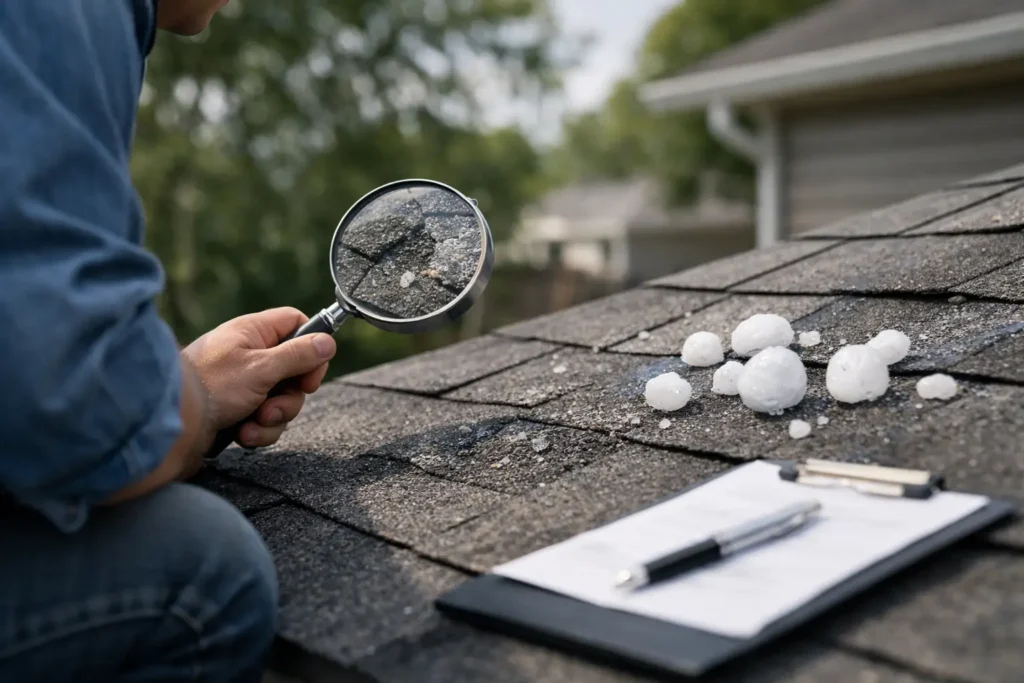
A hailstorm can leave a roof looking almost normal from the ground while causing damage that shortens shingle life, exposes vulnerable areas, or leads to leaks months later. This guide to hail damage evidence helps Central New York homeowners document what happened safely, preserve the facts, and make informed decisions before repairs begin.
The goal is not to prove a diagnosis from your driveway. It is to create a clear record of the storm, the visible conditions, and any changes to your home so a qualified roofing professional and, if needed, your insurance carrier can evaluate the damage properly.
Start documenting as soon as it is safe
Do not climb onto the roof after a storm. Wet shingles, loose granules, damaged decking, and hidden weak spots make a roof unsafe even for experienced homeowners. Take photos from the ground, from windows, or from a ladder only if you can do so without stepping onto the roof or overreaching.
Start with wide shots. Photograph each side of the house, the roofline, gutters, downspouts, siding, windows, doors, fences, decks, vehicles, and outdoor equipment. Wide photos establish the overall condition of the property and show where closer photos were taken.
Then take detailed photos of anything that looks newly damaged. Keep the original image files whenever possible. Their timestamps can help establish when you observed the condition. If your phone allows it, avoid filters, edits, or markup on the original images. You can make labeled copies later for easier reference.
Record the storm details while they are fresh
Write down the date and approximate time of the storm, how long it lasted, the size of the hail as best you can estimate, wind direction, heavy rain, and any immediate problems you noticed. A simple note is enough: “Hail began around 4:30 p.m., lasted 15 minutes, strong wind from the west, and water appeared near the upstairs bathroom ceiling afterward.”
If you safely collected a few hailstones during the storm, photograph them beside a ruler or a common object for scale before they melt. Do not rely on memory alone. Hail size can matter, but weather reports and professional inspection findings often provide useful context as well.
What hail damage evidence can look like
Hail damage is not always obvious, and not every mark is storm damage. Age, foot traffic, debris, blistering, manufacturing defects, and previous repairs can all create conditions that resemble hail impact. That is why photos are valuable, but they should be paired with a professional inspection.
On an asphalt shingle roof, hail impacts may appear as dark spots, small circular areas where granules have been knocked loose, cracks, bruising, or soft-feeling areas. A shingle can be damaged even when it is not missing. The impact may weaken the protective surface and make the shingle more likely to deteriorate over time.
Metal components often show more visible evidence. Check gutters, downspouts, flashing, roof vents, chimney caps, metal fascia, window screens, air-conditioning units, and mailbox posts for dents or fresh impact marks. These items can support the overall storm story, but damage to soft metal does not automatically mean the roof has qualifying damage. Each part of the property must be evaluated on its own condition.
Look for collateral signs around the home, including cracked window screens, chipped paint, damaged siding, dented outdoor fixtures, broken skylight covers, or torn awnings. Photograph these areas both up close and from farther away. Include a reference point, such as the full window or gutter run, so the image is easy to understand later.
Watch for interior signs, too
After wind-driven rain and hail, inspect your attic, ceilings, walls, and upper-floor rooms. Water stains, peeling paint, bubbling drywall, damp insulation, musty odors, or active drips should be documented immediately.
Take photos from several distances and note when you first saw the issue. If water is entering the home, place a container beneath the drip and move furniture or valuables away from the area. Do not delay emergency protection while waiting for an insurance decision. Preventing additional damage is part of responsible homeownership.
Build a simple, organized evidence file
A clear file is more useful than hundreds of random photos. Create one folder for the storm and use straightforward names, such as “North roofline,” “Dented west gutter,” or “Bedroom ceiling stain.” Keep photos, videos, storm notes, repair invoices, inspection reports, and communication records together.
If you have older photos of your roof or exterior, save those too. Before-and-after images can help show whether a dent, stain, or missing shingle was present before the storm. Previous roof repair records and the approximate age of your roof are also helpful. They give an inspector a better picture of the home’s condition, even though age alone does not determine whether storm damage occurred.
Avoid throwing away damaged materials until they have been photographed and a professional tells you they are no longer needed. If a branch fell, a gutter section came loose, or a vent cover broke, take pictures before cleanup when it is safe to do so. For urgent cleanup, document first, then keep receipts for temporary protective work.
Request a professional roof inspection
A roof inspection is where documentation becomes a practical plan. An experienced local contractor can inspect shingles, flashing, vents, valleys, penetrations, gutters, attic conditions, and other vulnerable areas that cannot be accurately assessed from the ground.
Ask for clear explanations in plain language. You should understand whether the roof has hail impacts, wind damage, ordinary wear, installation concerns, active leak points, or no actionable storm damage at all. A trustworthy contractor should not pressure you toward a full replacement when a repair, maintenance step, or continued monitoring makes more sense.
For Syracuse-area homes, this judgment matters. Central New York roofs already face snow load, freeze-thaw cycles, wind, ice dams, and heavy rain. A roof near the end of its service life may show several issues at once. The inspection should separate what is storm-related from what is age-related as carefully as possible.
Alpha Omega Roofing LLC can inspect storm-affected roofs and exterior components, explain the findings, and recommend appropriate next steps. If immediate protection is needed, ask about temporary repairs that can help limit further water intrusion while permanent work is planned.
Handle the insurance process carefully
If you decide to contact your insurance carrier, report the facts: the storm date, the visible conditions you documented, and any leaks or damage that appeared afterward. Provide photos, records, and inspection information when requested. Keep notes from phone calls, including the date, representative’s name, and claim number.
Coverage depends on your policy, deductible, exclusions, roof age, and the insurer’s inspection findings. Do not assume every hailstorm results in covered replacement, and do not assume a denied or partial claim means there is no repair need. Insurance coverage and the condition of your home are related but separate questions.
Be cautious with anyone who promises a specific claim outcome before a full inspection or tells you to sign paperwork immediately after a storm. You deserve time to review the scope of work, understand payment terms, and choose a contractor you trust. A written estimate should clearly describe the work, materials, and any conditions that could affect the final price.
Protect the home while the evidence is reviewed
Documentation should never come at the expense of safety. If shingles are missing, flashing is loose, a tree has struck the roof, or water is entering the home, contact a qualified roofing contractor promptly. Temporary measures may be necessary to protect the structure and belongings from additional damage.
Keep taking photos if conditions change. A small ceiling spot that becomes a larger stain after the next rain is useful information, not something to ignore. Quick action can limit the scope of repairs and give you a more accurate picture of what the storm left behind.
A good evidence file does not need to be complicated. It needs to be timely, honest, organized, and backed by a careful professional inspection. That gives you the clearest path forward, whether the answer is a minor repair, an insurance claim, or the peace of mind that your roof is still doing its job.