
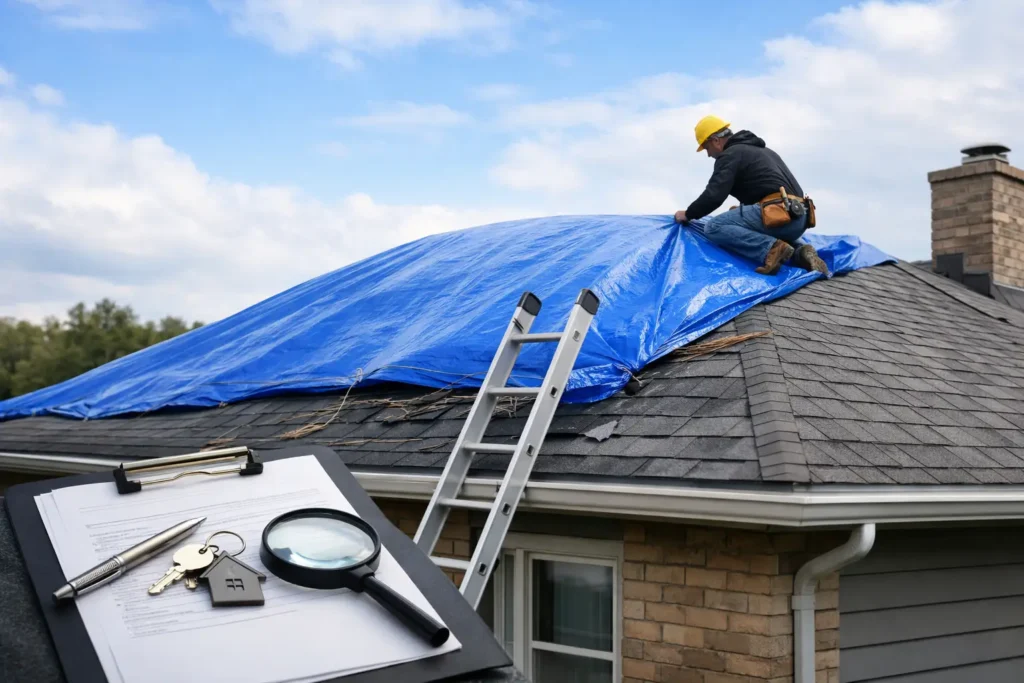
A roof leak after a Central New York windstorm can turn from a small ceiling stain into soaked insulation, damaged drywall, and mold concerns fast. So, is roof tarping insurance covered? In many cases, homeowners insurance may cover a professionally installed emergency tarp when it is needed to prevent further damage from a covered event. The key is the reason the roof needs protection, the language in your policy, and how quickly you document the damage.
A tarp is not a permanent repair. It is a temporary safeguard that buys time while your claim is reviewed and a qualified roofer determines the full scope of damage. Taking that step promptly can also show your insurer that you acted reasonably to protect the property.
When Is Roof Tarping Insurance Covered?
Most standard homeowners policies require you to take reasonable steps to prevent additional damage after a loss. If high winds tear off shingles, a tree limb punctures the roof, or hail damages roofing materials and water can enter the home, an emergency tarp may be considered part of that damage-mitigation effort.
Coverage is generally more likely when the tarp is installed because of a sudden, accidental, covered peril. Storm-related wind damage is a common example in Syracuse and the surrounding area, particularly when gusts lift shingles or expose vulnerable roof sections. Damage from falling branches, ice-related impacts, fire, or certain types of vandalism may also qualify depending on the policy.
The insurance company will not usually make a final coverage decision based on the tarp alone. It will look at the cause of the opening in the roof. If the underlying damage is covered, reasonable emergency protection costs may be covered as well, subject to your deductible and policy limits.
That distinction matters. A tarp installed over a roof that failed because of years of neglected maintenance, worn-out shingles, or a long-standing leak may not be reimbursed. Insurers commonly exclude normal wear and tear, deterioration, and damage caused by deferred upkeep.
Why Waiting Can Create a Bigger Problem
Homeowners sometimes wait to tarp a roof because they are worried about spending money before the insurance adjuster arrives. That hesitation is understandable, but it can be costly. An open roof can allow rain, melting snow, and wind-driven moisture into areas that were not initially damaged.
Insurance policies typically expect homeowners to mitigate additional loss when it is safe to do so. That does not mean climbing onto a steep, icy, or storm-damaged roof yourself. It means arranging safe, reasonable temporary protection and keeping records of what happened.
A proper emergency tarp should be secured to withstand wind without causing unnecessary additional damage to shingles, gutters, or siding. Loose plastic sheeting and improvised fasteners often fail during the next storm. They can also make a later inspection harder by concealing the original damage or creating new issues.
For an active leak or visible roof opening, a professional emergency response is usually the safest choice. A roofing contractor can document the affected areas, install the tarp correctly, and identify urgent repairs that cannot wait.
What Insurers Usually Need to See
Clear documentation helps support a claim and avoids confusion about when the damage occurred. Before temporary repairs are made, take photos and video from the ground if it is safe. Capture missing shingles, fallen limbs, damaged flashing, interior water stains, wet flooring, and any personal property affected by the leak.
Keep a record of the storm date, the time you first noticed the problem, and every action you took afterward. Save the tarp invoice, receipt, contractor inspection notes, and any estimate for permanent repairs. If a contractor finds hidden damage after removing roofing materials, that information may also be relevant to the claim.
When you call your carrier, explain the facts plainly: what happened, when it happened, and what damage you can see. Ask whether the policy has a separate limit for emergency services or temporary repairs. Also ask how the insurer wants estimates, invoices, and photos submitted.
Do not throw away damaged materials unless your insurer or contractor advises you to do so. A few removed shingles, broken flashing pieces, or photos of the debris may help establish the cause of loss. At the same time, do not delay necessary mitigation just to preserve evidence. Good photos and professional documentation often provide what is needed.
Your Deductible May Change the Answer
Even when roof tarping is covered, the payment may not feel straightforward. Emergency tarp costs are typically applied to the same deductible as the storm-damage claim. For example, if a tarp costs $700 and your wind deductible is $1,500, the tarp expense alone may not result in a check.
That does not mean tarping was a bad decision. The expense may still be included with the full repair or replacement claim if the covered damage exceeds your deductible. More importantly, stopping water from spreading can prevent thousands of dollars in avoidable interior repairs.
Some policies use a percentage deductible for wind or named storms rather than a flat dollar amount. Review your declarations page or speak with your insurance representative if you are unsure. Knowing the deductible before a storm happens makes the decision less stressful when an emergency occurs.
What Can Lead to a Denied Tarping Claim?
A denial does not always mean the insurer disputes that a tarp was installed. Often, it means the underlying roof damage was excluded or could not be tied to a covered event. Common issues include old roofing materials at the end of their service life, prior leaking, improper installation, lack of maintenance, or interior water damage that developed gradually.
The type of policy also matters. Some policies provide replacement-cost coverage for a roof, while others pay actual cash value after depreciation. Some carriers limit coverage for older roofs or apply special deductibles for wind and hail. The age and condition of your roof can affect the permanent repair settlement even if emergency mitigation was reasonable.
Be cautious about anyone who promises that insurance will cover everything before the policy and damage have been reviewed. A reliable contractor can help document conditions, explain repair options, and prepare a detailed estimate. They cannot guarantee a claim outcome or tell you what your carrier must pay.
What to Do Right After Roof Damage
Start by protecting people, not property. Stay away from downed power lines, unstable trees, and areas where the ceiling is bulging with water. If water is entering the home, move valuables out of the affected area and place containers beneath active drips when it is safe.
Then take photos, contact your insurance company, and arrange a professional roof inspection or emergency tarp installation. Do not climb onto the roof after a storm. Wet shingles, loose decking, and hidden structural damage make that a serious fall risk.
A reputable contractor should explain what is visible, what needs immediate protection, and what may require further inspection once conditions are safe. Ask for written documentation of the emergency work and a clear estimate for recommended repairs. Straight answers matter when you are making decisions under pressure.
A Tarp Protects the Claim and the Home
An emergency tarp does not guarantee insurance coverage, but it is often the right move after a covered storm damages your roof. The goal is simple: stop more water from getting in while the evidence is fresh and the repair plan is being developed.
If your home has missing shingles, a puncture, or an active leak after severe weather, do not wait for the next round of rain or snow. Alpha Omega Roofing LLC can inspect the damage, provide practical guidance, and install reliable temporary protection while you work through the next steps with your insurer.