
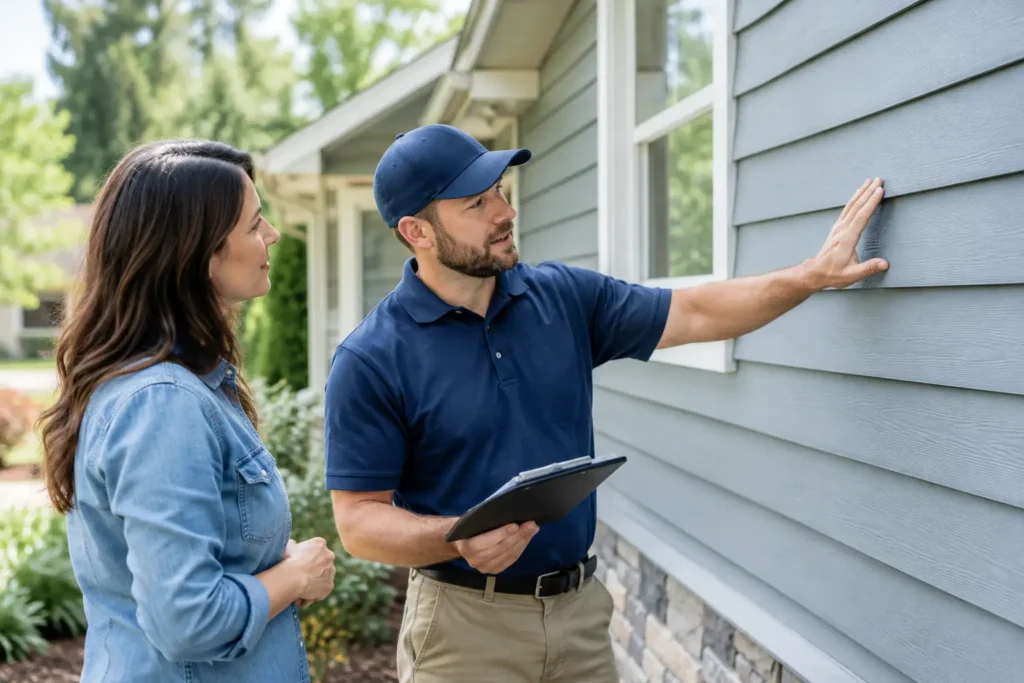
A siding project can look straightforward from the driveway, but the work behind the panels determines whether your home stays dry, efficient, and protected through Central New York winters. This guide to choosing siding contractors helps you look beyond a low price and find a crew that will identify underlying issues, explain the scope clearly, and stand behind the finished job.
Start With the Condition of Your Home
Before comparing contractors, get clear on what is actually wrong. Faded or cracked siding may be mostly a curb appeal concern. Loose panels, soft trim, recurring moisture stains, warped boards, or visible gaps can point to water intrusion, deteriorated sheathing, or a flashing problem that needs attention before new siding goes on.
A dependable contractor should inspect more than the front elevation. They should look at corners, windows, doors, roof-to-wall transitions, soffits, fascia, and areas where gutters overflow. If a contractor measures quickly and immediately offers a price without asking about leaks, drafts, or storm damage, that is a reason to slow down.
This matters in Syracuse and surrounding communities because wind-driven rain, freeze-thaw cycles, snow buildup, and seasonal temperature swings can expose weak installation details. New siding should not simply cover a problem. It should be part of a complete exterior protection plan.
Verify the Basics Before You Compare Prices
The right contractor does not need a flashy sales pitch. They do need to be accountable. Ask whether the company carries current general liability insurance and workers’ compensation coverage. Request proof rather than relying on a verbal assurance. If someone is injured on your property or damage occurs during the work, proper coverage protects both the homeowner and the crew.
Also ask how long the business has been serving the area, who will perform the installation, and whether subcontractors will be involved. Subcontracting is not automatically a problem, but you deserve to know who is responsible for the work, communication, cleanup, and warranty service.
Local experience has practical value. A contractor who regularly works on homes in Central New York is more likely to understand how snow, ice, wind, and moisture affect siding, trim, ventilation, and drainage details. They should also be familiar with the styles and construction methods common in older city homes, suburban developments, and rural properties.
Online reviews can help, but read them with context. Look for consistent comments about punctuality, jobsite cleanliness, responsiveness, workmanship, and how the company handled a concern after installation. A few imperfect reviews are less telling than a repeated pattern of poor communication or unfinished work.
What to Ask During a Siding Estimate
A useful estimate appointment should feel like a conversation, not a rushed sales call. The contractor should ask what you want to improve, whether you have noticed water issues, and what concerns you most about the home. They should then explain their recommendations in plain language.
Ask what the written proposal includes. A complete scope should identify the siding material and color, trim components, removal of existing siding if applicable, housewrap or weather-resistive barrier work, flashing, caulking, disposal, cleanup, and any expected repairs. If a contractor plans to install over existing siding, ask why that approach is appropriate for your home and whether it could hide damage or affect window and trim details.
You should also ask how they handle rotten sheathing, damaged framing, or other concealed conditions found after the old material comes off. No contractor can predict every hidden repair, but they should explain how discoveries are documented, priced, and approved before additional work begins. A vague answer can lead to an unpleasant surprise once the project is underway.
For a project of this size, ask at least these questions:
- What material system do you recommend for this home, and why?
- How will you protect landscaping, windows, walkways, and outdoor equipment?
- Who is the on-site point of contact each day?
- How will water be managed around windows, doors, rooflines, and penetrations?
- What happens if hidden damage is found?
- What workmanship warranty do you provide, separate from the manufacturer warranty?
Clear answers now are a good sign of clear communication later.
Compare Materials Based on Your Priorities
There is no single best siding material for every home. The right choice depends on budget, maintenance preferences, architecture, exposure to weather, and how long you plan to own the property.
Vinyl siding remains a practical option for many homeowners because it is cost-effective, low maintenance, and available in many profiles and colors. Quality varies, however. Thicker panels generally provide better impact resistance and a more substantial appearance. Installation details matter just as much as the product: vinyl needs room to expand and contract, so panels should not be nailed too tightly.
Fiber cement can offer a more traditional appearance and strong durability, but it typically costs more and requires careful cutting, fastening, and finishing. Engineered wood products can provide the warmth of wood with improved resistance to some moisture and insect concerns, though proper clearance from roofing, grade, and landscaping is still essential.
Natural wood has timeless appeal, especially on certain historic or distinctive homes, but it demands regular maintenance. It may be the right choice for a homeowner committed to preserving a particular look, not for someone seeking the lowest-maintenance exterior possible.
A trustworthy contractor will discuss the trade-offs without pushing one material simply because it is easiest to sell. Ask to see samples in outdoor light and consider how the color will work with your roof, masonry, shutters, and neighboring features. Dark colors can look sharp, but they may show dust or heat effects differently than lighter shades depending on the product.
Do Not Treat the Lowest Bid as the Best Value
When estimates vary widely, compare the details line by line before deciding. A lower quote may exclude tear-off, upgraded trim, flashing, underlayment, disposal, or necessary repair allowances. It may also reflect a lower-grade material or a smaller scope of preparation.
The highest estimate is not automatically the best choice either. It should justify its price with a clearly defined scope, better material specifications, stronger warranty coverage, or additional work that genuinely benefits your home. If the proposals are difficult to compare, ask each contractor to clarify the same items in writing.
Be cautious with unusually large upfront payment requests. Payment schedules should be reasonable and tied to defined project stages. Read the contract before signing, including change-order procedures, estimated timeline, cleanup responsibilities, payment terms, and warranty language. A professional company will give you time to review the agreement and answer questions directly.
Pay Close Attention to Water Management
Siding is only one layer of your home’s defense against water. The best-looking installation can fail if flashing, housewrap, window integration, or roof transitions are handled poorly. This is where experienced exterior contractors separate themselves from crews that focus only on speed.
Ask how the contractor will address kickout flashing where a roof meets a wall, flashing around windows and doors, and transitions between siding and masonry or decking. These areas are common sources of hidden water damage. If your roof, gutters, soffits, or chimney also need work, coordinating those details can prevent mismatched materials and avoidable rework.
Proper ventilation and drainage also matter. In some cases, a contractor may recommend replacing damaged fascia, improving trim details, or correcting a gutter issue as part of the project. That can increase the initial cost, but ignoring the cause of moisture can shorten the life of new siding.
Look for Communication You Can Rely On
You should know when the work is expected to begin, how weather delays will be handled, and who to contact with questions. Professional communication is not an extra. It is part of protecting your property while the project is in progress.
Before making a final decision, ask for a realistic schedule and confirm that permits, if required, will be addressed. Find out how cleanup will be managed each day, especially if you have children, pets, or limited parking. A good contractor respects that your house remains your home throughout the job.
Alpha Omega Roofing LLC approaches exterior work with the same straightforward focus homeowners expect from a local protection partner: inspect carefully, explain the options, use durable materials, and keep the process clear from estimate through cleanup.
New siding is a long-term investment in your home’s appearance and weather protection. Choose the contractor who takes the time to understand the condition of your exterior, puts the full scope in writing, and gives you confidence before a single panel is installed. A free, detailed estimate is a practical place to start when you are ready to protect your home for the seasons ahead.