
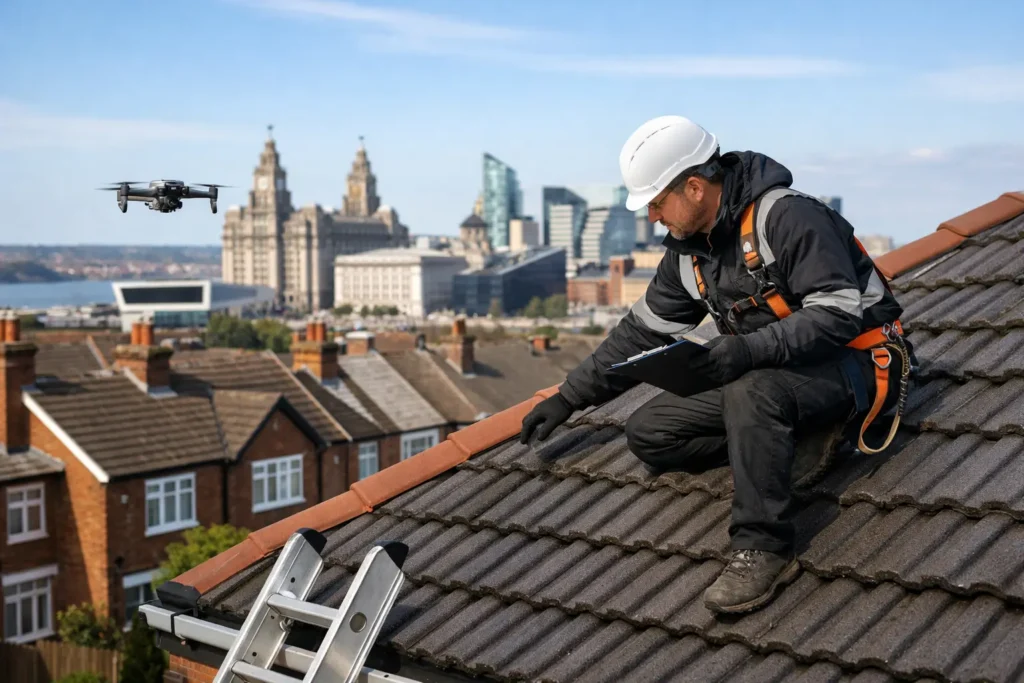
A small ceiling stain rarely stays small for long. By the time water shows up inside, the roof problem has usually been working for a while. That is why a Liverpool roof inspection service matters most before the damage spreads – not after drywall, insulation, and framing are already involved.
For homeowners in Central New York, roofs take a beating. Snow load, ice dams, wind-driven rain, and freeze-thaw cycles can wear down shingles and flashing faster than many people expect. A proper inspection gives you a clear picture of what is happening up top, what can wait, and what needs attention now.
What a Liverpool roof inspection service should actually do
A real inspection is not someone glancing at the roofline from the driveway and handing you a big estimate. It should be a close evaluation of the roofing system, not just the shingles. That includes the condition of flashing, roof penetrations, ridge caps, valleys, underlayment performance, ventilation, drainage paths, and any visible signs of storm impact or moisture intrusion.
For most homeowners, the value is clarity. You want to know whether you are dealing with a minor repair, normal aging, storm damage, or signs that replacement is getting close. You also want straightforward answers in plain language. A good inspection should help you make a smart decision, not pressure you into the biggest possible job.
That is especially important after rough weather. High winds can lift shingles without tearing them off completely. Hail can bruise roofing materials in ways that are easy to miss from the ground. Ice can push water into vulnerable areas around eaves and flashing. If those issues are caught early, the repair is often simpler and less expensive.
Signs you should schedule a roof inspection
Sometimes the warning signs are obvious, but often they are not. A roof can look mostly fine from the street and still have damage that needs professional attention.
If you have noticed water spots on ceilings, damp attic insulation, peeling paint near rooflines, granules collecting in gutters, or shingles that look curled, cracked, or out of place, it is time to have the roof checked. The same goes for any roof that has been through a recent storm, especially if your neighborhood saw wind damage or fallen branches.
Age also matters. Even if there is no active leak, an older roof may have areas where the protective life is wearing thin. An inspection helps separate a roof with a few repairable issues from one that is approaching the point where repeated patching stops making financial sense.
There is also the timing issue. Waiting until water is actively dripping into the house limits your options. Emergency work is sometimes necessary, but homeowners usually get better outcomes when the problem is identified before it becomes urgent.
Why local weather makes inspections more important
A Liverpool roof inspection service should reflect local conditions, not a generic checklist. Roofs in this region face long winters, heavy snow, and constant temperature swings. Those conditions affect more than shingle wear. They also stress flashing joints, ventilation balance, sealants, and roof edges.
Freeze-thaw cycles are a major factor. Water works its way into small openings, freezes, expands, and slowly widens weak points. You may not notice the result immediately, but over time it can lead to leaks around flashing, chimney areas, skylights, and valleys.
Ventilation is another issue that often gets overlooked. Poor attic ventilation can contribute to moisture buildup, uneven roof temperatures, and ice dam formation. That does not mean every roof problem is caused by ventilation, but it is often part of the full picture. A thorough inspection should look at how the roof system is performing as a whole.
What happens during a professional roof inspection
Most homeowners want the same thing from an inspection – a clear answer and a clear next step. The process should begin with an exterior assessment of visible roofing materials and known trouble spots. If conditions allow, the inspector may get on the roof for a closer look. In other situations, especially after severe weather or on steep roofs, inspection methods may vary for safety.
The attic or interior may also be checked if there are signs of leaks, staining, or ventilation concerns. That part matters because some roof issues show up underneath before they are obvious outside. Moisture marks, mold growth, soft decking, or daylight coming through roof boards can all tell an important part of the story.
After that, you should expect a straightforward explanation of findings. If repairs are recommended, they should be tied to actual problem areas. If replacement is the better long-term choice, the reason should be clear. Homeowners deserve to know whether the issue is isolated, widespread, storm-related, or mainly age-related.
Repair or replacement? It depends on the roof
This is where honesty matters. Not every damaged roof needs to be replaced, and not every aging roof is worth repairing. The right answer depends on how extensive the damage is, how old the roof is, and whether the trouble spots are part of a larger pattern.
If the issue is limited to a small section of missing shingles, minor flashing failure, or a localized leak, repair may be the practical choice. If the roof has repeated leaks, widespread shingle deterioration, soft decking, or signs of storm damage across multiple slopes, replacement may make more sense financially.
There are trade-offs. A repair costs less upfront, but if the roof is near the end of its service life, that savings can disappear quickly if more issues follow. A replacement is a bigger investment, but it may eliminate ongoing patchwork and give you stronger protection through future winters. A trustworthy inspection should lay out those options without overselling either one.
Storm damage inspections and insurance questions
After a major storm, speed matters, but so does accuracy. Homeowners often know something happened because they hear the wind, see debris, or find shingles in the yard. What they do not always know is how much damage the roof actually took.
A storm-focused inspection can help document visible impacts and identify whether the damage appears consistent with wind or hail exposure. That can be helpful if you are deciding whether to contact your insurance company. It is not about making assumptions. It is about getting a professional assessment before small damage turns into interior damage.
This is one reason many homeowners prefer working with a local contractor that understands the weather patterns and roofing problems common in the area. Companies like Alpha Omega Roofing LLC know what Central New York roofs go through and how quickly hidden damage can turn into a bigger repair.
Choosing the right Liverpool roof inspection service
The best inspection service is not the one with the flashiest sales pitch. It is the one that shows up, evaluates the roof carefully, communicates clearly, and gives you an honest recommendation.
Look for a contractor that is insured, experienced with residential roofing, and comfortable explaining both immediate concerns and long-term outlook. Fast response matters, especially when there is an active leak, but responsiveness should come with real workmanship and sound judgment.
It also helps to work with a company that can handle the next step. If your inspection turns up storm damage, flashing failure, or broader wear, you do not want to start over with another contractor just to get the work done. A smooth process usually starts with a solid inspection and continues with practical repair or replacement options.
The value of acting early
A roof inspection is not just about finding damage. It is about buying time, protecting your home, and avoiding decisions made under pressure. Catching a problem early can help preserve decking, insulation, ceilings, and wall finishes. It can also reduce the chances of emergency service during the worst possible weather.
For homeowners in Liverpool, peace of mind comes from knowing where the roof stands right now. If everything looks good, that is useful information. If there is a problem, you can address it before it affects more of the house and more of your budget.
When your roof has been through a storm, is showing its age, or is giving you even one sign that something is off, getting it inspected is a smart move. A good roof does its job quietly. When it starts sending signals, it is worth listening before the next round of weather makes the answer more expensive.