
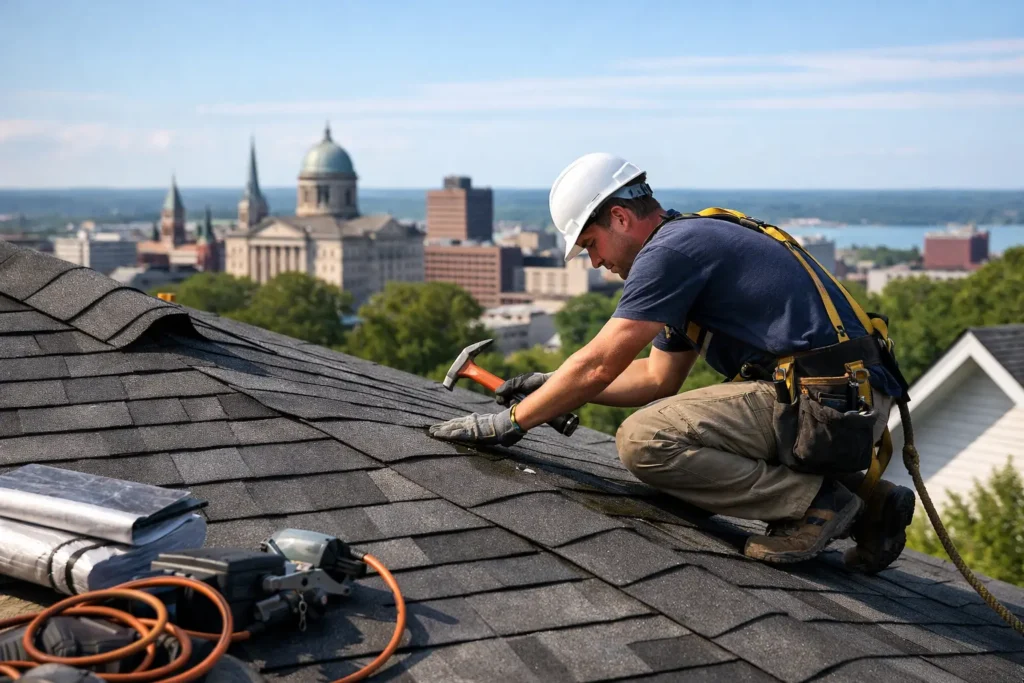
A small roof problem rarely stays small for long in Central New York. One missing shingle after a windstorm, a slow leak around flashing, or ice dam damage along the eaves can turn into stained ceilings, wet insulation, and more expensive repairs than most homeowners expect. That is why Syracuse roof repair services need to be more than a quick patch. They need to address the source of the problem and hold up through heavy snow, freeze-thaw cycles, wind, and rain.
For homeowners, the real issue is not just the roof. It is the stress that comes with not knowing how bad the damage is, how quickly it needs attention, or whether a repair will actually solve it. A good repair process should give you straight answers, clear pricing, and a practical recommendation based on the condition of your roof – not a sales pitch.
What Syracuse roof repair services should actually include
Not every roofing issue calls for a full replacement, but not every leak should be patched and forgotten either. The right repair starts with a close inspection of the damaged area and the surrounding roof system. Water often enters in one spot and shows up somewhere else, which is why surface symptoms can be misleading.
A dependable contractor will check shingles, flashing, vents, valleys, underlayment exposure, chimney connections, and any signs of decking or moisture damage. If your home has experienced recent wind or hail, the inspection should also look for less obvious storm damage that may shorten the life of the roof even if you are not seeing active leaks yet.
In practical terms, repair service may involve replacing missing or broken shingles, resealing flashing, correcting exposed nail heads, repairing vent boots, addressing small areas of decking damage, or fixing leak-prone transitions where the roof meets siding, chimneys, or masonry. The best work is not just about stopping water today. It is about protecting the roof from failing again during the next stretch of bad weather.
The most common roof problems in Syracuse homes
Local weather creates a very specific kind of wear and tear. Snow load, ice buildup, high winds, and sudden temperature swings can all affect different parts of the roof at once.
Leaks around flashing are one of the most common repair calls, especially near chimneys, skylights, and wall intersections. Shingle loss is also common after strong winds, and older roofs can develop cracking, curling, or granule loss that leaves them more vulnerable to water intrusion. Ice dams are another major issue in this region. When heat escapes through the attic, snow melts and refreezes at the roof edge, forcing water back under the shingles.
Sometimes the problem is obvious. You may see a stain on the ceiling or find shingles in the yard. Other times, the warning signs are subtler – a musty smell in the attic, peeling paint near the roofline, damp insulation, or a sudden spike in utility bills caused by moisture and ventilation problems. These are the kinds of issues worth checking sooner rather than later.
Repair now or replace later?
This is where honesty matters. Some roofs are excellent candidates for repair. Others are at a stage where repeated repairs stop making financial sense.
If the damage is limited to one section and the rest of the roof is in solid condition, a repair is often the right move. That is especially true when storm damage is recent and the roofing system still has good overall life left. In those cases, prompt repairs can prevent structural damage and extend the roof’s performance.
If the roof is older, has multiple leak areas, or shows widespread shingle deterioration, it depends on how extensive the wear is. A repair may still be worthwhile if it buys time and protects the home through an immediate problem. But if repairs are stacking up every season, replacement may be the better long-term investment.
A trustworthy contractor should explain both sides clearly. Homeowners should not feel pressured into replacing a roof that can be repaired properly, and they should not be talked into a cheap patch when the system is already failing across multiple areas.
Why speed matters with roof damage
Roof problems tend to spread quietly. A leak that starts near flashing can move into decking, insulation, drywall, and even interior framing before the full extent becomes visible. That means waiting too long can turn a repair job into a larger restoration project.
Speed matters most after storms, during freeze-thaw periods, and any time active water is getting into the house. Fast response can reduce interior damage and help preserve as much of the existing roof as possible. It can also matter for documentation if storm damage may involve an insurance claim.
That does not mean every repair is an emergency, but many homeowners underestimate how quickly moisture issues grow. If you have visible leakage, recent storm impact, or signs of water intrusion in the attic, it makes sense to schedule an inspection as soon as possible.
What to expect from a professional roof repair process
The process should feel straightforward from the first call. A contractor should ask the right questions about the age of the roof, the type of issue you are seeing, when it started, and whether the damage followed a weather event. From there, the next step is a proper inspection, not guesswork.
After the inspection, you should get a clear explanation of what was found, what needs immediate attention, and whether there are any related issues nearby. Good contractors do not hide behind vague language. They should be able to show where the problem is, explain why it happened, and tell you whether the repair is expected to solve the issue on its own.
Pricing should be transparent. Homeowners deserve to know what work is being performed, what materials are being used, and whether any hidden damage could affect the final scope if it is uncovered during repair. Especially in older Syracuse homes, roof damage can reveal underlying issues once shingles or flashing are removed.
Storm damage and insurance questions
After a major storm, many homeowners are unsure whether to call a roofer or their insurance company first. In most cases, having the roof inspected early helps you understand whether the damage looks cosmetic, repairable, or serious enough to support a claim.
Insurance-related roof work can be stressful because documentation matters. Photos, damage notes, and a clear explanation of affected areas can help homeowners make informed decisions. The key is not to assume every storm leads to a claim, but also not to ignore damage that could get worse if left exposed.
For homeowners in Syracuse and surrounding communities, this is where working with a local contractor makes a difference. Someone familiar with regional weather patterns, common storm impacts, and the age of local housing stock is better positioned to spot the issues that out-of-area companies often miss.
Choosing Syracuse roof repair services with confidence
The best choice is usually not the company with the lowest number on paper. It is the one that communicates clearly, responds quickly, and stands behind the work. Roof repair is not just about replacing materials. It is about protecting your home, your budget, and your peace of mind.
Look for a contractor that is insured, experienced with residential roofing in Central New York, and willing to explain your options in plain language. You want someone who understands the difference between a simple repair, a storm-related issue, and a roof that is nearing the end of its service life.
That local experience matters. Roofs in this region deal with a level of seasonal stress that demands durable workmanship and materials suited to harsh conditions. A repair done without that in mind may hold for a few months, but not for the next winter.
Alpha Omega Roofing LLC works with homeowners who need practical answers, not runaround. Whether the issue is a leak, missing shingles, flashing damage, or storm-related wear, the goal should always be the same – fix the problem correctly, explain the condition of the roof honestly, and help the homeowner make the right next decision.
If your roof has started showing signs of damage, trust your instincts and have it looked at before the problem spreads. A timely repair can protect more than shingles. It can protect the parts of your home you never want water to reach.