
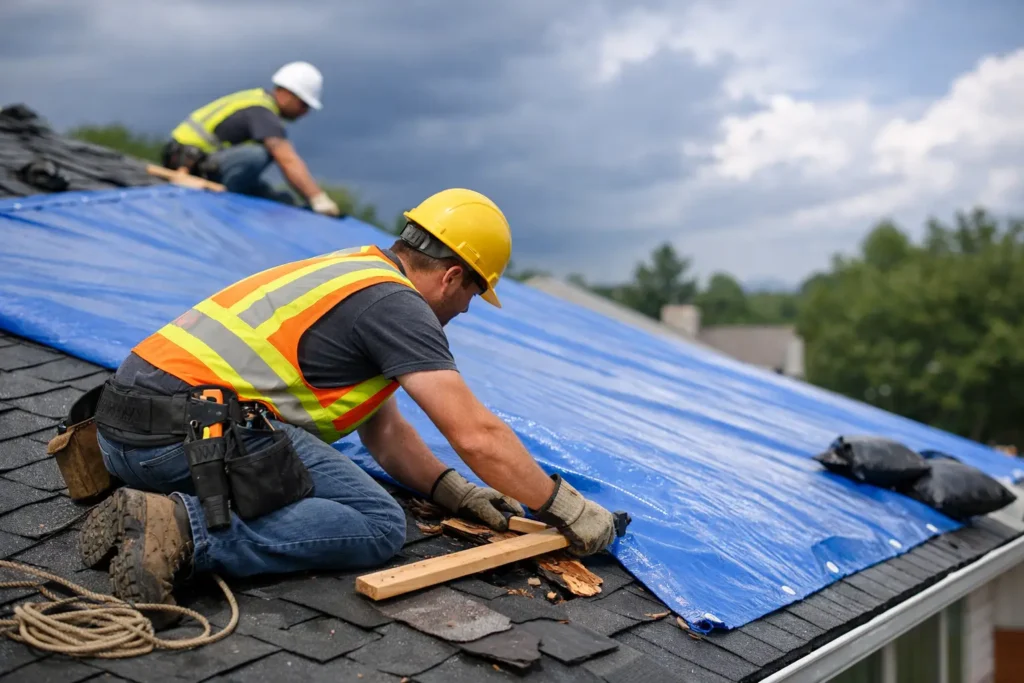
A windstorm can turn one missing shingle into a ceiling stain before the next morning. Emergency tarping after a roof storm is meant to slow that damage down, not permanently repair the roof. The priority is protecting your home, your belongings, and your family until a qualified roofing professional can inspect the damage and recommend the right repair.
For Central New York homeowners, that can mean acting after heavy snow, ice, high winds, driving rain, or a fallen branch. A tarp may be the right short-term measure, but only when the roof can be approached safely. If conditions are dangerous, staying off the roof is the right call.
Start With Safety, Not the Tarp
Do not climb onto a roof during rain, lightning, high winds, darkness, or icy conditions. Wet shingles are slick, and storm damage can weaken decking, loosen flashing, or hide holes under debris. A roof that looks stable from the ground may not be safe underfoot.
Start by walking around the home from a safe distance. Look for missing shingles, exposed underlayment, bent or lifted metal flashing, punctures from branches, displaced ridge caps, and sections of roof that appear uneven. Inside, check the attic and upper-level ceilings for drips, damp insulation, water stains, or sagging drywall.
If you see downed power lines, smell gas, notice structural movement, or have water entering near electrical fixtures, treat the situation as an emergency beyond roofing. Keep everyone away from the affected area and contact the appropriate utility or emergency service first.
A tarp is not worth a fall. Professional roofers have the safety equipment, roof-access experience, and materials needed to install a temporary cover without creating more damage. When the roof is steep, two stories high, icy, heavily damaged, or blocked by debris, call for help rather than trying to force a DIY fix.
When Emergency Tarping After a Roof Storm Makes Sense
A properly installed tarp can be useful when a limited area of the roof has been opened to the weather and rain or snow is expected before repairs can begin. It is commonly used over a missing-shingle section, a small puncture, damaged flashing, or an area exposed by a fallen limb.
It is less effective when the damage is widespread, when water is entering from multiple locations, or when the roof deck has collapsed or feels soft. In those cases, a tarp may still reduce exposure, but the home needs a prompt professional assessment. Water does not always enter directly below the visible roof damage. It can travel along decking, framing, pipes, or insulation before appearing inside.
The goal is simple: shed water away from the opening. Covering only the visible hole like a flat patch often fails because wind-driven rain can work underneath the edges. A temporary cover must extend above the damaged area and be secured without punching unnecessary holes through sound roofing.
What to Do Before Help Arrives
You can take several useful steps from the ground or inside the home while arranging an emergency roof inspection. First, document the damage. Take clear photos and video of missing materials, fallen branches, damaged gutters, interior leaks, wet belongings, and ceiling stains. Include wide shots that show the area of the home as well as close-ups of the damage.
This record can help with an insurance claim and gives your contractor a clearer picture before arriving. Do not throw away damaged materials or move a fallen limb if doing so could create a hazard. If it is safe, note the date and approximate time of the storm, along with any hail, wind, or other conditions you observed.
Inside, move furniture, electronics, rugs, and valuables away from active leaks. Place buckets or containers beneath drips, and use towels to manage small amounts of water. If a ceiling is bulging with trapped water, stay out from underneath it. A saturated ceiling can fail suddenly, and releasing water without understanding what is above the ceiling can make the damage worse.
If water is nearing outlets, fixtures, or a breaker panel, avoid contact and consult an electrician or emergency service. Do not assume a small leak is harmless simply because it has slowed. Insulation and drywall can hold moisture long after visible dripping stops.
How a Temporary Roof Tarp Should Be Installed
For a homeowner who can safely access a low-slope, stable roof in dry daylight conditions, a heavy-duty waterproof tarp may provide short-term protection. It should be large enough to extend several feet beyond the damaged section in every practical direction, especially uphill from the opening.
The upper edge matters most. Water runs downhill, so the tarp should extend over the roof peak when possible or be tucked beneath intact shingles above the damaged area. This helps direct water over the tarp rather than under it. A tarp laid on top of damaged shingles without an uphill overlap can trap or channel water into the roof system.
Avoid using nails, screws, or staples directly through the center of the tarp and roof field. Those fasteners create additional penetration points. Professional temporary installations typically secure tarps with wood battens or other methods designed to hold the material in place while limiting new damage. The tarp should be pulled taut enough to avoid pooling water, but not so tight that it tears under wind pressure.
Do not use bricks, loose boards, or other heavy objects as makeshift weights. They can slide, damage shingles, or become dangerous in high winds. Duct tape is also not a roof repair. It may help contain a small indoor issue temporarily, but it will not withstand wind, moisture, and temperature swings on a roof.
If snow is expected, do not assume a tarp will solve the problem for long. Snow load, meltwater, ice dams, and repeated freeze-thaw cycles can shift the material or force water under its edges. A prompt inspection remains the best next step.
Common Mistakes That Lead to Bigger Repairs
The most costly mistake is waiting because the leak seems minor. Moisture can soak insulation, stain ceilings, feed mold growth, and damage framing before it becomes obvious. A roof opening after a storm deserves attention even if the weather clears the next day.
Another mistake is covering only the interior symptom. Buckets protect flooring, but they do nothing to stop water at the source. Likewise, placing a tarp over a roof without checking for damaged flashing, lifted shingles, cracked vent boots, or gutter damage can leave the real entry point exposed.
Homeowners should also be cautious about signing paperwork or authorizing work before receiving a clear explanation of the damage, scope, materials, and cost. Storms can bring unsolicited door-to-door offers. Choose an insured local contractor who can inspect the roof, explain the temporary protection needed, and provide straightforward guidance on permanent repairs.
Protect Your Insurance Claim Without Delaying Repairs
Most insurance policies expect homeowners to take reasonable steps to prevent additional damage after a covered loss. Emergency tarping, water removal, and moving belongings out of the leak area can demonstrate that you acted responsibly. Save photos, receipts, written estimates, and any notes from conversations with your insurer.
At the same time, do not make permanent repairs before the damage is documented unless waiting would clearly cause more harm. A roofing contractor can help identify storm-related damage, prepare a detailed repair estimate, and explain what needs immediate attention versus what can wait for the insurance process.
Coverage depends on your policy, the age and condition of the roof, the cause of damage, and other factors. An inspection does not guarantee coverage, but it gives you the facts needed to make an informed decision and communicate clearly with your insurer.
Get a Professional Roof Assessment Quickly
Temporary protection buys time. It does not restore the roof’s weather barrier, and it should not become a long-term plan. Once the storm has passed, schedule an inspection to determine whether the roof needs a targeted repair, flashing replacement, deck repair, or a larger restoration effort.
At Alpha Omega Roofing LLC, homeowners can expect a clear assessment of visible storm damage, likely water-entry points, and practical next steps. For a Syracuse-area home, fast action after wind, rain, snow, or fallen-tree damage can often prevent a manageable repair from becoming an interior restoration project.
If your roof is leaking now, protect the area below, document what you can safely see, and get qualified help before the next round of weather arrives. The right temporary tarp is a first line of defense, but a sound repair is what brings real peace of mind back to your home.