A chimney can look weathered for years without causing a problem, then one Central New York winter exposes a small masonry weakness through a leak, loose brick, or crumbling mortar. Understanding chimney repointing versus rebuilding methods helps homeowners make a sound decision before damage spreads into the roof structure, attic, or living space.
The right repair is not automatically the least expensive option or the most extensive one. It depends on whether the chimney’s bricks remain sound, how deep the deterioration goes, and whether the structure is still stable. A qualified masonry inspection separates surface wear from a chimney that needs more serious work.
What Chimney Repointing Repairs
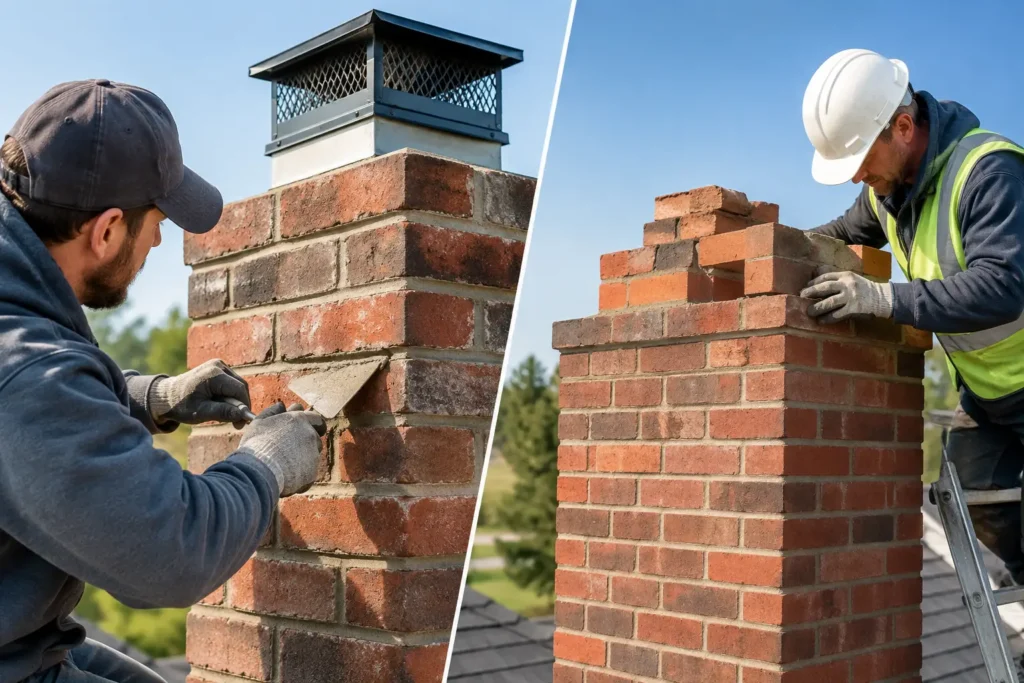
Repointing is the process of removing failed mortar from between otherwise solid bricks and installing new mortar joints. Mortar is designed to wear over time, especially on a chimney that is exposed to rain, snow, wind, and repeated freeze-thaw cycles. In many cases, deteriorated joints do not mean the entire chimney is failing.
During proper repointing, damaged mortar is carefully ground or removed to a consistent depth. The joints are cleaned, then filled and tooled with compatible mortar to create a tight, weather-resistant finish. Matching the mortar color and joint profile can also preserve the appearance of the chimney.
Repointing is usually a good fit when the brick faces are intact, the chimney is plumb, and damage is limited to open, cracked, sandy, or recessed mortar joints. It can stop water from getting behind the masonry and help protect adjacent roofing materials from moisture damage.
Signs Repointing May Be Enough
Homeowners often notice loose grit below the chimney, narrow cracks along mortar lines, or gaps where mortar has washed away. You may also see small areas of missing mortar around the upper courses, where the chimney receives the most weather exposure.
If these issues are caught early, repointing can be a practical repair that extends the life of the existing chimney. The key word is early. Once water enters through open joints, freezes, and expands, it can begin breaking down the bricks themselves.
When Chimney Rebuilding Is the Better Method
Rebuilding means dismantling and reconstructing all or part of the chimney with sound materials and proper support. It may involve rebuilding only the stack above the roofline, replacing several damaged courses, or reconstructing the full chimney when deterioration reaches lower sections.
A rebuild is necessary when the masonry has lost structural integrity. Bricks that are spalling, cracked through their faces, loose, bowing outward, or separating from the chimney are not repaired by adding mortar around them. New mortar cannot make failing brick strong again.
A partial rebuild is common for chimneys that are most damaged above the roof. This section faces the harshest weather and often deteriorates faster than the protected portion below. Rebuilding the upper stack can remove compromised material while preserving stable masonry lower on the home.
A full rebuild may be the safest choice if the chimney leans, has widespread brick failure, has major cracking through multiple courses, or has deteriorated down to the roofline and beyond. While that is a larger project, it addresses the underlying condition instead of repeatedly patching a structure that is already unstable.
Warning Signs That Point to Rebuilding
Call for an inspection promptly if you see bricks flaking apart, pieces of masonry on the roof or ground, a chimney that appears tilted, or large vertical and stair-step cracks. Rust staining, white mineral deposits, and interior water marks can also signal long-term moisture entry that deserves a closer look.
Do not ignore a chimney that is separating from the home or visibly shifting. Masonry is heavy, and a failing stack can damage shingles, roof decking, gutters, siding, and more if it becomes unstable.
Chimney Repointing Versus Rebuilding Methods: The Real Difference
The central difference is simple: repointing restores the joints, while rebuilding replaces damaged masonry and reconstructs the chimney section. But choosing between them requires more than a quick look from the driveway.
A chimney may have a few open joints and several spalled bricks at the same time. In that case, a contractor may recommend a targeted rebuild of the damaged courses followed by repointing where the surrounding brick remains sound. This approach can deliver a longer-lasting repair without replacing masonry that still has useful life.
The condition of the brick matters as much as the condition of the mortar. If a screwdriver can easily scrape out mortar but the bricks are solid and firmly bonded, repointing may work well. If the brick faces are soft, breaking apart, or coming loose, the problem has moved beyond the mortar joints.
Age and previous repairs matter, too. Some older chimneys were patched with mortar that is harder than the original brick. That mismatch can trap moisture in the masonry and cause the brick to deteriorate faster. A careful repair plan uses materials suited to the chimney rather than treating every masonry job the same way.
Why Central New York Weather Makes Timing Important
Syracuse-area chimneys handle a punishing cycle of rain, snow, ice, wind, and temperature swings. Water enters a small crack or open joint, freezes overnight, expands, and makes the opening larger. After enough cycles, mortar fails, brick faces pop off, and moisture reaches deeper into the chimney.
That is why spring inspections are useful after a hard winter, while dry weather repairs can often be easier to schedule. However, an active leak, loose brick, or unstable stack should not wait for an ideal season. Temporary protection may be needed until permanent masonry work can be completed safely.
Chimney problems can also be mistaken for roof leaks. Water may enter through failed flashing, a cracked crown, an uncapped flue, or open mortar joints. A complete inspection should evaluate the chimney masonry and the points where the chimney meets the roof so the actual source is addressed.
What a Professional Inspection Should Determine
Before recommending repointing or rebuilding, a contractor should examine the chimney from the roofline when it is safe to do so. Ground-level observations are useful, but they often miss damage on the back side of the stack, around the crown, or near the flashing.
The inspection should assess brick condition, mortar depth, cracking patterns, chimney alignment, crown condition, flashing, and signs of water intrusion. It should also identify whether repairs are cosmetic, preventative, or necessary for structural safety.
A clear estimate should explain the proposed scope. Homeowners deserve to know whether the work involves spot repointing, broad repointing, replacing brick courses, rebuilding above the roofline, or reconstructing a larger section. Straight answers help prevent surprise costs and make it easier to compare repair options fairly.
Choosing the Repair That Protects Your Home
Repointing is often the more economical method when deterioration is limited to mortar joints. It preserves good brick, restores weather resistance, and can prevent a manageable issue from becoming a reconstruction project. It is not, however, a cure for weakened or failing masonry.
Rebuilding costs more because it requires careful dismantling, replacement materials, reconstruction, and attention to structural stability. Yet it can be the better value when bricks and support are compromised. Paying for repeated patches on a failing chimney usually costs more over time and leaves the home exposed to continued water damage.
Be cautious of any recommendation made without a close inspection. A low-price patch may look better briefly while moisture continues working behind the surface. On the other hand, a full rebuild is not always necessary simply because a chimney looks old. The best repair is the one that matches the actual condition of the masonry.
If your chimney has missing mortar, loose bricks, water stains, or visible cracking, arrange an inspection before the next storm finds the weak spot. Alpha Omega Roofing LLC can help Central New York homeowners understand the condition of their chimney and choose a repair that protects the roof, the home, and the budget.