
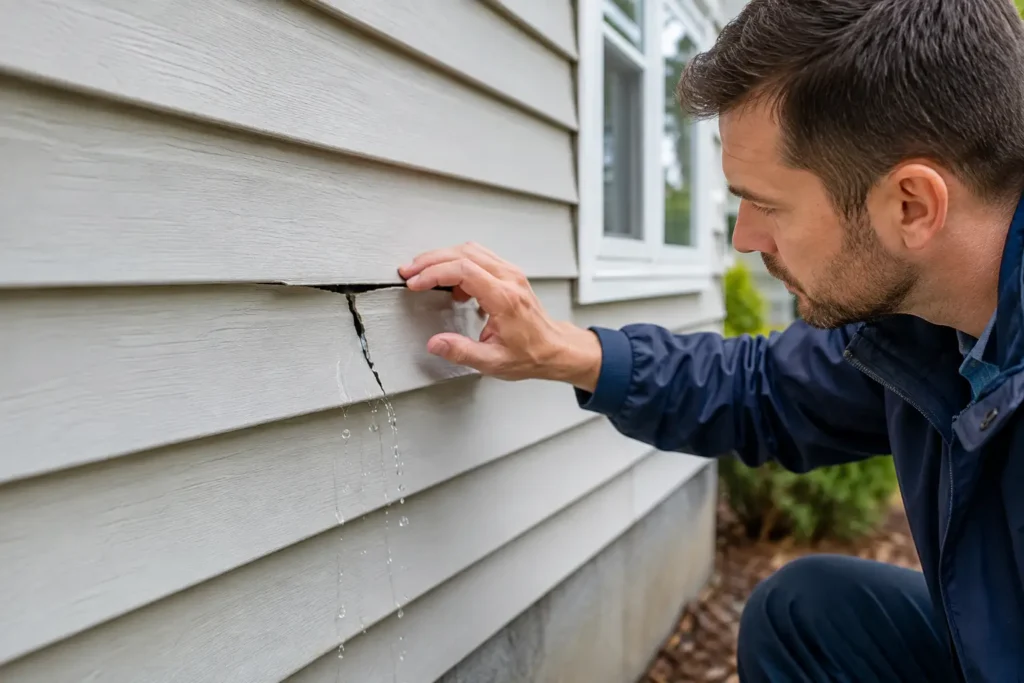
A hairline crack near a window may look like a cosmetic issue, but after a Syracuse downpour or a long freeze-thaw cycle, it can become a path for water. So, can cracked siding cause leaks? Yes. Damaged siding can allow rain, melting snow, and wind-driven moisture behind the exterior wall, where the problem may stay hidden until staining, mold, or rot appears indoors.
The good news is that not every crack means major structural damage. The risk depends on the material, the crack’s location, the condition of the weather barrier behind the siding, and how much water the wall receives. What matters most is finding the source early and repairing the system around the damage, not simply covering a visible crack with caulk.
How Cracked Siding Causes Water Leaks
Siding is the first layer of protection on your home’s exterior. It sheds most rain and snow away from the wall. Behind it, components such as housewrap, flashing, trim, and window or door seals provide a second line of defense. When siding cracks, loosens, or pulls away from the wall, water can bypass that outer layer.
Wind makes the situation worse. A calm drizzle may run down the siding without causing trouble, while heavy rain driven sideways can force water into a crack, open seam, or gap around a fastener. Once moisture gets behind the siding, it can travel along framing, insulation, or sheathing before it shows up as a stain far from the original entry point.
That is why a ceiling spot or wet drywall does not automatically mean the roof is leaking. A failed window seal, damaged trim, chimney flashing, or cracked siding can create similar symptoms. A thorough exterior inspection is the fastest way to avoid repairing the wrong area.
Which Cracks Are Most Likely to Leak?
Not all siding damage carries the same level of risk. Small surface scratches in otherwise sound vinyl or fiber cement may be mostly cosmetic. Open cracks, missing pieces, and gaps at joints deserve more attention, especially on walls exposed to prevailing wind.
Cracks Near Windows, Doors, and Corners
Openings are vulnerable because several materials meet in one place. Siding, trim, flashing, caulk, and the window or door frame all need to work together. A crack near a window may point to movement, impact damage, or deteriorated trim. If flashing is missing or improperly installed, water can enter the wall with every storm.
Corners also see more stress than broad, flat wall areas. Vinyl siding expands and contracts with temperature changes. If it was installed too tightly, it can split around fasteners or buckle at the corners. Central New York winters and summer heat can expose these installation issues over time.
Cracks Along Seams or Loose Panels
Siding panels are designed to overlap and drain. When a panel becomes loose, warped, or separated from the one above it, water can get behind the overlap. This is common after strong winds, falling branches, or impact from lawn equipment.
With vinyl siding, a panel may look intact from the ground but have a broken locking edge. The panel can then flap or pull away during wind, allowing repeated water exposure behind the wall. Aluminum and wood siding can develop their own issues, including loose fasteners, corrosion, splitting, and failed paint or sealant.
Damage at the Bottom of the Wall
Cracks close to the ground can let in splashback from rain, snowmelt, and clogged gutters. This area also faces more risk from landscaping moisture, snow piles, and damage from shovels or equipment. If the lower siding edge is soft, stained, or warped, moisture may already be affecting the sheathing behind it.
Signs Water May Be Getting Behind Your Siding
Exterior damage is the clearest clue, but homeowners should also watch for changes inside the house. Water behind siding does not always create an obvious leak right away. It can slowly wet insulation or wood framing and create a larger repair later.
Common warning signs include a musty odor near an exterior wall, peeling interior paint, bubbling drywall, stains around windows, damp baseboards, or unexplained mold growth. On the outside, look for warped siding, soft trim, open seams, missing caulk, rusted fasteners, or paint that is peeling in one concentrated area.
Pay attention to timing. If you notice staining or dampness after wind-driven rain but not after a light shower, the issue may be a siding or flashing problem. If the symptom appears after snow begins to melt, the source could be lower wall damage, an ice dam, or a roof drainage issue. The pattern helps, but it does not replace an inspection.
When a Crack Needs Immediate Repair
A small crack should not be ignored indefinitely, but some conditions call for prompt service. Schedule an inspection soon if you can see the wall beneath the siding, if a section is missing or loose, or if water has reached the interior of your home. The same applies when siding damage is located around windows, doors, roof-to-wall transitions, chimneys, or where a gutter overflow regularly hits the wall.
Storm damage should be checked quickly. Hail can crack vinyl, dent aluminum, and fracture fiber cement. Wind can loosen panels and trim without leaving a dramatic hole. A professional can document the damage, determine whether a repair is practical, and help you understand whether the condition may be relevant to an insurance claim.
Waiting through another season can turn a manageable siding repair into replacement of wet sheathing, framing, insulation, or interior finishes. In older homes, hidden moisture can also contribute to masonry deterioration around chimneys and exterior walls.
Can You Seal a Crack Yourself?
For a very small, accessible crack in otherwise sound siding, a compatible exterior sealant may temporarily reduce water entry. It is not a complete repair if the panel is loose, the locking edge is broken, or water is entering behind nearby trim. Caulk can also trap water if it is applied across drainage paths that siding needs to shed moisture.
Avoid using expanding foam or heavy amounts of sealant as a permanent fix. These products can make future repairs harder and may hide the actual source of the problem. Painting over a crack in wood siding may improve appearance, but it will not stop a leak if the wood is split, soft, or separated at a joint.
If you are comfortable checking from the ground, clear leaves from gutters and confirm that downspouts direct water away from the foundation. Do not climb a ladder during wet, icy, or windy conditions to investigate a suspected leak. The safer choice is to have the exterior evaluated by an insured contractor.
What a Proper Siding Leak Repair Should Address
A lasting repair looks beyond the damaged face of the siding. The contractor should inspect the affected panels, trim, flashing, and wall area for signs that moisture has reached the layers underneath. If the housewrap or flashing has failed, replacing one cracked piece of siding alone may not solve the problem.
The right repair may involve replacing individual panels, reinstalling loose siding, repairing trim, adding or correcting flashing, sealing penetrations, and addressing drainage from gutters or roof runoff. When sheathing is wet or rotted, it should be repaired before new siding closes the wall again. This is where workmanship matters most: the visible finish should look clean, but the hidden water-management details must be correct.
For widespread cracking, fading, warping, or repeated repairs, partial or full siding replacement may be the more cost-effective choice. A local contractor can explain the trade-off honestly. Targeted repair makes sense when the surrounding system is sound; replacement is often smarter when the damage reflects age, poor installation, or ongoing moisture exposure.
Get the Source Identified Before Damage Spreads
A leak is rarely just an inconvenience. Water that enters behind siding can quietly affect the wall system long before it becomes an obvious interior repair. If you have cracked, loose, or storm-damaged siding, Alpha Omega Roofing LLC can inspect the area, explain what is causing the problem, and provide a straightforward repair recommendation.
Do not assume a stain is coming from the roof or that a cracked panel is only a curb-appeal concern. A timely exterior inspection can protect your home before the next heavy rain, snowmelt, or windstorm turns a small opening into a larger repair.